Is 20th Century Boys Worth Reading? Review & Where to Read

Quick Answer
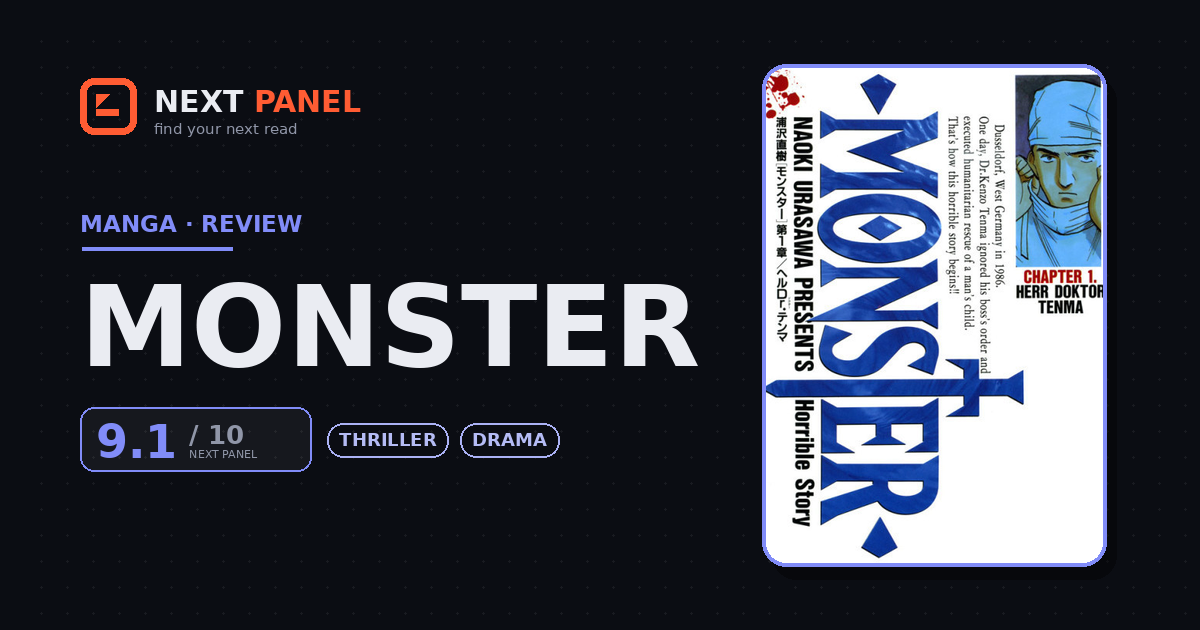
Yes, if you love slow-burn mystery and conspiracy thrillers. It's one of the most gripping page-turners in manga, with a fantastic villain — right up there with Urasawa's Monster. The catch is its ending, which a lot of readers find underwhelming. If you can enjoy a brilliant ride that stumbles at the finish, it's essential.
Quick Verdict
“Urasawa's paranoid epic is one of the great page-turners in manga — just know the decades-long buildup pays off better than the ending does.”
Best for: Readers who love slow-burn mystery and conspiracy thrillers and care more about the ride than a perfect ending.
Not for: Readers who need a tidy, fully satisfying payoff, or who want something short and fast.
- Type
- Manga
- Genres
- Thriller, Sci-Fi
- Status
- Completed
- This review
- Minor Spoilers
- Author
- Naoki Urasawa
- Publisher
- VIZ Media
- Platform
- VIZ
| Quick facts | |
|---|---|
| Format | Manga (seinen), 249 chapters, 22 volumes |
| Run | 1999–2006 · completed |
| Community score | AniList 8.8 · MangaUpdates 8.8 |
| Content | Violence, mature themes |
| Where to read | VIZ — official |
Overview
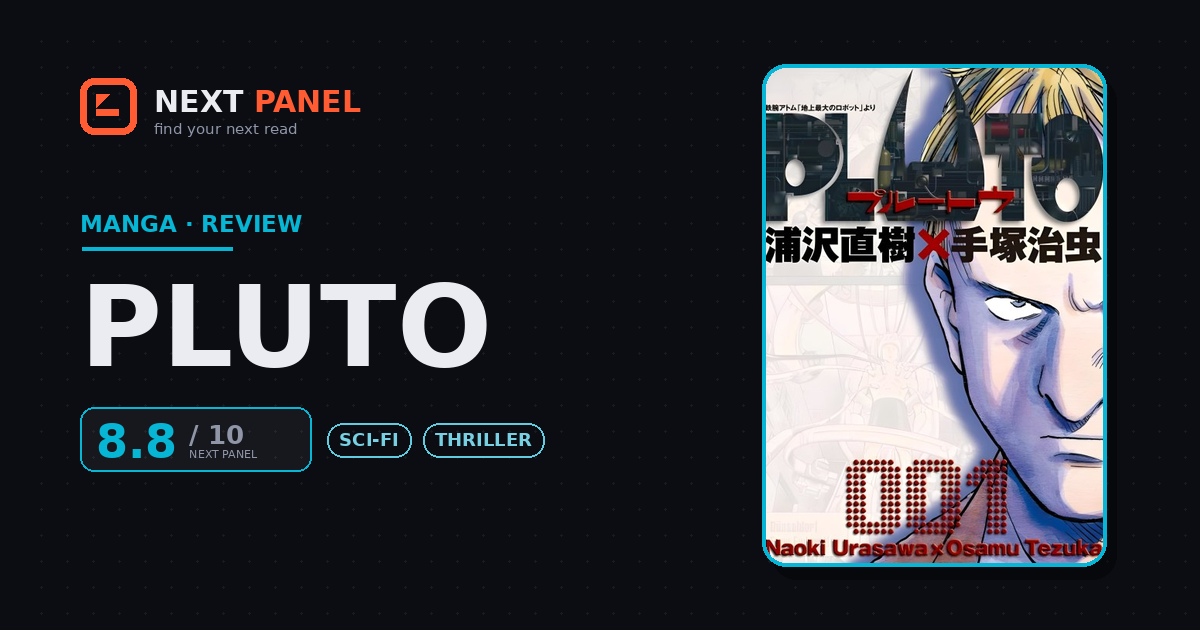
20th Century Boys is an epic mystery-thriller from Naoki Urasawa, the creator of Monster and Pluto. Kenji is an ordinary guy — a convenience-store manager and former teenage wannabe-rocker — whose dull adult life cracks open when he stumbles onto a growing cult led by a masked figure who calls himself "Friend." The terrifying part: the cult's apocalyptic plan matches a "Book of Prophecy" that Kenji and his childhood friends made up as a game back in 1969. To understand what's happening and stop it, Kenji has to track down his old friends and dig back into their childhood.
It's a story that spans decades — childhood in the late '60s, adulthood around the turn of the century, and beyond — and it's really about memory, nostalgia, and how the make-believe of children can curdle into something monstrous.
What it does well
The mystery is the engine, and it's extraordinary. Urasawa is a master of the slow burn: almost every chapter ends on a new question, and the constant cutting between the characters' childhood and the present builds a momentum that's genuinely hard to put down. This is one of the best page-turners the medium has.
"Friend" is a huge part of why it works. A masked figure whose identity is the central mystery, he's one of the most unnerving villains in manga, and the dread Urasawa builds around him barely lets up across thousands of pages. The cast around the mystery is enormous, but Urasawa keeps everyone distinct and human, and his obvious affection for childhood — the games, the music, the friendships — makes the stakes feel personal rather than abstract.
It looks the part, too. The grounded, realistic art makes you believe in ordinary people getting swept up in something far bigger than themselves, which is exactly the feeling the story is going for.
Where it falls short
There's one famous problem: the ending. After an incredible, years-long buildup, the resolution of the central mystery lands as underwhelming or overly convoluted for a lot of readers. The journey is better than the destination, and how much that bothers you will shape your whole experience.
It's also long and sprawling. The middle takes some detours, and with so many characters and timelines it can be genuinely hard to keep everything straight. And because the whole thing runs on cliffhangers and reveals, a few stretches feel like they're stalling to keep the mystery alive a bit longer.
Verdict
20th Century Boys is one of the best thrillers in manga and a must-read if you love mystery and slow-burn tension — it belongs in the same conversation as Urasawa's Monster, even if it doesn't quite stick the landing. If you can enjoy a brilliant ride that fumbles its finish, it's essential reading. If a weak ending tends to sour a whole story for you, just go in knowing that's the trade-off here.
Strengths & Weaknesses
Strengths
- The mystery and tension are incredible — Urasawa ends nearly every chapter on a new question, and the weave between the characters' childhood and the present is masterful. It's one of the great page-turners in manga.
- 'Friend,' the masked villain whose identity is the central mystery, is one of the most unnerving antagonists in the medium, and the dread built around him barely lets up.
- It juggles a huge cast across multiple timelines and keeps them all distinct and human, with a warmth toward childhood and friendship that makes the stakes feel personal.
- The grounded, realistic art sells the idea of ordinary people caught up in something enormous.
Weaknesses
- The ending is the big one — after an extraordinary buildup, the resolution of the central mystery lands as underwhelming or convoluted for a lot of readers.
- It's long and sprawling, and the many timelines and characters can be hard to keep straight in the middle stretch.
- Because it runs on cliffhangers and reveals, a few sections feel like they're stalling to keep the mystery going.
Similar Titles
Where to Read Officially
| Platform | Format | Pricing | Region notes | Link |
|---|---|---|---|---|
| VIZ | Print & digital volumes | Paid | Region availability varies | Open |
Frequently Asked Questions
Is 20th Century Boys finished?
Yes. It's complete, including its short follow-up arc, so you can read the whole story start to finish.
Is the ending really that bad?
It's divisive. Many readers feel the payoff doesn't match the incredible buildup, while plenty still think the journey is more than worth it. Just don't expect a flawless finish.
Is it like Monster?
Very much so — same author, same slow-burn mystery style and strong villain. If you loved Monster, this is the natural next read.