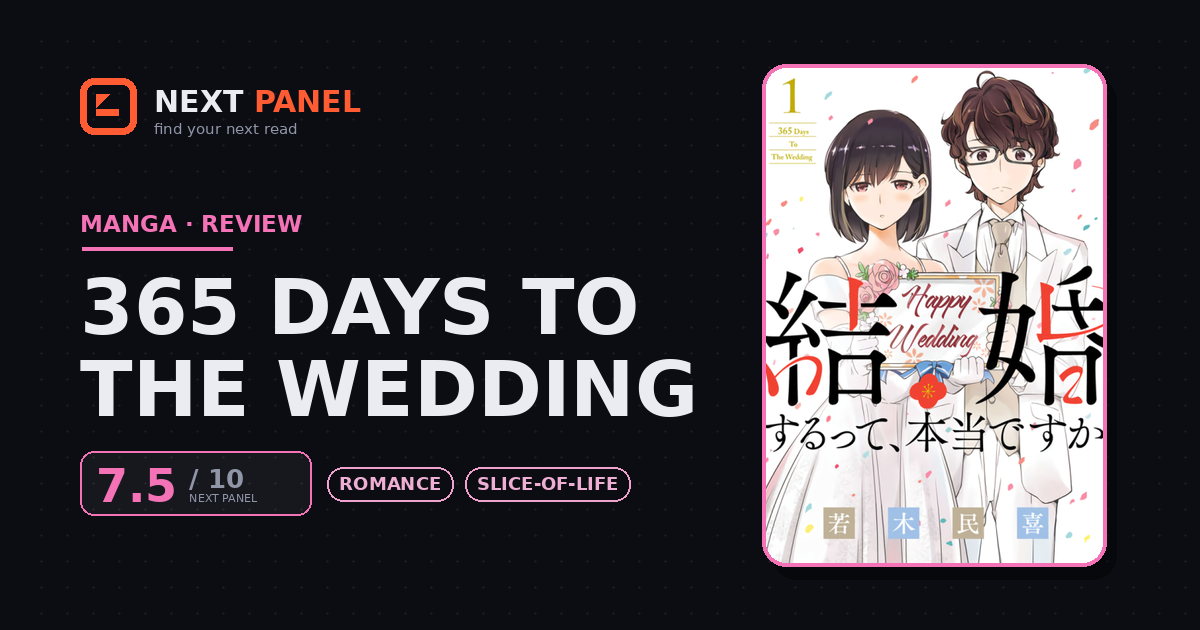
Is 365 Days to the Wedding Worth Reading? Review & Where to Read
Quick Answer
Yes, if you want a grounded adult romance that treats the fake-relationship trope seriously instead of playing it for pure comedy. It's more about two people learning to communicate than a wacky misunderstanding plot.
Quick Verdict
“Two coworkers fake an engagement to please their families, and the manga is smart enough to make the fakeness the least interesting part of the arrangement.”
Best for: Readers who want an adult, communication-focused romance built on a fake-relationship setup rather than broad comedy or melodrama.
Not for: Readers who want a younger, higher-energy romance with more comedic misunderstandings and less emphasis on adult practicality.
- Type
- Manga
- Genres
- Romance, Slice of Life
- Status
- Completed
- This review
- Minor Spoilers
- Author
- Tamiki Wakaki
- Publisher
- Shogakukan
- Platform
- Seven Seas Entertainment
| Quick facts | |
|---|---|
| Format | Manga (seinen), 110 chapters, 11 volumes |
| Run | 2020–2023 · completed |
| Community score | AniList 7.7 · MangaUpdates 7.4 |
| Where to read | Seven Seas Entertainment — official |
Overview
365 Days to the Wedding follows Mizuki Sagara and Rikuto Yamamoto, two coworkers who agree to fake an engagement to satisfy family pressure to get married, without either of them having any romantic interest in the other, or so they insist. As the fake arrangement forces them to spend more time together, navigating meddling relatives and awkward social obligations, the manga slowly turns the premise from a practical solution into something neither of them expected to actually feel.
What it does well
Tamiki Wakaki grounds the fake-engagement premise in believable adult stakes. Mizuki and Rikuto aren't forced together by a wacky contrivance; they're both dealing with real family pressure and career considerations that make a fake engagement a genuinely reasonable, if awkward, solution. That grounding gives the story more weight than a lot of romance manga built on flimsier setups.
The bigger strength is how the two leads actually talk to each other. Rather than dragging out tension through convenient miscommunication, Mizuki and Rikuto default to honesty more often than the genre usually allows, which makes their slow shift from practical partners to something more sincere feel earned rather than manufactured. Watching two adults navigate an unusual situation with real communication is refreshing in a genre that often relies on the opposite.
The art supports this tone well, staying clean and grounded rather than leaning into exaggerated comedic expressions, which suits a story more interested in quiet honesty than big romantic gestures.
Where it falls short
That same restraint is a double-edged sword. Because the story avoids a lot of typical romance-manga conflict engines, the overall tension can feel low, especially for readers used to higher-stakes will-they-won't-they structures. Some chapters move at a genuinely quiet pace with limited narrative urgency.
A handful of side characters and workplace subplots feel more like connective tissue between the leads' key scenes than material that stands on its own. And some of the family-pressure conflicts that carry real weight earlier in the story get resolved more smoothly than their setup suggested they would, which can feel like a slight shortcut given how much time was spent building them up.
Verdict
365 Days to the Wedding is a grounded, communication-forward romance that gets real mileage out of treating its fake-engagement premise seriously. It won't satisfy readers who want higher drama or faster pacing, but the honesty between its two leads makes it a refreshing, low-key read in a genre that often relies on avoidable misunderstandings.
Strengths & Weaknesses
Strengths
- The fake-engagement premise is grounded in believable adult motivations, family pressure and career practicality, rather than a contrived excuse to force proximity.
- Both leads communicate like actual adults for most of the story, which sidesteps a lot of the frustrating miscommunication tropes common to the genre.
- The slow shift from a practical arrangement to real feelings is handled with restraint, letting small moments of honesty carry the emotional weight.
- The art keeps a clean, grounded style that suits the story's realistic, workplace-adjacent tone.
Weaknesses
- The lower-stakes, communication-forward approach means there's less overt drama or tension than readers used to typical romance pacing might expect.
- Some side characters and workplace subplots feel more like filler between the leads' key scenes than fully developed threads.
- The resolution of certain family-pressure conflicts comes together a little too smoothly given how much weight they carry earlier in the story.
Similar Titles
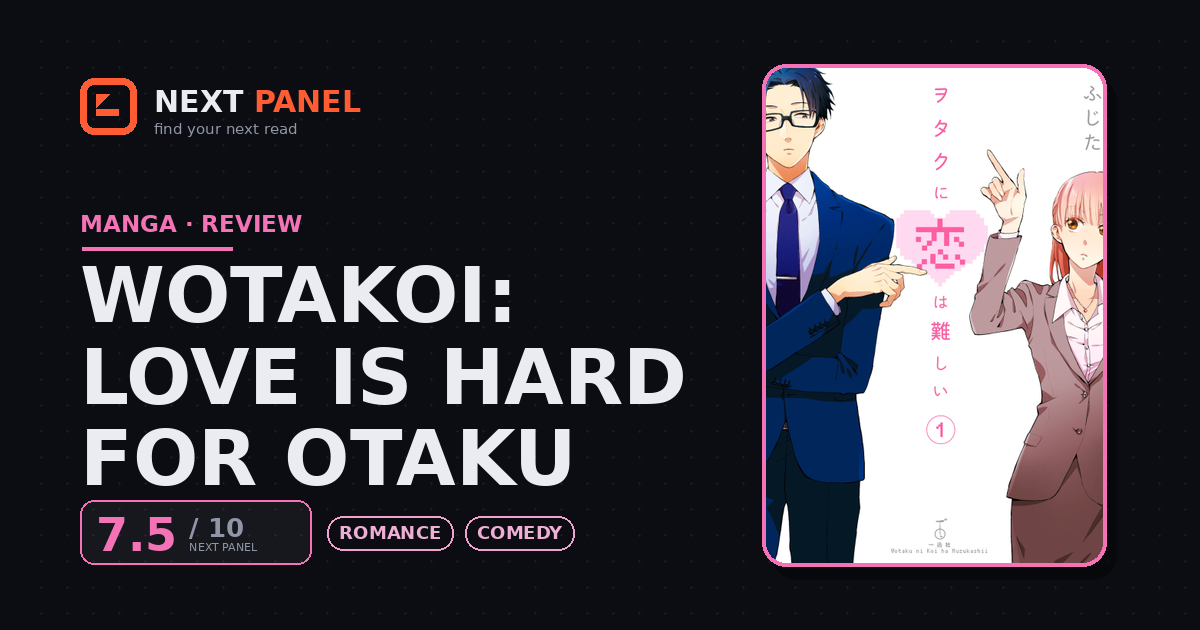
Wotakoi: Love is Hard for Otaku
Shares an interest in adult romance grounded in practical, communicative relationships rather than melodrama.
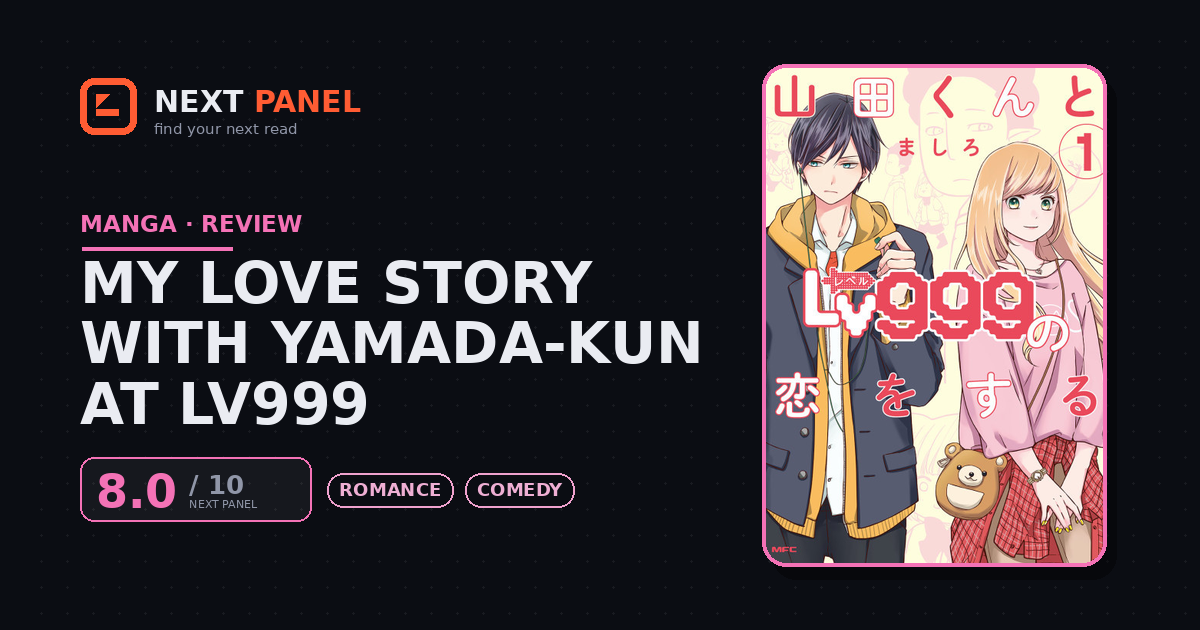
My Love Story with Yamada-kun at Lv999
Similar slow-burn structure built around two adults navigating honest feelings alongside a practical arrangement.
Where to Read Officially
| Platform | Format | Pricing | Region notes | Link |
|---|---|---|---|---|
| Seven Seas Entertainment | Print & digital volumes | Paid | Region availability varies | Open |
Frequently Asked Questions
Is this a comedy or a serious romance?
It leans more toward a grounded, serious romance, with comedy coming from situational humor rather than slapstick.
Is the manga complete?
Yes, it ran to completion.
Is there an anime adaptation?
Yes, and it adapts the manga's story closely.