Is Alya Sometimes Hides Her Feelings in Russian Worth Reading? Review & Where to Read
Quick Answer
Yes, if you're in the mood for a light, funny school romance. The Russian-crush gimmick is smarter than it sounds and the two leads have real chemistry. Just know it's a slow burn built on familiar romcom beats.
Quick Verdict
“The Russian-crush gimmick could've been a one-note joke; instead it anchors a genuinely charming, funny slow-burn. Standard romcom bones, better-than-average execution.”
Best for: Readers who want a light, funny high-school romance with a charming hook and a slow-burn will-they-won't-they.
Not for: Readers who want fast romantic payoff or a story that breaks from familiar romcom beats.
- Type
- Manga
- Genres
- Romance, Comedy
- Status
- Ongoing
- This review
- Minor Spoilers
- Author
- Sunsunsun
- Artist
- Saho Tenamachi
- Publisher
- Kodansha
- Platform
- K Manga (Kodansha)
| Quick facts | |
|---|---|
| Format | Manga (shōnen), 9 volumes |
| Run | 2022–present · ongoing |
| Community score | AniList 7.5 · MangaUpdates 6.7 |
| Where to read | K Manga (Kodansha) — official |
Overview
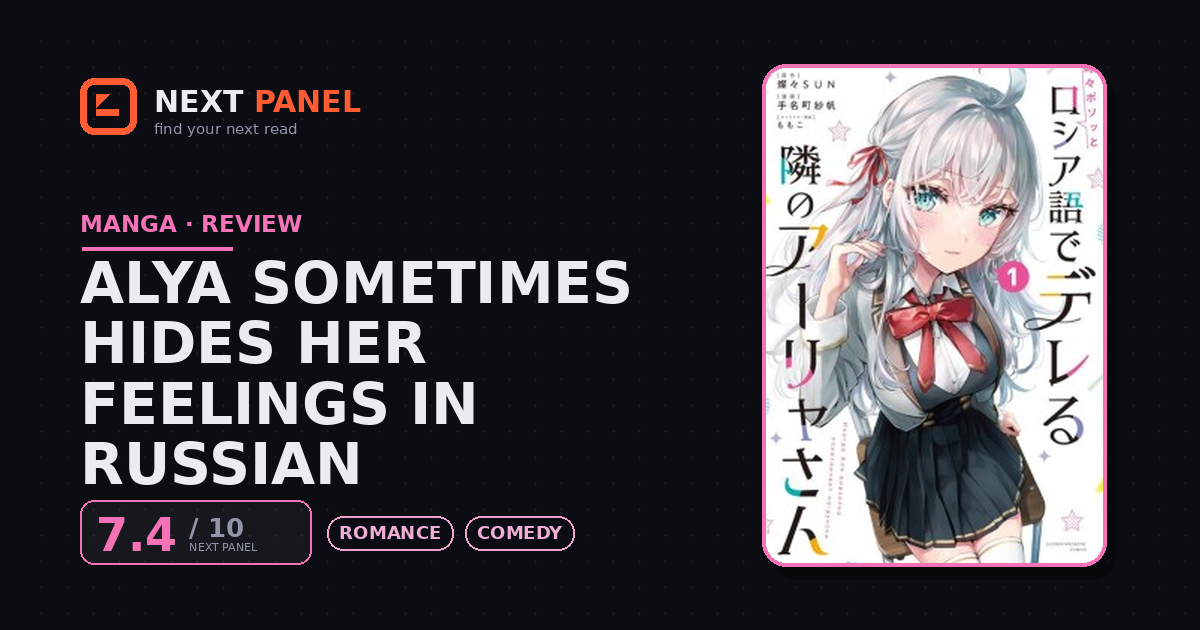
The gimmick is right there in the title. Alya — Alisa Mikhailovna Kujou, a sharp, silver-haired half-Russian honor student — likes to mutter little sweet or cutting things in Russian, certain the boy sitting next to her can't understand a word. He can. Masachika Kuze is a lazy but quick-witted classmate who happens to be fluent, and he plays dumb while quietly filing away everything she says. That's the engine: she hides her real feelings in a language she thinks is safe, and he hears all of it. Around that sits a normal school romcom — student-council elections, friends, family baggage — written by Sunsunsun with manga art by Saho Tenamachi.
What it does well
The hook is the reason to read, and the surprise is how much mileage it gets. A lesser version of this idea would run the same joke every chapter, but the Russian asides do double duty: they're funny, and they let you see the soft, honest Alya that her proud front hides. You spend the whole book a step ahead of the characters, which turns even small scenes into a low simmer of will-he-react, will-she-realize.
Masachika is what keeps it from coasting on the gimmick. He's a slacker, but a self-aware, genuinely funny one, with a backstory that explains why he's decided not to try at anything. His running commentary carries the comedy, and his slow re-engagement with the world gives the romance somewhere to go beyond blushing. Alya, for her part, is more than the tsundere setup — prickly and proud on the surface, lonely and earnest underneath, and the story lets both sides show.
The supporting cast pulls its weight too. Masachika's over-the-top little sister figure, the student-council rivals, and the election plot keep the book from being two people staring at each other, and the banter across the group is quick and easy to enjoy. Tenamachi's art is clean and reaction-focused, which is exactly what this kind of comedy needs — half the jokes live in a well-timed face.
Where it falls short
Underneath the hook, this is a very familiar formula. The cultural festival, the popularity contest, the near-misses and misunderstandings — if you've read a few school romcoms, you know these beats, and Roshidere hits most of them straight. It executes them well, but rarely surprises you with the shape of the story itself.
It's also a committed slow burn. The gimmick means the leads keep circling their feelings by design, and if you want an actual step forward you'll be waiting a long while. And a couple of the heavier subplots around Masachika's family are more tangled than they need to be, slowing the momentum whenever the book leaves the main pair.
Verdict
Roshidere takes a gimmick that could have been unbearable and builds a warm, funny romance on top of it, carried by two leads who are better company than the premise promises. It won't reinvent the genre, and the pace tests your patience, but as a light, charming school romcom it's an easy one to keep up with. Come for the joke, stay for the two people underneath it.
Strengths & Weaknesses
Strengths
- The hook actually works. Alya's Russian asides — sweet things she assumes no one understands — are a smart engine for both the comedy and the tension.
- Masachika is a better lead than the setup suggests. He's a witty, self-aware slacker with real reasons for coasting, not a blank self-insert.
- The comedy lands. The banter is quick, the side cast is fun, and the student-council material gives everyone something to do besides pine.
- The art is clean and expressive. Tenamachi sells the small reactions the jokes depend on.
Weaknesses
- It's a familiar formula. Strip away the gimmick and the beats — festival, election, misunderstandings — are standard school-romcom fare.
- The slow burn is slow. If you want the leads to actually get somewhere, be ready to wait a long time.
- A few subplots around Masachika's family pull focus from the main pair and take a while to pay off.
Similar Titles
Another gentle, gimmick-driven romcom about one character quietly getting the better of the other.
Smart, comedy-forward school romance about two leads too stubborn to confess.
The Quintessential Quintuplets
Popular high-school romcom with a strong hook and a long slow-burn romance.
Where to Read Officially
| Platform | Format | Pricing | Region notes | Link |
|---|---|---|---|---|
| K Manga (Kodansha) | Digital chapters & print volumes | Free + Paid | Region availability varies | Open |
Frequently Asked Questions
Do I need to know Russian?
No. Alya's Russian lines are always translated for you, so you're in on what she's really saying the whole time.
Should I read the manga or the light novels?
Both adapt the same story. The manga is the easiest place to start if you'd rather watch the comedy play out on the page.
Where can I read it in English?
Kodansha publishes it in English — digitally on the K Manga app and in print volumes.