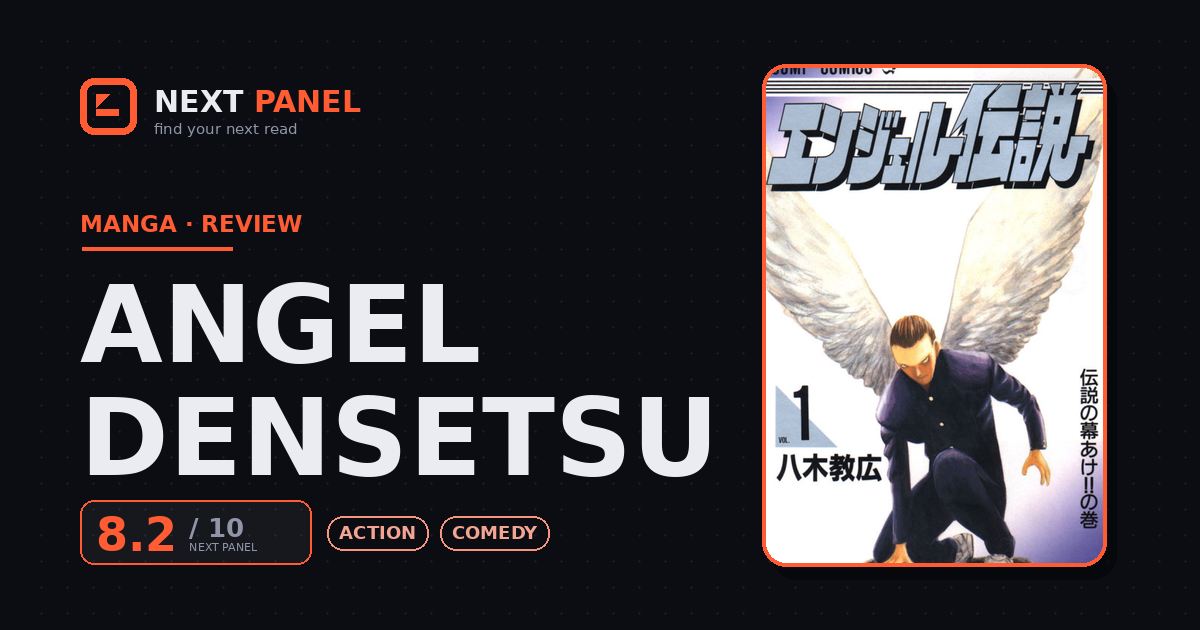
Is Angel Densetsu Worth Reading?
Quick Answer
Yes, if you can track down a copy -- it's a genuinely funny, warm 90s shonen comedy, though it currently has no official English digital release.
Quick Verdict
“Norihiro Yagi's pre-Claymore comedy turns a simple joke, a gentle boy who looks like a yakuza nightmare, into a genuinely sturdy shonen comedy that holds up decades later.”
Best for: Readers who want a classic misunderstood-tough-guy comedy that finds real variety in its central joke instead of repeating the same beat for fifteen volumes.
Not for: Readers who want a story available through a current official digital platform instead of one without an active English license right now.
- Type
- Manga
- Genres
- Action, Comedy
- Status
- Completed
- Author
- Norihiro Yagi
- Publisher
- Shueisha (Monthly Shonen Jump)
| Quick facts | |
|---|---|
| Format | Manga, 89 chapters, 15 volumes |
| Run | 1993–2000 · completed |
| Community score | AniList 8.0 · MangaUpdates 8.8 |
| Content | Cartoon violence |
Overview
Angel Densetsu follows Seiichirou Kitano, a genuinely kind-hearted high schooler whose face and general presence terrify everyone around him, to the point where classmates and teachers alike assume he's a violent delinquent despite him never actually doing anything wrong. Norihiro Yagi, who would later go on to create the much darker Claymore, built the whole series around that single misunderstanding, following Kitano as he accidentally becomes the terrifying "guardian" of his new school while trying to do nothing more than make a friend or two. The manga ran in Shueisha's Monthly Shonen Jump from 1993 to 2000 and wrapped as a complete 15-volume series, years before Yagi would trade slapstick comedy for the grim, sword-swinging world of Claymore.
What it does well
The central joke could easily wear out its welcome, but Yagi keeps finding new angles on it: new characters misreading Kitano, Kitano's own oblivious sincerity making the misunderstandings worse, and a slowly growing circle of people who do see him for who he actually is. That last part gives the manga real heart underneath the slapstick. Ikuko Hirayama, Kitano's love interest and one of the few people who's never been afraid of him, anchors a sweet, straightforward romance that develops gradually alongside the comedy rather than being sidelined by it. The fight scenes, when they happen, are genuinely well-choreographed. You can see the artist who'd go on to draw Claymore's action sequences taking real care with the physical comedy and the occasional serious brawl alike. The supporting delinquent cast gives the school setting a lived-in, episodic structure that makes it easy to read in chunks, and several recurring rivals get just enough backstory to feel like people rather than punchlines.
Where it falls short
The central premise is, by design, a single joke, and Angel Densetsu leans on it constantly. Even with Yagi's variations, readers who don't find the initial setup funny will have a hard time with the volumes that follow. The episodic school-comedy structure means plot momentum takes a back seat to standalone gags and mini-arcs for a lot of the run, which some readers will find charming and others will find aimless. There's currently no official English-language release, so English readers are limited to secondhand collections of past printings or import copies rather than a modern digital option.
Verdict
Angel Densetsu is worth seeking out for readers who want a genuinely funny, good-hearted 90s shonen comedy from the creator of Claymore, executed with more craft and warmth than its one-joke premise suggests. The lack of a current official English release is a real barrier, but the manga itself holds up well enough that it deserves a proper reprint or digital license.
Strengths & Weaknesses
Strengths
- Yagi keeps finding new angles on the central misunderstanding instead of repeating the same joke beat for beat across fifteen volumes.
- Ikuko Hirayama anchors a sweet, straightforward romance that develops gradually alongside the comedy rather than getting sidelined by it.
- The fight scenes are genuinely well-choreographed, with the same care Yagi would later bring to Claymore's action visible even here.
- The supporting delinquent cast gives the school setting a lived-in, episodic structure that makes the manga easy to read in chunks.
Weaknesses
- The premise is, by design, a single joke, and readers who don't find the initial setup funny will struggle with the volumes that follow.
- The episodic school-comedy structure means plot momentum takes a back seat to standalone gags for a lot of the run, which won't work for every reader.
- There's currently no official English-language digital release, so English readers are limited to older printed collections or import copies.
Similar Titles
Shares the gentle-giant-mistaken-for-a-thug comedy energy in a different high school setting.
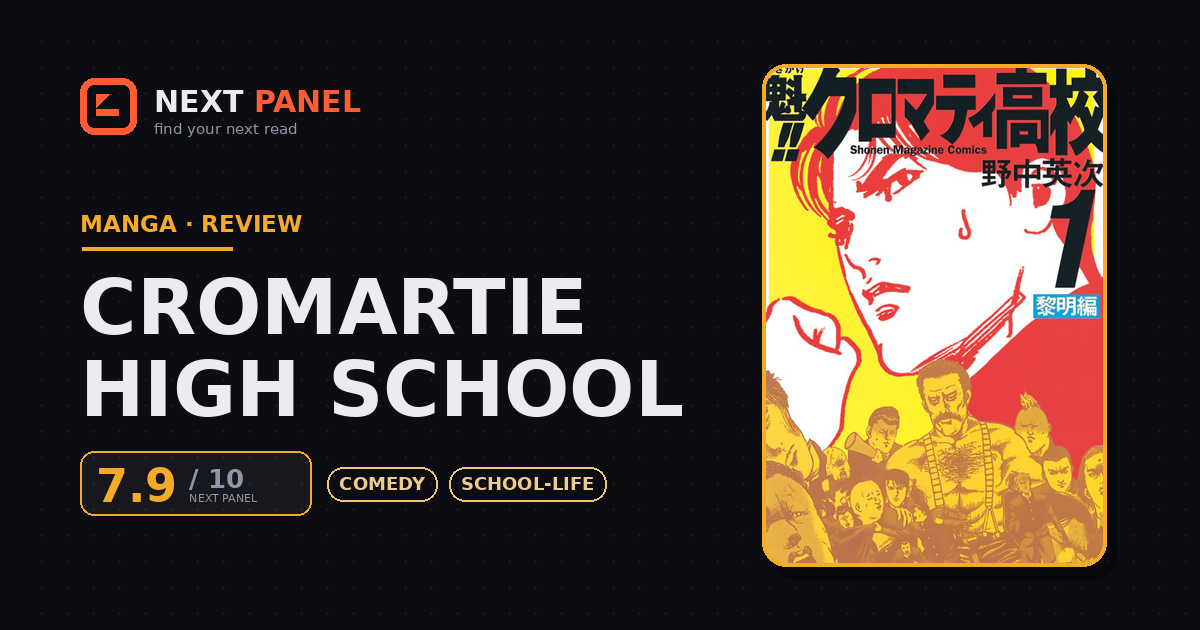
Another delinquent-school comedy that mines absurdist humor from tough-guy misunderstandings.
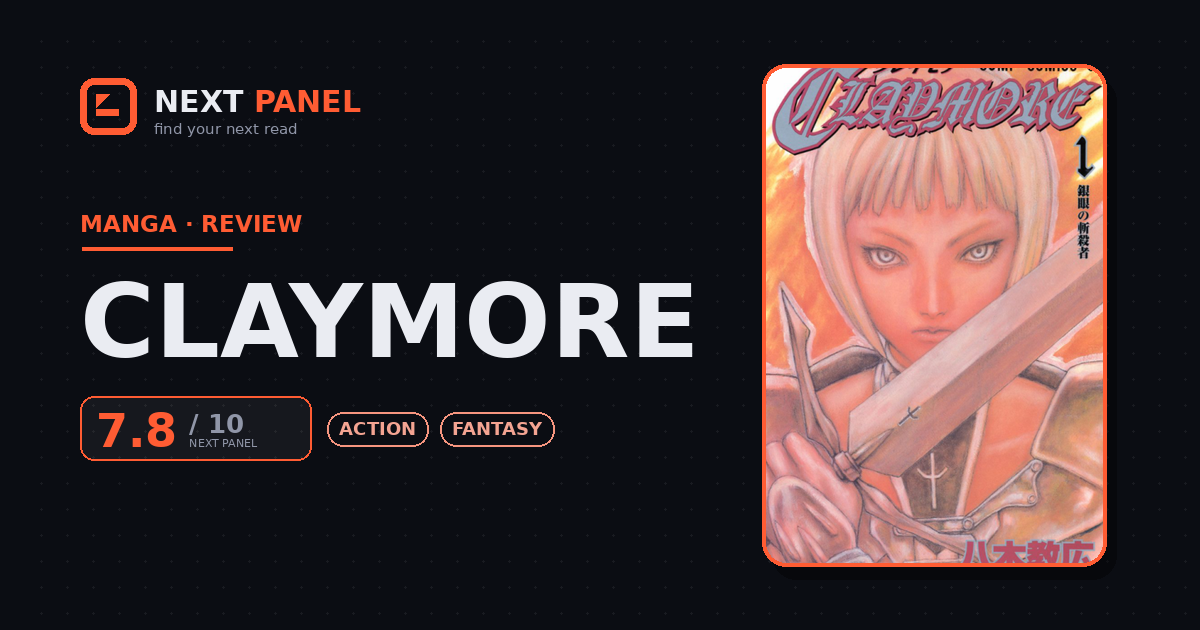
Norihiro Yagi's much darker, action-focused follow-up series, for readers curious where his career went next.
Frequently Asked Questions
Is Angel Densetsu finished?
Yes, it's a complete 15-volume series that ran in Monthly Shonen Jump from 1993 to 2000.
Where can I read Angel Densetsu legally?
There's currently no official English-language digital or print release in print, so legal access is limited to secondhand copies of past printings rather than a modern platform.
Is this by the same creator as Claymore?
Yes, Norihiro Yagi wrote and drew both, and Angel Densetsu came first, before his art style shifted toward Claymore's darker tone.