Is Aria Worth Reading? Review & Where to Read
Quick Answer
Yes, if you want a comic that slows you down instead of speeding you up. Aria is a near-plotless healing story about gondoliers on a terraformed Mars, and it's one of the best at what it does. Just don't come to it for drama or stakes.
Quick Verdict
“Almost nothing happens, page after page, and it's still one of the most calming things you can read — come for the art and the mood, not the plot.”
Best for: Readers who want a quiet, cozy comic to unwind with and don't need a strong plot.
Not for: Readers who want clear stakes, conflict, or a story that moves quickly.
- Type
- Manga
- Genres
- Sci-Fi, Slice of Life
- Status
- Completed
- This review
- Minor Spoilers
- Author
- Kozue Amano
- Publisher
- Mag Garden
- Platform
- TOKYOPOP
| Quick facts | |
|---|---|
| Format | Manga (seinen), 67 chapters, 12 volumes |
| Run | 2002–2008 · completed |
| Community score | AniList 8.6 · MAL 8.6 · MangaUpdates 8.7 |
| Where to read | TOKYOPOP — official |
Overview
Aria is a slice-of-life manga by Kozue Amano set on Aqua, a terraformed, water-covered version of Mars. You follow Akari, a young woman training to be an "undine" — a gondolier who rows tourists through the canals of Neo-Venezia, a loving recreation of old Venice. That's basically the whole pitch. There's no villain, no looming threat, no real plot engine. Each chapter is a small, calm episode: a walk, a festival, a quiet conversation, a moment of wonder at the city. If that sounds thin, it kind of is — but it's done so well that Aria became one of the comics people point to when they explain what "iyashikei," or healing manga, even means.
What it does well
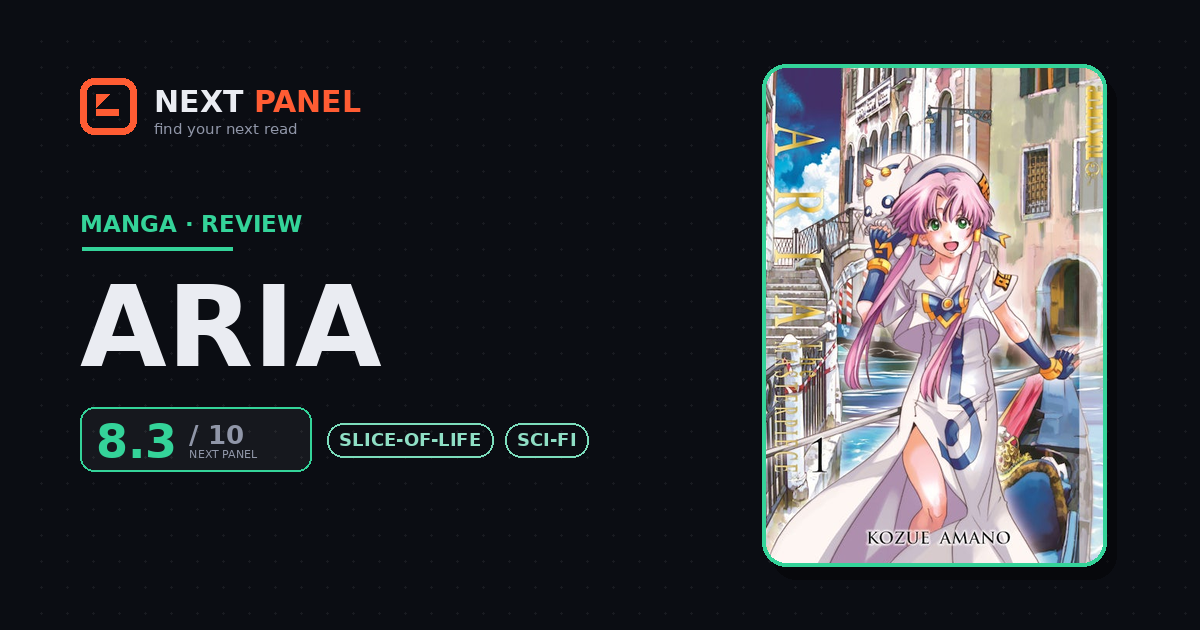
The art carries it, and the art is gorgeous. Amano draws Neo-Venezia with a level of background detail most artists save for a single splash page, then keeps it up panel after panel. The city feels real and lived-in, and the color pages are stunning. If you like just looking at a comic, this is one of the best on the shelf.
The bigger achievement is the mood. Aria is genuinely calming in a way very few books manage. It's built to slow you down — the gentle pacing, the soft dialogue, the focus on small pleasures all work together, and reading a chapter at the end of a long day actually helps. The episodic structure means you can read one chapter or ten and it works either way, so it's an easy book to keep nearby and dip into whenever you need to.
The cast is the other reason it lands. Akari and her friends are warm and easy to spend time with, and the mentors they look up to are quietly aspirational without ever being preachy. The soft sci-fi setting gives the whole thing a faintly dreamlike edge — there's something lovely about a future where people chose to rebuild a slow, beautiful city instead of a fast one — but the book never uses the sci-fi for plot. It's just there to make the calm feel earned.
Where it falls short
The flip side of "nothing bad ever happens" is that nothing much happens at all. There's no tension, no stakes, no momentum. If you read for plot or conflict, you'll be checking how far you have left to go. Aria asks you to meet it on its terms, and those terms are extremely low-key.
It can also tip into saccharine. Everyone is kind, every problem is small and quickly soothed, and a few chapters lay the wholesomeness on thick enough that it loses its effect. The opening is rougher too — the early Aqua chapters are slower and less polished before Amano finds the rhythm that makes the series special.
Verdict
Judge Aria as what it is — a healing, atmospheric slice-of-life — and it's close to the top of its class. Judge it as a story with a plot and it barely registers. Go in wanting a calm, beautiful book to unwind with and you'll love it; go in wanting drama and you'll bounce off within a chapter. For the right mood, almost nothing else does this particular job as well.
Strengths & Weaknesses
Strengths
- Kozue Amano's art is the main event — the watercolor-style backgrounds of Neo-Venezia are some of the most detailed and pretty you'll find in any manga, and the regular color pages are stunning.
- It nails the 'healing' mood better than almost anything else; reading a chapter before bed genuinely takes the edge off a stressful day.
- The episodic structure means you can read one chapter or ten and it works either way, so it's an easy book to keep on a nightstand and dip into.
- The cast is warm and easy company, and the soft sci-fi setting gives the slice-of-life a quietly magical edge without ever leaning on it for plot.
Weaknesses
- There's almost no plot, tension, or stakes — if you read for momentum, you'll be counting the pages left.
- The relentlessly positive tone can tip into saccharine; every problem is small and quickly soothed.
- The early Aqua chapters that open the story are slower and rougher before Amano finds the rhythm that makes the series special.
Similar Titles
Another gentle, near-plotless slice-of-life with a soft sci-fi setting and the same calming mood.
Episodic and contemplative, trading stakes for atmosphere and quiet wonder.
Warm, low-stakes slice-of-life that finds small magic in everyday routine.
Where to Read Officially
| Platform | Format | Pricing | Region notes | Link |
|---|---|---|---|---|
| TOKYOPOP | Print & digital omnibus volumes | Paid | Region availability varies | Open |
Frequently Asked Questions
Do I need to read Aqua first?
It helps but isn't required. Aqua is the short prequel that sets up the world, and the 'Aria: The Masterpiece' omnibus collects it up front, so most readers just start there.
Is there an official English version?
Yes. TOKYOPOP publishes the series in English as the deluxe 'Aria: The Masterpiece' omnibus, with color pages. The older ADV and TOKYOPOP single volumes are out of print.
Does the anime spoil the manga?
The manga and anime tell the same gentle story and neither hinges on twists, so starting with either is fine.