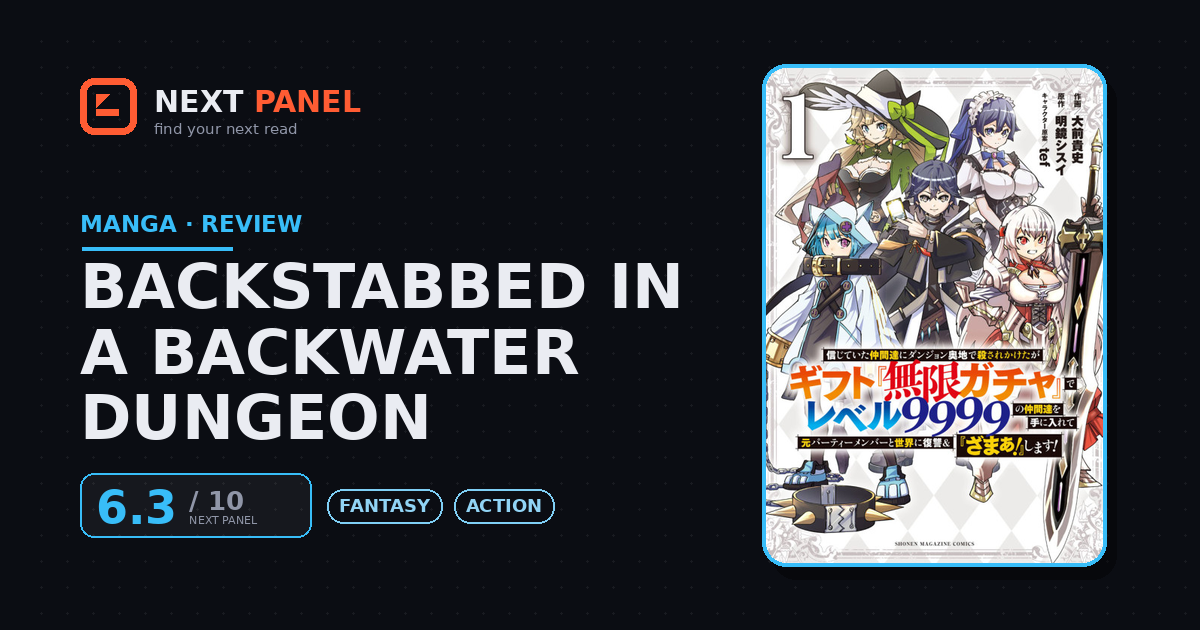
Is Backstabbed in a Backwater Dungeon Worth Reading? Review & Where to Read
Quick Answer
With real caveats. It delivers exactly the harem-heavy, overpowered-revenge power fantasy it promises, but the pacing is rushed and character work is thin, so it's best for genre fans, not a strong pick outside that lane.
Quick Verdict
“This is exactly as much brainless harem revenge as the title promises — which is either the appeal or the dealbreaker.”
Best for: Readers who want a straightforward, over-the-top harem power fantasy and don't need subtlety.
Not for: Readers who want restrained pacing, light fan service, or a story that regularly surprises them.
- Type
- Manga
- Genres
- Fantasy, Action
- Status
- Ongoing
- This review
- Minor Spoilers
- Author
- Shisui Meikyou
- Artist
- Takafumi Oomae
- Publisher
- Kodansha
- Platform
- Seven Seas Entertainment
| Quick facts | |
|---|---|
| Format | Manga (shōnen), 206 chapters, 22 volumes |
| Run | 2021–present · ongoing |
| Community score | AniList 6.7 · MangaUpdates 6.2 |
| Content | Fan service, suggestive content |
| Where to read | Seven Seas Entertainment — official |
Overview
Light was the only human in a party otherwise made up of the setting's other tribes, and when his so-called comrades decide he's expendable, they leave him for dead in the depths of a dungeon called the Abyss. What they didn't count on was the Infinite Gacha: a power that lets Light summon Level 9999 allies to his side. Three years later, he's built his own underground kingdom out of loyal, absurdly overpowered followers, and Backstabbed in a Backwater Dungeon spends its volumes walking him back to the surface to make his former party pay.
What it does well
The gacha hook gives the harem-building at least a mechanical reason to exist. Every new ally Light gains is tied to an actual pull from his power, not just another attractive character wandering into frame, and the manga leans into that structure enough that the harem feels like part of the premise rather than an excuse bolted onto it.
The revenge plot itself stays legible. The manga knows exactly who betrayed Light and why, and it paces his return and his targets one at a time instead of losing the thread in filler. If you're here for the wronged-hero-returns-to-settle-a-specific-list structure, the story delivers that cleanly.
It also does exactly what it says on the cover. Big power gaps, absolute loyalty from Light's followers, a clear villain to take down in each arc — genre fans looking for that specific shape of story get it without the manga pretending to be something more restrained.
Where it falls short
The pace is the biggest issue. New allies, power-ups, and plot beats show up quickly enough that they rarely feel earned — the manga tends to tell you a character is now devoted to Light rather than build to it, and the effect is a story that moves through its own hooks faster than it develops them.
The harem angle also crowds the revenge plot more than it should. New allies keep entering the story, and the fan-service attention paid to introducing each one starts to compete with, rather than support, the comeuppance arc that's supposed to be the actual draw.
Beyond genre execution, there isn't much here that pushes past convention. If you've read a handful of betrayed-hero, overpowered-revenge stories already, very little in the setup, cast, or structure will surprise you.
Verdict
This is a manga that knows exactly what audience it's for and doesn't apologize for it: harem-heavy, power-fantasy revenge with a gimmick to justify the harem part. It moves fast enough that character work gets shortchanged, and it won't win over anyone tired of the genre's tropes, but if the premise sounds appealing rather than exhausting, it delivers precisely what it promises.
Strengths & Weaknesses
Strengths
- The gacha-summon hook gives Light's harem an actual gimmick instead of just accumulating followers for no reason — each new ally is tied to a specific pull, and the manga leans into that.
- The revenge structure stays legible: the manga knows exactly who wronged Light and paces his comeuppance arc by arc instead of losing the thread in filler.
- It delivers exactly what genre fans come for — big power gaps, absolute loyalty from Light's followers, and a clear villain to take down in each arc.
Weaknesses
- The pacing moves fast enough that character and plot beats often feel skipped rather than earned — new allies and power-ups arrive with little setup.
- The harem angle leans hard on fan service, and the constant introduction of new allies can crowd out the revenge plot that's supposed to be the hook.
- The writing doesn't reach far beyond genre convention — if you've read a few betrayed-hero, overpowered-revenge stories already, this won't surprise you.
Similar Titles
A much tighter-paced power-fantasy pick if the gacha-harem angle isn't the draw for you.
Another overpowered-lead fantasy, with more focus on worldbuilding and less on harem fan service.
Where to Read Officially
| Platform | Format | Pricing | Region notes | Link |
|---|---|---|---|---|
| Seven Seas Entertainment | Print & digital volumes; first chapters free via K Manga | Free + Paid | Region availability varies | Open |
Frequently Asked Questions
Is Backstabbed in a Backwater Dungeon finished?
No, both the manga and light novels are ongoing, and a J.C.Staff anime adaptation aired in late 2025.
Where can I read it officially in English?
Seven Seas Entertainment publishes the print and digital volumes, and Kodansha's own K Manga app has the opening chapters free.
Is this mostly action or mostly harem and fan service?
Both, roughly evenly — go in expecting fan-service-heavy harem content alongside the revenge-focused action.