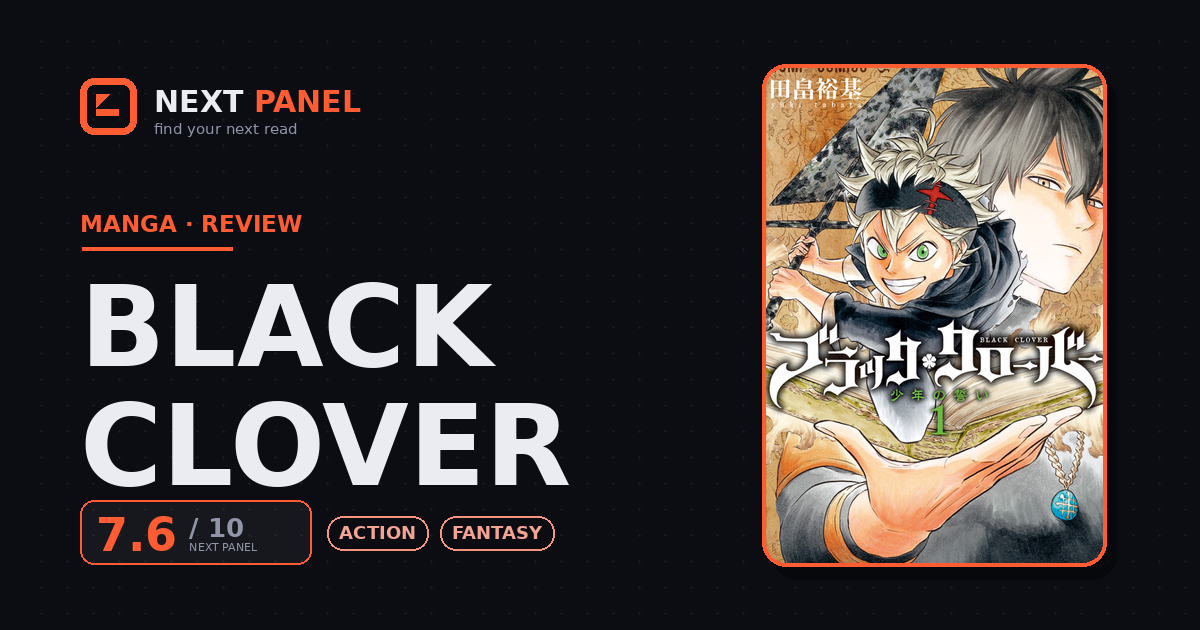
Is Black Clover Worth Reading? Review & Where to Read
Quick Answer
Yes, if you can push through a loud, trope-heavy opening arc. Once the Black Bulls squad and the wider Clover Kingdom fill out, it turns into one of the more consistently satisfying long-running shonen series of the last decade.
Quick Verdict
“Asta yells a lot in the first fifty chapters, but stick with it — the found-family squad dynamics and the Asta/Yuno rivalry make this one of the few 300+ chapter shonen that actually sticks the landing.”
Best for: Shonen readers who want a hard-work-beats-talent underdog story with a big cast of squadmates who each get a real arc.
Not for: Readers who want a tight, economical plot and a power scale that stays predictable instead of escalating every arc.
- Type
- Manga
- Genres
- Fantasy, Action
- Status
- Completed
- This review
- Minor Spoilers
- Author
- Yūki Tabata
- Publisher
- Shueisha
- Platform
- VIZ / Shonen Jump
| Quick facts | |
|---|---|
| Format | Manga (shōnen), 392 chapters, 38 volumes |
| Run | 2015–2026 · completed |
| Community score | AniList 7.7 · MangaUpdates 7.5 |
| Content | Violence |
| Where to read | VIZ / Shonen Jump — official |
Overview
Black Clover is set in a kingdom where magic runs everything — status, jobs, survival — and Asta, one of two orphans raised at the same church, is born without a drop of it. His best friend and rival Yuno has the opposite problem: freakish natural talent. Both want the same title, Wizard King, and the whole series tracks them chasing it from opposite ends of the talent spectrum. Yūki Tabata's manga ran in Weekly Shonen Jump from 2015 before shifting to quarterly Jump Giga chapters, and wrapped its main story at chapter 392 in 2026 after eleven years. It's long, it's loud, and it knows exactly what kind of shonen story it's telling.
What it does well
The best thing Black Clover does is make its power system mean something. Asta fights with anti-magic swords instead of spells, which forces every fight he's in to be solved with a different kind of trick than the magic-users around him — it's a genuinely clever constraint that keeps his battles from feeling like everyone else's with different colors. Once he's placed in the Black Bulls, the series' weakest-on-paper squad, the cast opens up fast. Noelle, Magna, Luck, Vanessa, Gauche, Charmy — nobody in that squad is filler. Each one gets a real backstory, a fighting style that's actually distinct, and enough page time that their eventual growth lands instead of feeling like a stat upgrade.
Tabata's art also just gets better. Early fights are functional at best, but by the elf reincarnation arc and the material that follows, the choreography gets genuinely inventive — magic and swordplay combine in ways that feel earned rather than randomly assigned. And through all 392 chapters, the Asta/Yuno rivalry never gets shoved aside. A lot of long shonen series let their founding hook drift once the cast expands; this one keeps circling back to two kids who made a promise as children, and the ending actually pays that off.
Where it falls short
The opening stretch is rough. Asta's whole personality for the first fifty-odd chapters is volume, and the plot leans on stock underdog beats — the doubting rivals, the sudden power-up, the tournament arc — before the setting has enough texture to make them land. If you bounce off the first few volumes, that reaction is fair; the series takes a while to become more than its premise.
The other real problem is scale. Once the story moves into kingdom-spanning wars and elf-possession arcs, nearly every named character gets some kind of awakening, transformation, or new grimoire power. Individually each one can be fun, but stacked across hundreds of chapters the escalation starts to feel automatic instead of dramatically earned — power creep as a structural habit, not a plot choice. And while the Black Bulls are consistently great, most of the other eight Magic Knight squads exist mainly to populate tournament brackets and war set-pieces. A few get real moments; most don't.
Verdict
Black Clover asks for patience up front and repays it. The premise is simple — talentless kid, talented rival, both chasing the same crown — but the squad-based cast Tabata builds around it, and the fact that the central rivalry never loses focus across more than a decade of serialization, make it one of the more reliably satisfying long shonen runs to finish in the last few years. Push through the shouty start; the payoff is real.
Strengths & Weaknesses
Strengths
- Asta's total lack of magic in a magic-obsessed world makes the stakes and the power system legible from page one, and that internal logic holds up even as the cast grows into the hundreds.
- The Black Bulls squad plays like a genuine found family — nearly every member gets a distinct fighting style, a backstory, and a real arc instead of just a name and a color scheme.
- Tabata's fight choreography gets more inventive as the series goes, especially once devil-power and spirit-magic material enters the story.
- The Asta/Yuno rivalry stays the emotional spine of the whole series and actually pays off at the end instead of getting buried under side content.
Weaknesses
- The first fifty or so chapters lean hard on shouting and stock underdog beats before the worldbuilding catches up to the art.
- Power creep is real — by the later arcs almost every named character has awakened some new form, and the escalation starts to feel automatic rather than earned.
- Squads outside the Black Bulls get thin treatment; several exist mainly to fill out tournament and war arcs rather than to matter on their own.
Similar Titles
same underdog-in-a-power-obsessed-world hook and squad-based structure
Record of Ragnarok
same energy of a huge cast and escalating tournament-style spectacle fights
guild-based found family and a similarly upbeat, loyalty-driven tone
Where to Read Officially
| Platform | Format | Pricing | Region notes | Link |
|---|---|---|---|---|
| VIZ / Shonen Jump | Digital chapters | Print & digital volumes | Free + Paid | Region availability varies | Open |
Frequently Asked Questions
Is Black Clover finished?
Yes. The main series ended at chapter 392 in May 2026 after an 11-year run, with an official new ending releasing separately in a guidebook later that year.
Do I need to watch the anime to understand the manga?
No. The manga tells the complete story on its own, and a new anime isn't set to premiere until October 2026, well after the manga's ending.
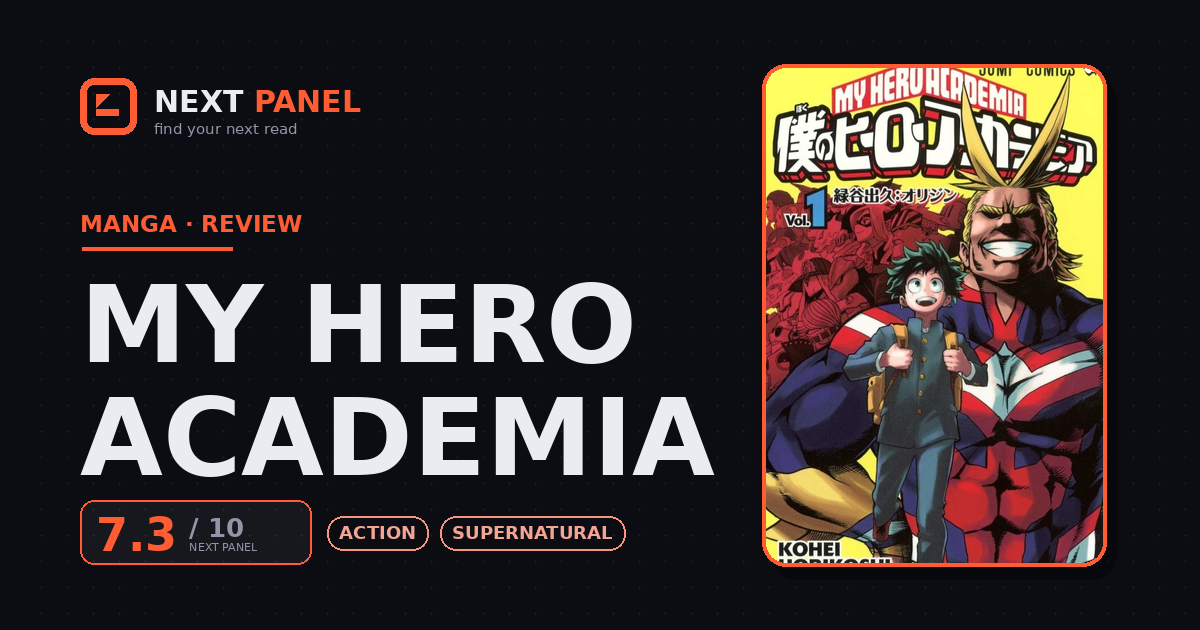
Is Black Clover similar to Naruto or My Hero Academia?
It shares the classic shonen underdog-training structure, but Asta's complete lack of magic and the Magic Knight squad system give it its own flavor rather than copying either one.