Is Blank Canvas: My So-Called Artist's Journey Worth Reading? Review
Quick Answer
Yes -- this autobiographical, award-winning manga about becoming an artist under a demanding, unconventional teacher earns its emotional weight by being genuinely true.
Quick Verdict
“Knowing this mentor-student story actually happened gives every hard lesson and payoff more weight than fiction usually manages.”
Best for: Readers who want a candid, autobiographical coming-of-age story about the slow, unglamorous work of becoming an artist.
Not for: Readers who want a story unrelated to art or the manga industry itself.
- Type
- Manga
- Genres
- Drama, Slice of Life
- Status
- Completed
- This review
- Minor Spoilers
- Author
- Akiko Higashimura
- Publisher
- Shueisha
- Platform
- Seven Seas Entertainment
| Quick facts | |
|---|---|
| Format | Manga, 34 chapters, 5 volumes |
| Run | 2011–2015 · completed |
| Community score | AniList 8.3 |
| Where to read | Seven Seas Entertainment — official |
Overview
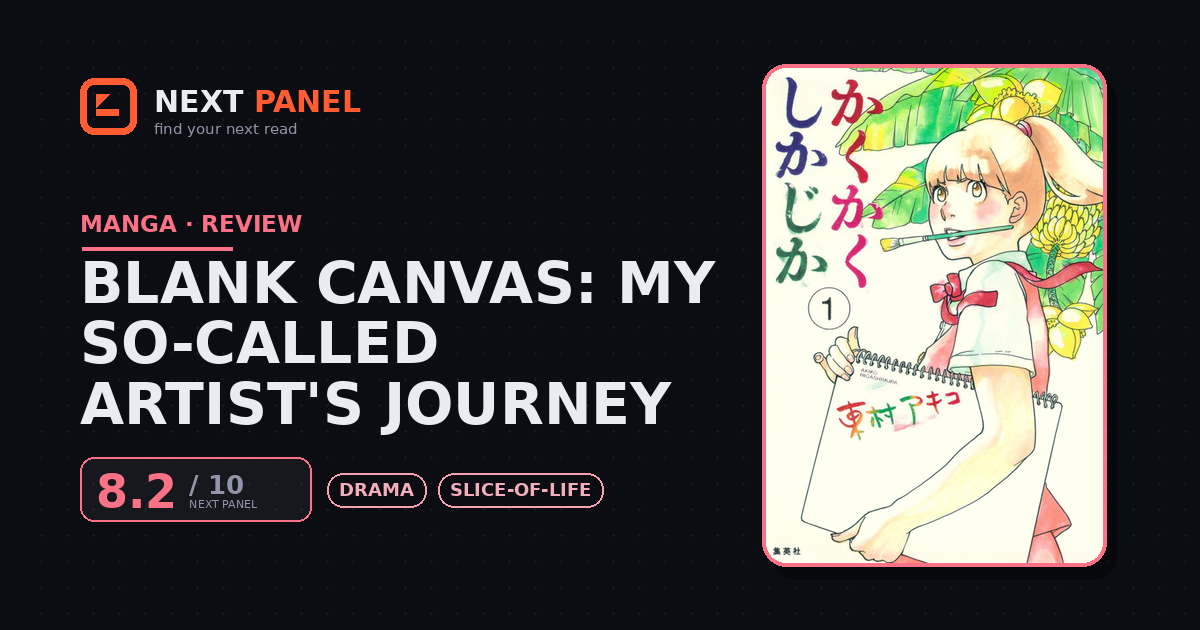
Blank Canvas: My So-Called Artist's Journey (Kakukaku Shikajika in Japan) is Akiko Higashimura's autobiographical manga about her own path to becoming a professional mangaka, published in English by Seven Seas. It's complete at 5 volumes and 34 chapters (2011-2015), and won the 2015 Manga Taisho Award along with the Grand Prize at the Japan Media Arts Festival's manga division. High-schooler Akiko dreams of becoming a popular manga artist and signs up for an art class expecting an easy fix. Instead she gets Kenzou Hidaka, a gruff, sword-wielding instructor who doesn't care about manga at all, only about making her actually learn to draw. The series follows their relationship from Akiko's teenage years into her adult career.
What it does well
Knowing this actually happened changes how the story lands. Fiction can invent a demanding mentor and a slow, hard-won creative journey, but Higashimura is telling us this is what it took for her specifically to become the artist she is, and that grounding gives every setback and small victory more weight than a similar invented story could manage.
Hidaka himself is the clearest example of why the real-life framing works. He's not a warm, encouraging teacher figure -- he's blunt, old-fashioned, and largely indifferent to manga as a medium, and the manga doesn't soften that to make him more palatable. The relationship earns its emotional payoff precisely because it's followed across real years, not compressed into a tidy arc.
Higashimura is also unflinching about her own shortcomings. She depicts her younger self as lazy, arrogant, and frequently ungrateful for the instruction she's getting, which makes the manga feel honest rather than self-congratulatory, and makes her eventual growth feel like something she had to actually earn.
Where it falls short
Because the story is explicitly about the process of becoming a manga artist, some of its most resonant chapters are aimed at readers who already care about art and the industry behind it. Readers without that interest may find certain stretches less gripping than the central relationship at the story's core.
The manga also jumps across large stretches of time -- from Akiko's teenage years into her adult career -- in sudden leaps, and it can take a moment to reorient after each one.
Verdict
Blank Canvas: My So-Called Artist's Journey turns Higashimura's own difficult, unglamorous path into a manga artist into a candid, award-winning coming-of-age story. The autobiographical honesty is what makes it stand out, and it's a strong pick for anyone who wants a mentor-student story with real stakes behind it.
Strengths & Weaknesses
Strengths
- Being genuinely autobiographical rather than just 'inspired by real events' gives the mentor-student relationship a weight and specificity fiction usually can't match.
- The gruff, unconventional teacher figure, Kenzou Hidaka, earns real emotional stakes because the manga follows the relationship across decades rather than a single arc.
- Higashimura doesn't flatter her younger self -- the manga is candid about her own laziness, arrogance, and mistakes along the way, which makes the eventual payoff feel earned rather than inevitable.
Weaknesses
- Because it's explicitly about the making of a manga artist, some of its most resonant beats are aimed at readers who already care about the craft and industry, and may land less for readers with no interest in that world.
- The structure jumps across Akiko's teenage years into adulthood in sudden leaps that can take a beat to reorient to.
Similar Titles
shares the unglamorous, hard-won portrayal of learning to make art seriously
another story about an artist forced to rebuild their craft and identity from scratch
similar quiet, character-driven drama about growth under a demanding mentor figure
Where to Read Officially
| Platform | Format | Pricing | Region notes | Link |
|---|---|---|---|---|
| Seven Seas Entertainment | Print and digital volumes | Paid | Region availability varies | Open |
Frequently Asked Questions
Is Blank Canvas based on a true story?
Yes, it's autobiographical -- it follows creator Akiko Higashimura's own path to becoming a professional mangaka.
Is it complete?
Yes, it finished in 2015 at 5 volumes and 34 chapters.
Where can I read it officially?
Seven Seas Entertainment publishes the English edition, in print and digital.
Has it won any awards?
Yes -- it won the 2015 Manga Taisho Award and the Grand Prize at the 19th Japan Media Arts Festival Manga Division.