Is The Color of the End Worth Reading? Review & Where to Read
Quick Answer
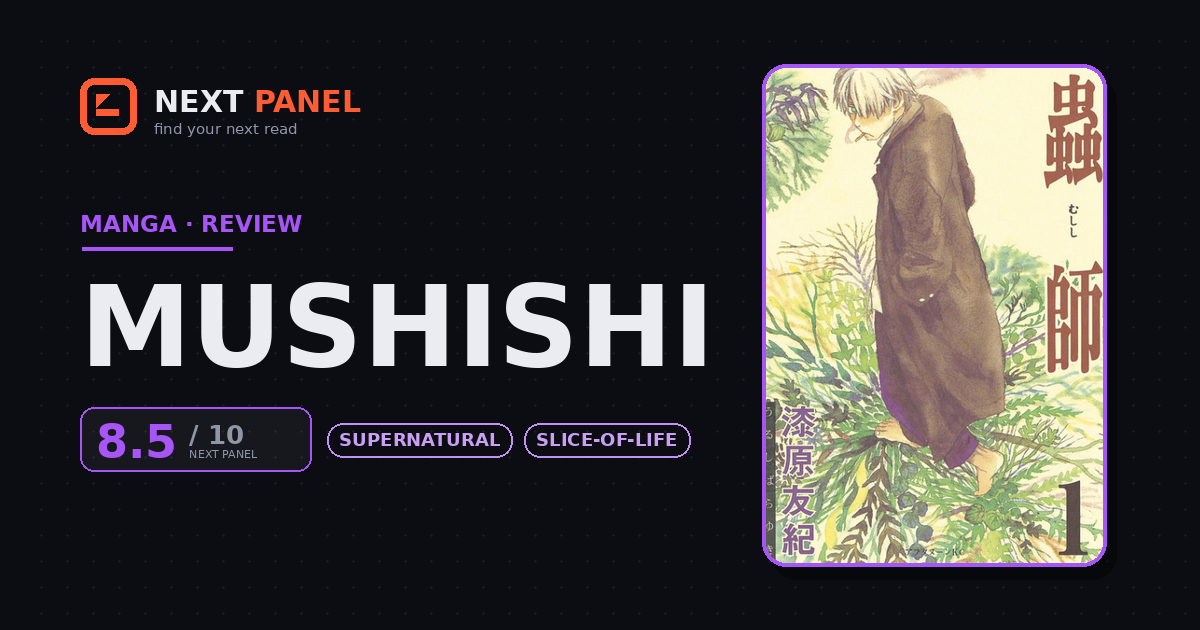
Yes, if you want a quiet, atmospheric post-apocalyptic series more interested in who's left and what they find in each other than in action spectacle. It earns comparisons to Mushishi for a reason.
Quick Verdict
“It treats a dead world as something to move through slowly and carefully, and lets the found-family threads that grow out of that stillness carry the real emotional weight.”
Best for: Readers who want a slow, character-driven post-apocalyptic story with real atmosphere over constant action.
Not for: Readers who want a fast-paced, action-heavy apocalypse story with constant forward momentum.
- Type
- Manga
- Genres
- Drama, Sci-Fi
- Status
- Ongoing
- Author
- Haruo Iwamune
- Publisher
- Enterbrain (Harta)
- Platform
- Yen Press
| Quick facts | |
|---|---|
| Format | Manga (seinen), 60 chapters |
| Run | 2022–present · ongoing |
| Community score | AniList 7.8 |
| Content | Body horror, isolation, violence |
| Where to read | Yen Press — official |
Overview
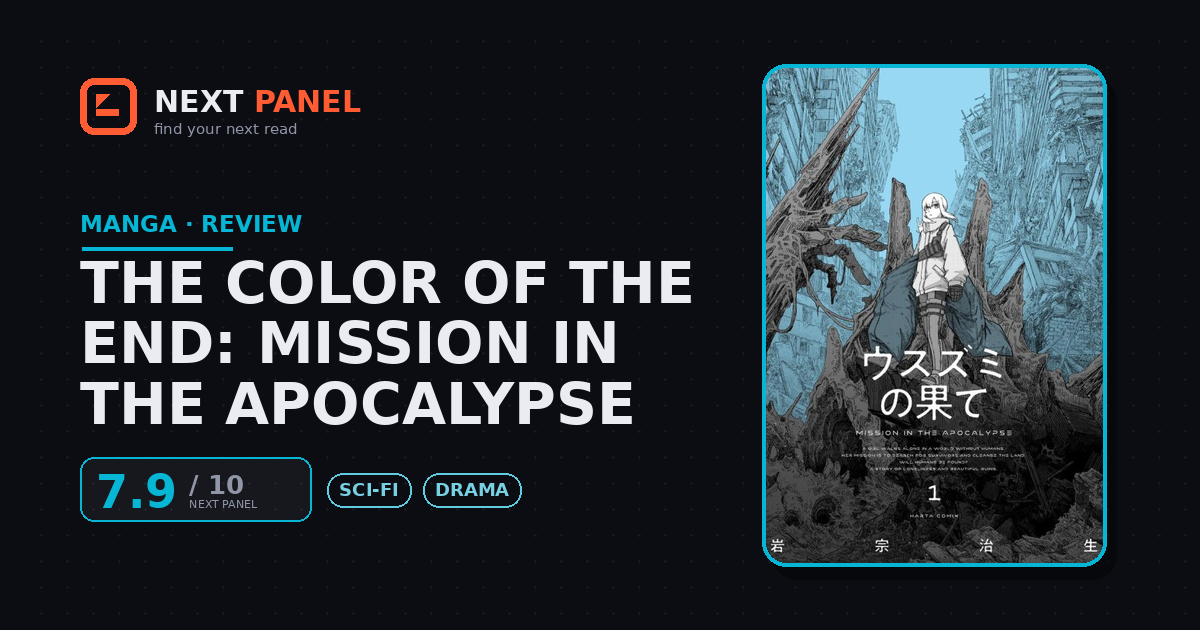
Saya walks alone through a world that's been emptied out by whatever catastrophe came before the story starts, searching for any survivors still out there and clearing away the contamination that's still killing what's left. Haruo Iwamune's The Color of the End: Mission in the Apocalypse builds its post-apocalyptic premise around patience rather than spectacle, serializing in Enterbrain's Harta since 2022 and licensed in English by Yen Press.
What it does well
The manga's defining choice is trusting stillness. Instead of racing toward the next crisis, it lets Saya's journey unfold slowly, giving the desolate setting real weight as something to actually move through rather than just a backdrop for action beats. That patience pays off in how the story handles its survivor encounters — Saya's mission gives the episodic structure real purpose, and the found-family relationships that grow out of those meetings feel earned rather than rushed into place by plot convenience.
The art matches that tone, rendering the ruined world with a specific, quiet beauty rather than defaulting to generic rubble-and-ash wasteland imagery. It's easy to see why the series draws comparisons to Mushishi — both share a commitment to episodic, atmospheric storytelling that's more interested in a character's internal state than in constant momentum.
Where it falls short
That same patience is going to be a real barrier for readers who want their apocalypse stories to move fast — this is a slow, contemplative read by design, and it won't satisfy anyone looking for consistent action. As an ongoing series, the larger mystery behind what actually happened to the world is still being doled out gradually rather than explained, so patience is required on that front too. And while most of the episodic survivor encounters land, their staying power varies more than the story's strongest chapters.
Verdict
The Color of the End is a genuinely atmospheric, patient post-apocalyptic manga that earns its Mushishi comparisons through real craft rather than just surface similarity. If you want a quiet, character-driven story about what's left after everything ends, this delivers. If you need constant action and forward momentum, the pacing will test you.
Strengths & Weaknesses
Strengths
- The pacing trusts silence and stillness rather than rushing toward the next plot beat, giving the desolate setting real weight instead of treating it as just a backdrop for action.
- Saya's mission — searching for survivors and clearing contamination — gives the episodic, meeting-people structure real purpose beyond just wandering from encounter to encounter.
- The found-family threads that develop as Saya meets other survivors are earned gradually, growing out of shared circumstance rather than convenient plot shortcuts.
- The art renders the ruined world with a specific, quiet beauty that matches the story's more contemplative tone, rather than leaning on generic wasteland imagery.
Weaknesses
- The deliberate pacing and quiet atmosphere will read as slow if you're looking for a more action-driven apocalypse story.
- As an ongoing series, the larger mystery of what actually happened to the world is still unfolding gradually rather than being explained.
- Some of the episodic survivor encounters vary in how much staying power they have compared to the strongest ones.
Similar Titles
A different premise entirely, but the same patient, atmospheric episodic structure and interest in quiet human moments.
A different tone, but a similar interest in two people moving slowly through a dead world and finding meaning in small moments.
Where to Read Officially
| Platform | Format | Pricing | Region notes | Link |
|---|---|---|---|---|
| Yen Press | Print & digital volumes | Paid | Region availability varies | Open |
Frequently Asked Questions
Is The Color of the End finished?
No, it's an ongoing manga, currently serializing in Enterbrain's Harta.
Is The Color of the End available in English?
Yes, Yen Press publishes it officially in English.
Is The Color of the End similar to Girls' Last Tour or Mushishi?
It's frequently compared to both, sharing Mushishi's episodic, atmospheric structure and a similar interest to Girls' Last Tour in quiet survival in a depopulated world.