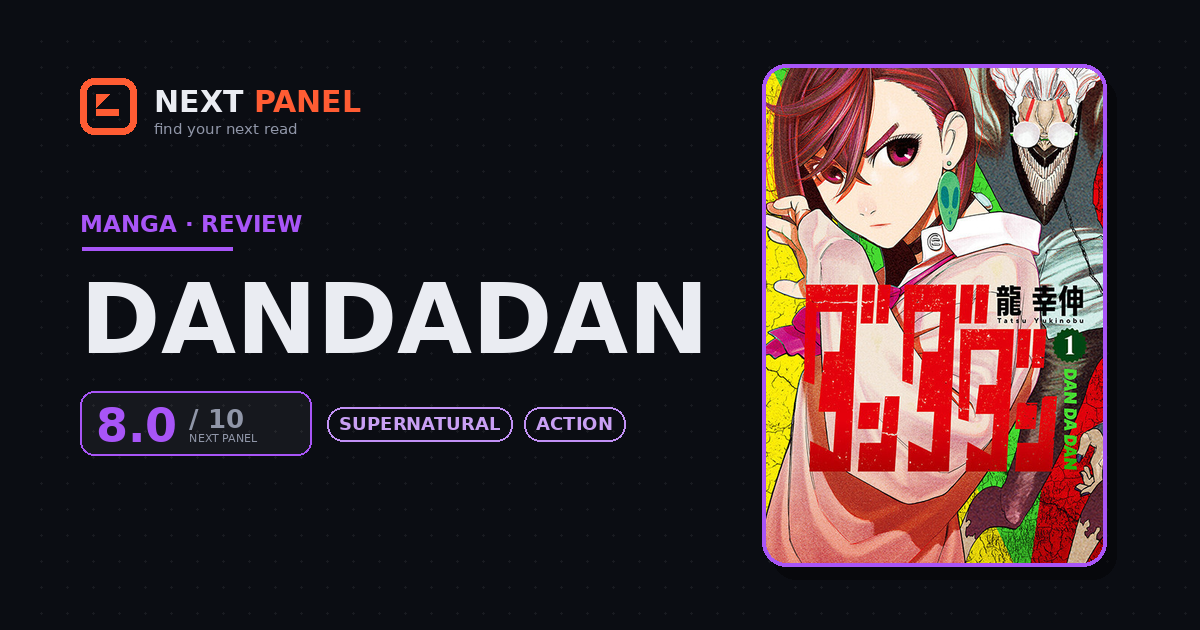
Is Dandadan Worth Reading? Spoiler-Light Manga Review
Quick Answer
Yes — it commits fully to being ridiculous and heartfelt at the same time, and that combination is rare enough to make it worth your time even if the genre mashup sounds like a mess on paper.
Quick Verdict
“Aliens versus ghosts sounds like a bit, and it stays a bit, right up until it isn't and you notice you actually care about these two.”
Best for: Readers who want supernatural chaos with real teenage awkwardness underneath it, not just monster-of-the-week spectacle.
Not for: Readers who want a calm, steadily-paced story instead of constant tonal whiplash and nonstop escalation.
- Type
- Manga
- Genres
- Action, Supernatural, Comedy
- Status
- Ongoing
- This review
- Minor Spoilers
- Author
- Yukinobu Tatsu
- Publisher
- Shueisha
- Platform
- VIZ Media / MANGA Plus
| Quick facts | |
|---|---|
| Format | Manga, 24 volumes |
| Run | 2021–present · ongoing |
| Community score | AniList 8.2 · MAL 8.4 · MangaUpdates 8.2 |
| Where to read | VIZ Media / MANGA Plus — official |
Overview
Dandadan starts with an argument that shouldn't carry a whole series: one teenager believes in aliens, the other believes in ghosts, and each thinks the other is an idiot for it. Then the manga does the thing that makes it work — instead of proving either kid right, it says they're both right, and keeps piling on from there until occult folklore, UFO paranoia, teenage embarrassment, and full battle-manga stakes are all sharing the same page.
This review isn't trying to map every arc. The real question for a new reader is simpler: is the opening promise strong enough to earn your time, and does the series keep finding new ways to pay it off? For most readers, yes.
What it does well
The series' best trick is how confidently it moves between registers. One page is slapstick comedy, the next is genuine horror-movie dread, and the one after that is a quiet, sincere character beat — and none of it feels like whiplash, because the emotional throughline never actually changes: these two are scared, excited, and trying not to let the other one see how much they care. That consistency underneath the chaos is what keeps the tone from collapsing.
The art is doing serious heavy lifting too. Pages often read like they're already in motion — speed, impact, and exaggerated expression selling jokes and fight beats before a single line of dialogue lands. It's some of the best pure comic-craft in current shonen.
And at the center of it all, Momo and Okarun are just a genuinely good pairing. Their dynamic is defensive and prickly and a little jealous in a way that reads like real teenagers navigating a crush neither of them will admit to, not two archetypes going through the motions of a will-they-won't-they. The monsters are memorable, but they're not why you stay.
Where it falls short
The opening stretch is a real gate for some readers — it leans hard into crude humor and body-horror imagery early, which is not the gentlest introduction if that's not the kind of thing you enjoy. It's worth pushing past if the core hook appeals to you, but it's fair to know it's coming.
The story's appetite for escalation is a double-edged sword. It's part of the fun, but it also means some arcs sprint through beats that a slower series would've let breathe, and the rules of each new supernatural threat get introduced fast enough that it's easy to lose the thread of exactly how any given power works.
Verdict
Dandadan is messy, loud, and constantly changing gears, and it's also one of the more purely fun ongoing manga running right now — precisely because it never loses sight of the two kids underneath all the noise. If you can handle a rough, crude opening stretch and don't need your supernatural action calmly paced, this is an easy recommendation.
Strengths & Weaknesses
Strengths
- It swings between slapstick, horror, and genuine tenderness on the same page without the shifts feeling jarring, because the emotional core — two kids who are scared, excited, and trying not to admit they care — never wavers.
- The art sells motion and impact better than almost anything else on shelves right now; fights and reactions read as fast and alive even in still panels.
- Momo and Okarun's relationship carries the whole thing — defensive, jealous, funny, and brave in ways that read like actual teenagers instead of genre archetypes.
- The monster designs are genuinely inventive, pulling from real occult and UFO folklore instead of generic creature-of-the-week filler.
Weaknesses
- The opening chapters lean hard into crude humor and body-horror imagery, which can be a rough on-ramp if that's not what you signed up for.
- The story's addiction to escalation means some arcs sprint past beats that could've used more room to land.
- New threats and rules get introduced fast enough that it's easy to lose track of exactly how the power systems work from arc to arc.
Similar Titles
Mob Psycho 100Manga
Same sincere-weird supernatural energy.
Chainsaw ManManga
Chaotic action with real emotional control.
Where to Read Officially
Frequently Asked Questions
Is Dandadan good for beginners?
Usually yes if the “Best for” section sounds like you. New readers should start with official preview chapters when available, because tone matters more than hype.
Is this review spoiler-free?
It is spoiler-light. It discusses the premise, style, reader fit, and general strengths without explaining major twists or late-arc reveals.
Where should I read it?
Use the official links in the Basic facts section. Availability can vary by country and app, so check the linked platform directly before buying or subscribing.