Is Food Wars! Worth Reading? Review & Where to Read
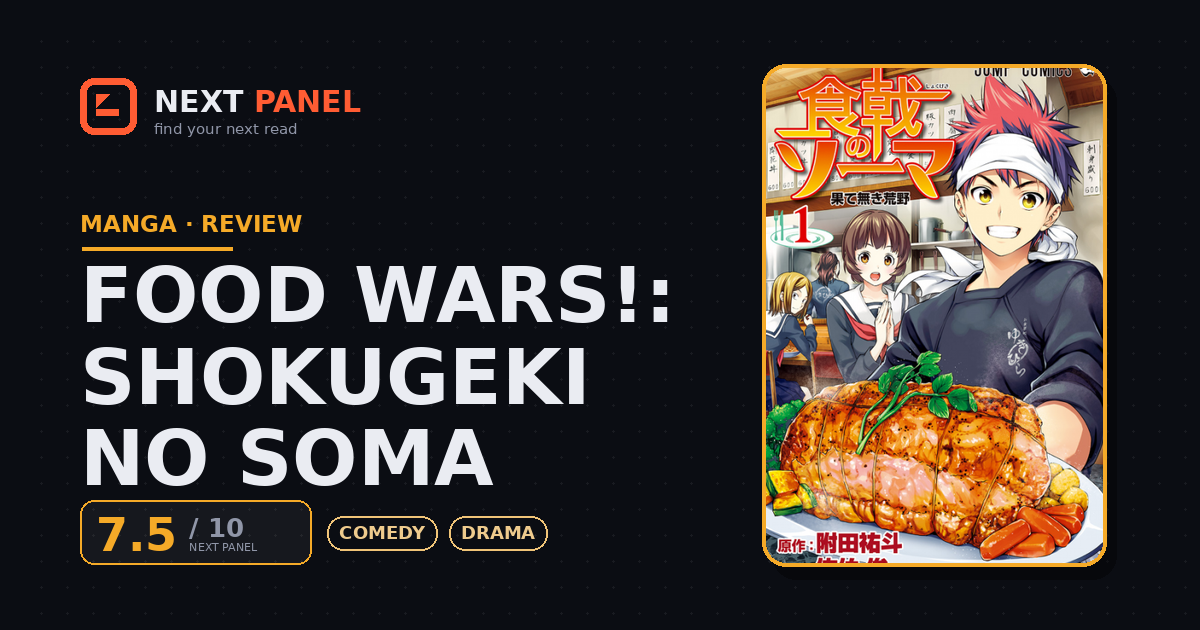
Quick Answer
Yes, if the premise appeals at all. Food Wars! commits fully to turning cooking into legitimate shonen battle stakes, with genuinely inventive food ideas driving most of its 36-volume run.
Quick Verdict
“Turning a cook-off into a shonen duel shouldn't work as well as it does, and the sheer inventiveness of the dishes carries this well past its most divisive stylistic tic.”
Best for: Shonen readers who want competitive battle-manga structure applied to food, with genuine culinary detail behind the spectacle.
Not for: Readers who want to skip constant over-the-top, sexualized reaction shots as the main way the story sells how good a dish tastes.
- Type
- Manga
- Genres
- Drama, Comedy
- Status
- Completed
- This review
- Minor Spoilers
- Author
- Yūto Tsukuda
- Artist
- Shun Saeki
- Publisher
- Shueisha
- Platform
- VIZ
| Quick facts | |
|---|---|
| Format | Manga (shōnen), 324 chapters, 36 volumes |
| Run | 2012–2019 · completed |
| Community score | AniList 7.4 · MangaUpdates 8.1 |
| Content | Fan service |
| Where to read | VIZ — official |
Overview
Soma Yukihira grew up cooking in his father's cheap, unpretentious diner, and he's good at it — good enough to enroll at Totsuki Culinary Academy, an elite school notorious for a brutal graduation rate and for settling disputes through Shokugeki: formal cook-off duels judged on taste alone, with real consequences for the loser. Yūto Tsukuda and Shun Saeki's Food Wars! follows Soma's rise through Totsuki's ranks, using diner-cooking resourcefulness to repeatedly outmaneuver classmates trained in fine dining and classical technique. It ran in Weekly Shōnen Jump from 2012 to 2019 and is complete at 36 volumes, fully available in English from Viz Media.
What it does well
The core trick of Food Wars! is treating cooking with the same structural seriousness a fighting manga gives combat, and it commits fully. Every Shokugeki has real stakes, a clear judging standard, and a genuine sense of escalation, which turns something as mundane as a cook-off into legitimately tense reading. That structure is backed up by real culinary imagination — the dishes Soma and his rivals invent are specific and inventive rather than generic "it's delicious" filler, and the manga clearly did its homework on technique and ingredients.
Soma's specific philosophy — that diner cooking built on instinct and resourcefulness can outmatch classically trained fine dining — gives the series a consistent point of view that pays off across dozens of duels. And the rival cast is genuinely deep: instead of one recurring antagonist, Food Wars! builds an entire bench of classmates and instructors, each with a distinct specialty and culinary philosophy, which keeps the duel format from feeling like the same fight redone with a new sauce.
Where it falls short
The most divisive element by far is the reaction shots. When a character eats something exceptional, the manga sells it through exaggerated, often overtly sexualized physical reactions, and this happens constantly, in nearly every chapter. It's a real stylistic signature of the series, but it's also going to be a dealbreaker for plenty of readers regardless of how good the surrounding material is.
Structurally, the later arcs — especially the extended storyline around the Central faction's tradition-versus-innovation ideology — lean on the same framing repeatedly, and the political maneuvering starts to feel like a formula the series returns to a few arcs too many times. Side characters also tend to lose focus once their specific arc wraps; a rival with a great specialty in one storyline may barely register again afterward.
Verdict
Food Wars! makes a genuinely bold structural choice — treating a cook-off with the stakes of a shonen fight scene — and mostly earns it through real culinary inventiveness and a deep rival cast. The fan service is a real and constant presence you should know about going in, but underneath it is one of the more distinctive competitive shonen series out there.
Strengths & Weaknesses
Strengths
- The Shokugeki duel structure gives cooking real competitive stakes, turning kitchen technique into legitimate shonen-battle drama judged entirely on taste.
- The food itself is drawn and conceived with real inventiveness — dishes read as genuinely creative culinary ideas rather than generic 'delicious meal' filler.
- Soma's underdog, resourceful diner-cooking philosophy gives the whole series a consistent point of view about food that fine-dining snobbery keeps having to reckon with.
- A deep bench of rival characters, each built around a distinct culinary specialty and philosophy, keeps the recurring duel structure from feeling repetitive.
Weaknesses
- The exaggerated, often sexualized reaction shots used to sell how good a dish tastes are a constant presence and a real dealbreaker for some readers.
- Later arcs, particularly the Central/tradition-vs-innovation political storyline, lean on a fairly repetitive framing across multiple arcs in a row.
- Some side characters' culinary specialties get sidelined once their specific arc's usefulness has passed.
Similar Titles
same competitive-cooking-duel shonen structure, focused on bread instead of fine dining
similar underdog-rising-through-the-ranks structure, in a completely different genre
Where to Read Officially
| Platform | Format | Pricing | Region notes | Link |
|---|---|---|---|---|
| VIZ | Digital chapters | Print & digital volumes | Paid | Region availability varies | Open |
Frequently Asked Questions
Is Food Wars! finished?
Yes, it's complete at 36 volumes (2012-2019), fully available in English from Viz Media.
Is Food Wars! just fan service with cooking as an excuse?
The fan service is a real, constant presence, but the culinary detail and duel structure are genuine strengths on their own — it's not purely a delivery vehicle for the reaction shots.
Do I need to know about cooking to enjoy it?
No, the manga explains techniques and ingredients as it goes, so no outside culinary knowledge is required.