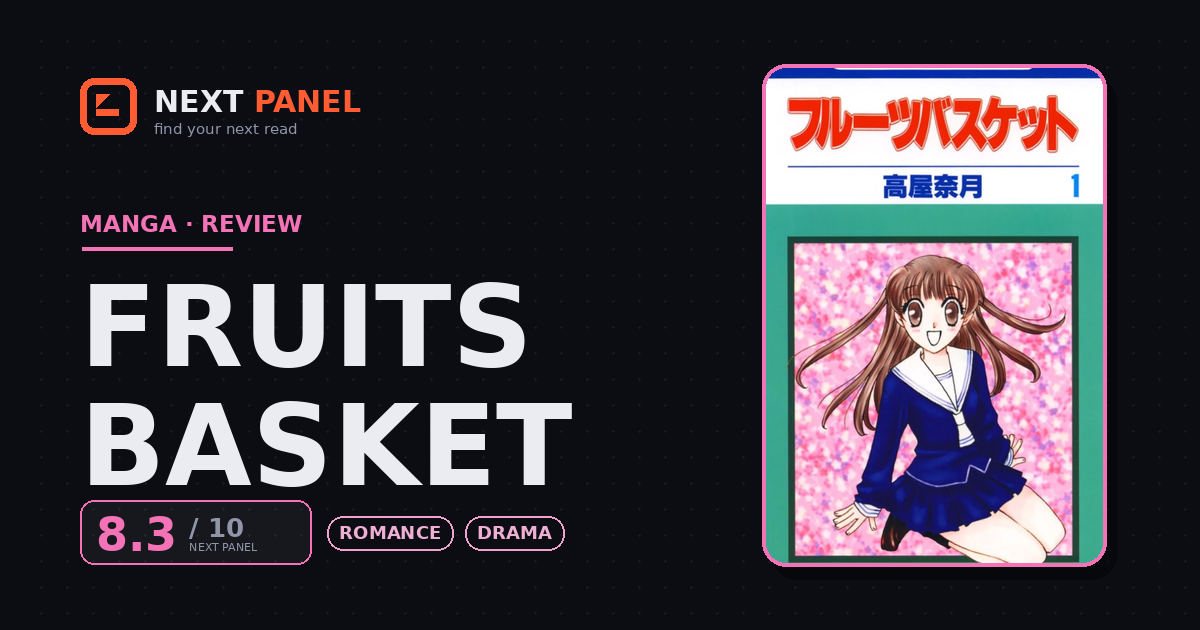
Is Fruits Basket Worth Reading? Review & Where to Read
Quick Answer
Yes — it's a shojo landmark. Fruits Basket follows kind-hearted, orphaned Tohru, who ends up living with the Sohma family, who transform into zodiac animals when hugged. What starts as a charming supernatural comedy slowly becomes a deeply emotional story about trauma, loneliness, and healing, with one of the genre's best casts. The early episodic chapters and dated art take patience, but it builds into something genuinely moving and unforgettable.
Quick Verdict
“It starts cute and silly, then quietly becomes one of the most emotionally devastating, healing stories in shojo — a slow burn that earns every tear.”
Best for: Readers who want a deeply emotional shojo about trauma, healing, and found family, wrapped in a charming supernatural premise.
Not for: Readers who want a fast-moving, action-driven story and a modern, polished art style.
- Type
- Manga
- Genres
- Romance, Drama
- Status
- Completed
- This review
- Minor Spoilers
- Author
- Natsuki Takaya
- Publisher
- Hakusensha / Yen Press
- Platform
- Yen Press
| Quick facts | |
|---|---|
| Format | Manga (shōjo), 137 chapters, 23 volumes |
| Run | 1998–2006 · completed |
| Community score | AniList 8.5 · MAL 6.7 · MangaUpdates 8.7 |
| Content | Trauma, abuse, and grief themes |
| Where to read | Yen Press — official |
Overview
Fruits Basket is one of the defining shojo manga — a story that starts as a cute supernatural comedy and slowly reveals itself as a profound, heart-wrenching exploration of trauma and healing. Tohru Honda is a relentlessly kind, recently orphaned high-schooler quietly living in a tent when she stumbles into the lives of the mysterious Sohma family. The Sohmas carry a strange curse: thirteen of them transform into animals of the Chinese zodiac when they're hugged by someone of the opposite sex, or when they're weak. Taken in by them, the warm, selfless Tohru begins to see past the curse's whimsy to the deep loneliness and pain it has caused — and her presence starts, gently, to change them. It's written and drawn by Natsuki Takaya, ran in Hana to Yume, and is complete in 23 volumes.
What it does well
Its emotional depth is extraordinary, and it sneaks up on you. What begins as light, charming zodiac-curse comedy gradually becomes a deeply serious story about loneliness, abuse, grief, and the slow, hard work of healing. The Sohma curse is a beautiful metaphor for the ways trauma isolates people, and as the series peels back each character's wounds, it earns a level of catharsis few manga reach. By the end, it's genuinely devastating in the best way.
The cast is the heart of it. Tohru is a wonderful, deceptively complex heroine — her kindness is a real, hard-won strength, not naivety — and the enormous Sohma family are vivid, damaged, and lovable. Watching these hurt people slowly open up and care for each other is the whole point, and the relationships, romantic and otherwise, are tender and earned.
It's also wise and warm in a way that lingers. The series has real things to say about love, self-worth, and breaking generational cycles of pain, and it says them with sincerity rather than sap.
Where it falls short
It's a slow burn with a misleading start. The early volumes are light, episodic, and comedic, and it takes a while for the deeper story to emerge — readers expecting the emotional powerhouse from chapter one may find the opening stretch slight. Patience is rewarded, but it's required.
The art is also very much of its late-90s shojo era — delicate, sometimes busy, with the slightly stiff faces and screentone-heavy style of the period — which takes adjustment for modern readers. And the huge cast and tangled family history can get confusing before everything clicks into place.
Verdict
Fruits Basket is a shojo masterpiece — a story that disguises itself as a cute curse comedy and becomes one of the most moving, thoughtful explorations of trauma and healing in all of manga. Its slow start and dated art are real hurdles, and it asks for patience, but the payoff is immense: a warm, wise, devastating story with characters you'll never forget. If you give it the time, it's essential, and it's complete.
Strengths & Weaknesses
Strengths
- Its emotional depth is extraordinary and sneaks up on you — a light zodiac comedy that becomes a serious, cathartic story about loneliness and healing.
- The Sohma curse is a beautiful metaphor for how trauma isolates people, and peeling back each character's wounds earns rare catharsis.
- Tohru is a wonderful, deceptively complex heroine whose kindness is a hard-won strength, and the huge Sohma cast is vivid and lovable.
- It's wise and warm about love, self-worth, and breaking cycles of pain, sincere rather than saccharine.
Weaknesses
- It's a slow burn with a light, episodic, comedic start, so the deeper story takes a while to emerge.
- The art is very much of its late-90s shojo era — delicate and screentone-heavy — which takes adjustment.
- The huge cast and tangled family history can get confusing before it all clicks.
Similar Titles
Gentle supernatural healing and found family, with the same warm, melancholy heart.
A lonely kid slowly found and healed by a makeshift family — beautifully emotional.
Another beloved, emotionally rich shojo with a lovable cast and real growth.
Where to Read Officially
| Platform | Format | Pricing | Region notes | Link |
|---|---|---|---|---|
| Yen Press | Print & digital volumes | Paid | Region availability varies | Open |
Frequently Asked Questions
Is Fruits Basket finished?
Yes. It ran from 1998 to 2006 and is complete in 23 volumes, available in English from Yen Press in a Collector's Edition (12 oversized omnibus volumes).
Is it a comedy or a drama?
Both — it starts as a charming supernatural comedy and gradually deepens into a serious, emotional drama about trauma and healing. The shift is part of its magic.
Is the 2019 anime the same story?
Yes, the 2019-2021 anime adapts the full manga faithfully (the older 2001 anime only covered the early part). The manga is the complete original.