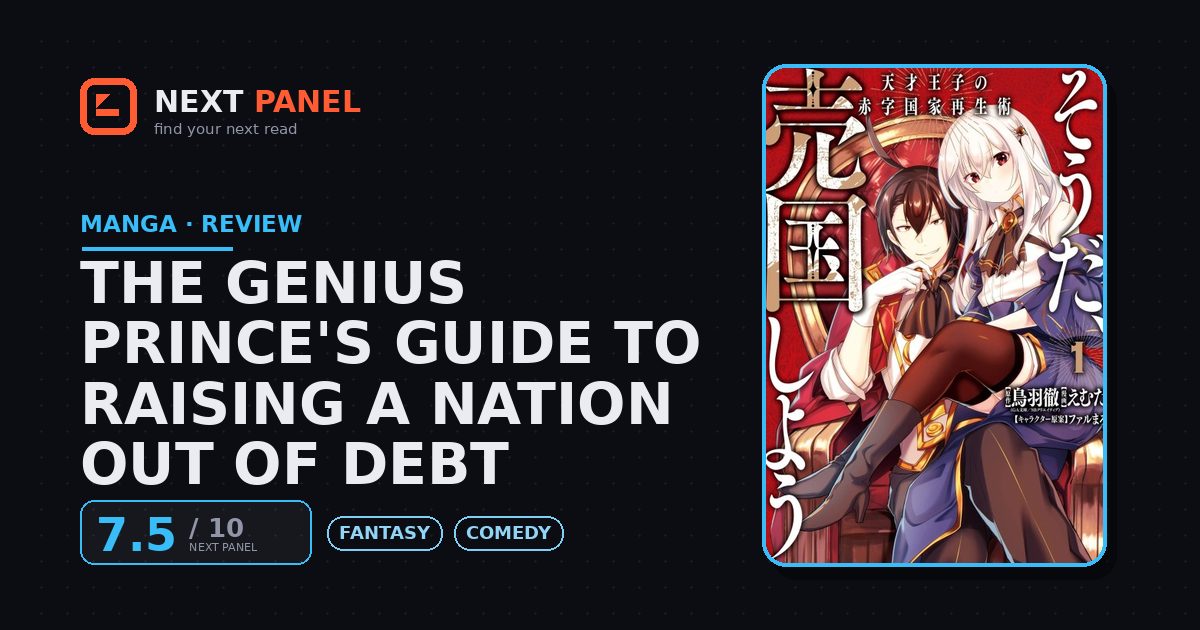
Is The Genius Prince's Guide to Raising a Nation Out of Debt Worth Reading? Review & Where to Read
Quick Answer
Yes, especially if you like political scheming played for comedy instead of grim seriousness. The joke of a genius constantly outsmarting himself into more work never really gets old.
Quick Verdict
“Every scheme to lose backfires into another win — somehow that joke carries an entire political-comedy series.”
Best for: Readers who want political and military strategy told through comedy rather than grimdark stakes.
Not for: Readers who want a straightforward hero's-journey power fantasy or fast-paced action over scheming and dialogue.
- Type
- Manga
- Genres
- Fantasy, Comedy
- Status
- Ongoing
- This review
- Minor Spoilers
- Author
- Toru Toba
- Artist
- Emuda
- Publisher
- Square Enix
- Platform
- Manga UP!
| Quick facts | |
|---|---|
| Format | Manga, 18 volumes |
| Run | 2019–present · ongoing |
| Community score | AniList 6.8 · MangaUpdates 6.5 |
| Where to read | Manga Up! — official |
Overview
Wein Salema Arbalest inherited a small, mountainous, broke country surrounded by three larger powers, and his entire plan is to get it annexed by one of them so he can retire from ruling and live quietly as a bureaucrat somewhere. The joke is that Wein is, without question, a genius — and every clever move he makes to engineer his nation's fall ends up making it stronger, richer, or more strategically valuable instead. The manga follows him and his aide Ninym as they navigate a web of larger empires, rival princes, and internal politics, with Wein constantly trying to lose and constantly failing to.
It's a premise that could get thin fast, but the manga earns its laughs by taking the political maneuvering seriously even while playing the outcome for comedy.
What it does well
The central conceit works because Wein's plans are genuinely smart. He's not a bumbling idiot who stumbles into success — he correctly identifies leverage, plays factions against each other, and solves problems with real strategic insight. The comedy comes entirely from the gap between his intentions (fail, retire, relax) and his competence (he can't help but win). That gap stays funny because the writing never cheats it; you can see exactly why each of his schemes backfires into success.
Wein and Ninym carry the emotional core of the story. She's his aide, his oldest friend, and the only person who fully understands what he's actually trying to do, and their scenes together have a lived-in warmth that grounds all the political chess around them. It's a slow-burn dynamic that the manga is smart enough not to rush.
The political maneuvering itself is genuinely readable. A lot of genius-strategist stories tell you a character is brilliant and expect you to take it on faith; this one shows the reasoning, lets you follow the moves as they happen, and rewards paying attention. Rival nobles and foreign dignitaries get enough characterization that the larger political map feels like it's made of people, not just labeled territories.
Where it falls short
The premise is a one-joke engine, and it does start to feel repetitive over a long stretch — Wein schemes to lose, Wein wins anyway, repeat. It works because each individual scheme is clever, but the shape of the story rarely surprises once you know the formula.
Action is a secondary concern here, and it shows. When fights or battles do happen, they tend to be resolved quickly in favor of getting back to the political conversation, which can feel like an afterthought if you're hoping for more physical spectacle.
A few arcs wrap up a little too cleanly given the stakes established going in, which can undercut tension in the moment even if the resolution makes narrative sense in hindsight.
Verdict
The Genius Prince's Guide is a comedy that respects its own premise enough to actually think through the political and military logic behind every joke. If you want scheming played smart rather than slapstick, and you don't mind a plot that runs on one very good idea for a long time, it's a consistently entertaining read — and Wein and Ninym's partnership gives it more heart than the premise alone would suggest.
Strengths & Weaknesses
Strengths
- The core joke — a genius who wants to fail but keeps succeeding by accident — stays funny because his solutions are genuinely clever, not just lucky.
- Wein and Ninym's dynamic is the emotional backbone of the series, playing an odd-couple political partnership as something quietly sincere without turning saccharine.
- The political and military maneuvering is legible on the page — you can follow the plans as they unfold instead of just being told a character is smart.
- Side characters, especially rival nations' representatives, get enough personality that the political chess never feels like faceless factions.
Weaknesses
- The one-joke premise (Wein wants to lose, wins anyway) does start to feel repetitive if you binge large chunks at once.
- Action scenes are secondary to the scheming and can feel perfunctory when they do show up.
- Some arcs resolve a little too neatly for the stakes the story sets up.
Similar Titles
Similar blend of comedy and competent characters working an elaborate long game.
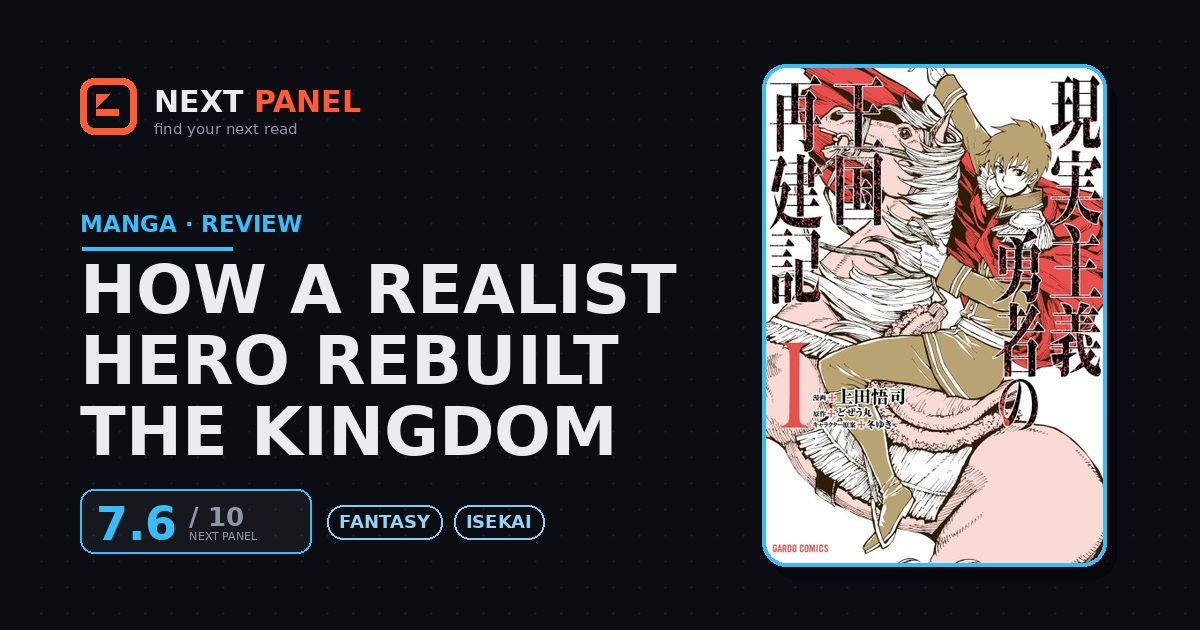
How a Realist Hero Rebuilt the Kingdom
Another political-strategy fantasy that favors economics and planning over combat.
Where to Read Officially
| Platform | Format | Pricing | Region notes | Link |
|---|---|---|---|---|
| Manga UP! | Digital chapters | Free + Paid | Region availability varies | Open |
Frequently Asked Questions
Is this the same story as the anime?
Yes, the manga adapts the same light novel source and covers the same early arcs, with some pacing differences.
Do I need to read the light novels first?
No, the manga stands on its own, though the novels go further and add extra detail.
Is it more comedy or more political drama?
Both, roughly evenly split — the humor comes from how seriously the scheming is played.