Is Glasses With a Chance of Delinquent Worth Reading? Review & Where to Read
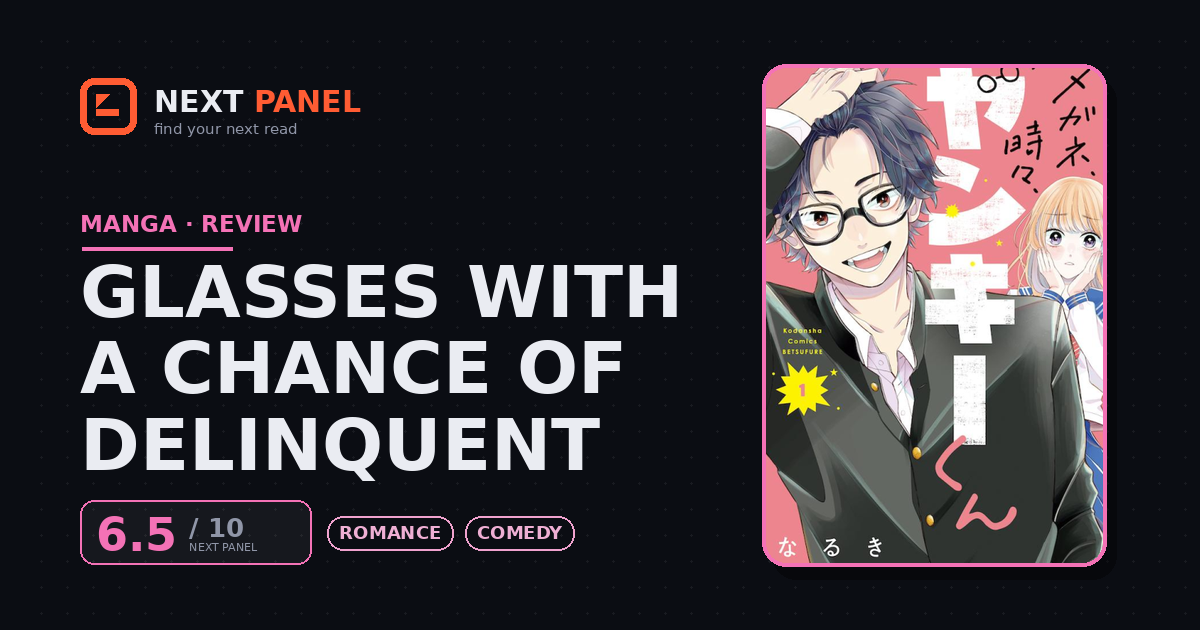
Quick Answer
Yes, if you enjoy earnest high-school-debut shoujo romance and don't mind a rocky, sometimes possessive turn along the way.
Quick Verdict
“It's an earnest, well-meaning romance that improves as it goes, even when one plot turn tests how comfortable you are with a jealous love interest.”
Best for: Fans of shoujo romance who like a 'both leads are secretly reinventing themselves' hook and don't need a flawless love interest from chapter one.
Not for: Readers who want a love interest who's steady and comfortable with boundaries from the start, rather than one who grows into it.
- Type
- Manga
- Genres
- Romance, Comedy
- Status
- Ongoing
- This review
- Minor Spoilers
- Author
- Naruki
- Publisher
- Kodansha
- Platform
- Seven Seas Entertainment / K Manga
| Quick facts | |
|---|---|
| Format | Manga |
| Run | 2021–present · ongoing |
| Community score | AniList 7.6 |
| Where to read | Seven Seas Entertainment / K Manga — official |
Overview
Momose's middle school years were rough, spent as an unwilling errand girl for the delinquents and gyaru who ran her school's social order. Determined not to repeat that experience, she remakes herself for high school: new hair, new contacts, and a plan to blend in as someone aggressively unremarkable. It's working, right up until she meets Ichikura, the studious, bespectacled classmate who runs their school's one-man Helpers Club. He seems perfectly safe. Then she realizes he's hiding a delinquent past of his own, and the two of them, both quietly trying to become someone new, start to notice each other.
What it does well
The smartest thing this manga does is give both leads the same core arc instead of just one: Momose and Ichikura are each reinventing themselves, and that symmetry gives their growing relationship a real foundation beyond simple romantic chemistry. Naruki treats their stumbles and relapses into old habits with genuine sympathy rather than using them purely for cringe comedy, which makes both characters easy to root for even when they mess up.
The series also earns real credit for its handling of the expected rival subplot: when an old acquaintance of Ichikura's transfers to their school, the twist isn't a crush on Momose but a desire to understand Ichikura's transformation and rebuild their friendship. It's a clever subversion of a very tired romance trope, even as it opens the door to a jealousy angle that some readers will find appealing in its own right. With 11-plus volumes currently out and a newly announced anime adaptation, there's also a lot of story here for readers who click with the setup.
Where it falls short
The most significant issue readers flag is Ichikura's behavior around volume three, where his affection tips into possessiveness — lines like declaring Momose is 'his' can read as romantic to some and uncomfortably controlling to others, and it's a real fork in the road for how much you'll enjoy the later chapters of the early volumes. This is also Naruki's first serialized manga, and it shows in places, particularly in page layouts that take some time to find their footing before the visual storytelling gets more confident.
Beyond that, the central premise doesn't push far beyond a familiar high-school-debut romance formula — its cleverness is mostly in execution and the rival subplot rather than in reinventing the genre. And because it's an ongoing series, readers are at the mercy of the official translation schedule for new volumes rather than being able to read straight through.
Verdict
Glasses With a Chance of Delinquent is an earnest, sympathetically written high-school-debut romance that gets more confident as it goes, even with a rockier turn in its third volume that won't sit right with everyone. Worth reading for shoujo romance fans who want a 'both leads are reinventing themselves' hook and don't need their love interest to be perfect from page one.
Strengths & Weaknesses
Strengths
- The core hook — both leads are quietly reinventing themselves, not just one of them — gives the high-school-debut romance formula a nice symmetry.
- Both Momose and Ichikura are earnestly trying to change and grow, and the story treats their stumbles with real sympathy rather than played for easy cringe.
- The rival subplot subverts the usual love-triangle setup in a genuinely clever way, using jealousy without falling back on a tired rival-for-her-affection cliché.
- As a long-running series with 11+ volumes and counting (plus a newly announced anime), there's a substantial amount of material for readers who latch onto it.
Weaknesses
- Ichikura's affection tips into possessiveness at points, particularly around volume three, which will read as uncomfortable rather than romantic for some readers.
- This is creator Naruki's first serialized manga, and the early volumes show it, especially in page layouts that take a while to settle into a confident rhythm.
- The central premise is a fairly familiar high-school-debut romance formula, without much ambition to reinvent the genre beyond its central twist.
- As an ongoing series without an English release date for every volume, keeping up means accepting the pace of official translations.
Similar Titles
World's Strongest Troll
A very different genre if you want more comedy-forward chaos instead of earnest teen romance.
Footsteps in the Snow
A shorter, complete romance if you'd rather not commit to an ongoing series.
Where to Read Officially
| Platform | Format | Pricing | Region notes | Link |
|---|---|---|---|---|
| Seven Seas Entertainment / K Manga | Print / digital volumes; also simulpubbed digitally on K Manga | Free + Paid | Region availability varies | Open |
Frequently Asked Questions
Is Glasses With a Chance of Delinquent finished?
No, it's ongoing, with 11 volumes released in Japan as of mid-2026 and an anime adaptation announced in April 2026.
Where can I read Glasses With a Chance of Delinquent in English?
It's officially available in print and digital volumes from Seven Seas Entertainment, and simulpubbed digitally through Kodansha's K Manga service.
Is the male lead's behavior ever addressed as a problem in the story?
The story treats his possessiveness as something he's actively working through as part of his character growth, rather than something the narrative endorses outright, though how well that lands is a matter of reader taste.