Is God-Level Assassin, I'm the Shadow Worth Reading? Review & Where to Read
Quick Answer
It's a competent, familiar entry in the betrayal-and-regression genre — solid if you're already a fan of the formula, but it doesn't do much to distinguish itself from the crowded field around it.
Quick Verdict
“Cutting the sister loose instead of forgiving her is a blunt, satisfying pivot, even if the story around it plays everything else safe.”
Best for: Readers who want a straightforward betrayal-and-payback power fantasy without much interest in subverting the formula.
Not for: Readers who want their revenge-regression story to bring something genuinely new to a very crowded genre.
- Type
- Manhua
- Genres
- Regression, Action
- Status
- Ongoing
- This review
- Minor Spoilers
- Author
- Wujinhai Studio
- Publisher
- Unlicensed (Chinese webcomic)
| Quick facts | |
|---|---|
| Format | Manhua |
| Run | ongoing |
| Content | Violence, body horror, family betrayal |
Overview
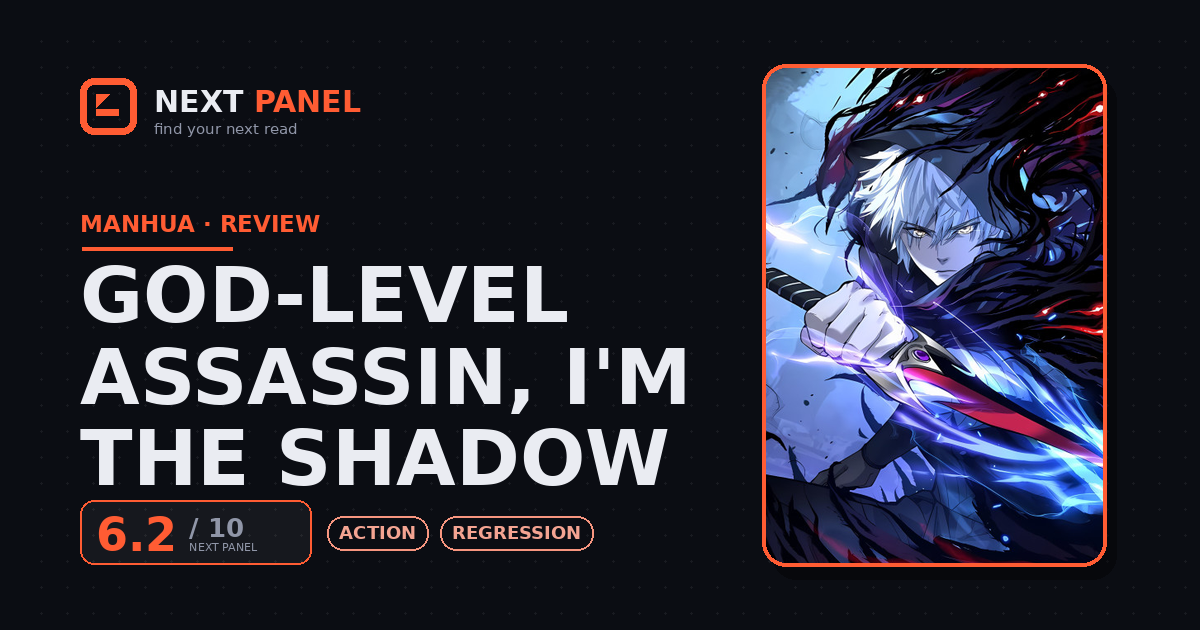
Qin Feng gave up everything to protect his sister, Qin Xiaoyou, clawing his way to become one of the top 100 fighters in a world reshaped by the game God's Forsaken — a system where players gain lifespan by killing monsters and can burn that lifespan to manifest in-game power in reality. His reward for all that sacrifice: his own sister, obsessed with a celebrity idol, gouges out his eyes to hand over as a gift. Fate — or the story's regression mechanic — sends him back nine years, before any of it happened. This time, Qin Feng isn't protecting anyone but himself.
It's a premise built entirely on genre furniture readers of Chinese web-manhua will recognize instantly: betrayal, a second chance, a power system with clean rules. The question is whether the execution does enough with that furniture to be worth your time, and the answer here is a qualified yes.
What it does well
The betrayal itself is doing real work. It would have been easy to write a vague falling-out to justify Qin Feng's hardened second-life mindset, but making the betrayal this specific and brutal — his own sister taking his eyes, literally, for a celebrity crush — gives his coldness in the second timeline real weight instead of feeling like an arbitrary personality shift.
The more interesting choice is what the story does with that betrayal afterward: instead of setting up a slow-burn redemption arc where Qin Feng eventually forgives his sister, the story lets him simply cut her loose and move on. That's a blunter, less sentimental choice than this genre usually makes, and it's more satisfying for it — there's no dangling thread where you're waiting for the story to soften on someone who doesn't deserve it.
The power system is also easy to follow. Trading banked lifespan for real-world strength is a clean mechanic that keeps the action readable without requiring the reader to track a dozen overlapping rules, which matters in a genre that can get bogged down in system jargon.
Where it falls short
The honest issue is that almost nothing here is new. Betrayed protagonist, timeline reset, game-mechanics-made-real power system — this is the genre's standard toolkit, assembled competently but without much ambition to push past it. Readers who've read a handful of similar regression revenge stories will recognize the shape immediately.
The supporting cast outside the two central family members is thin right now — allies exist mostly to react to Qin Feng's growing strength rather than pursue goals of their own, which flattens some of the stakes outside the central grudge.
Verdict
This is a solidly built, if unambitious, entry in the betrayal-and-regression genre, elevated by a genuinely brutal inciting betrayal and the nerve to let its lead simply walk away from the person who wronged him instead of forgiving her. It won't convert anyone who's tired of this formula, but if you're already a fan of it, this is a competent one to add to the pile.
Strengths & Weaknesses
Strengths
- The betrayal at the center is genuinely brutal and specific — a sister literally taking her brother's eyes for a celebrity crush — which gives Qin Feng's hardened second-life mindset real justification instead of vague resentment.
- Choosing to cut his sister loose rather than set up a redemption arc is a blunter, more satisfying choice than this genre usually makes, and it commits to it.
- The 'system' hook — trading lifespan gained from monster kills for real-world power — is a clean, easy-to-follow mechanic that keeps the action legible.
Weaknesses
- The setup is extremely familiar: betrayed protagonist, second chance via regression, a power system converting game mechanics into reality — none of it is new ground for the genre.
- The supporting cast outside Qin Feng and his sister is thin so far, with allies mostly there to admire his growing strength.
- No official English license yet, so English readers are limited to fan translations for now.
Similar Titles
similar betrayed-and-reborn revenge structure with a harder edge
Solo Leveling
for readers who want the same power-system mechanics executed with sharper art and pacing
The Book Eating Actor
another regression story built around discarding a toxic family bond instead of repairing it
Frequently Asked Questions
Is God-Level Assassin, I'm the Shadow finished?
No, it's ongoing, with around 60 chapters released so far.
Is there an official English translation?
Not yet — there's no confirmed English license as of this review; we'll revisit this if that changes.
Does Qin Feng reconcile with his sister?
No spoilers on specifics, but the story is upfront early on that this isn't heading toward a redemption arc for her.