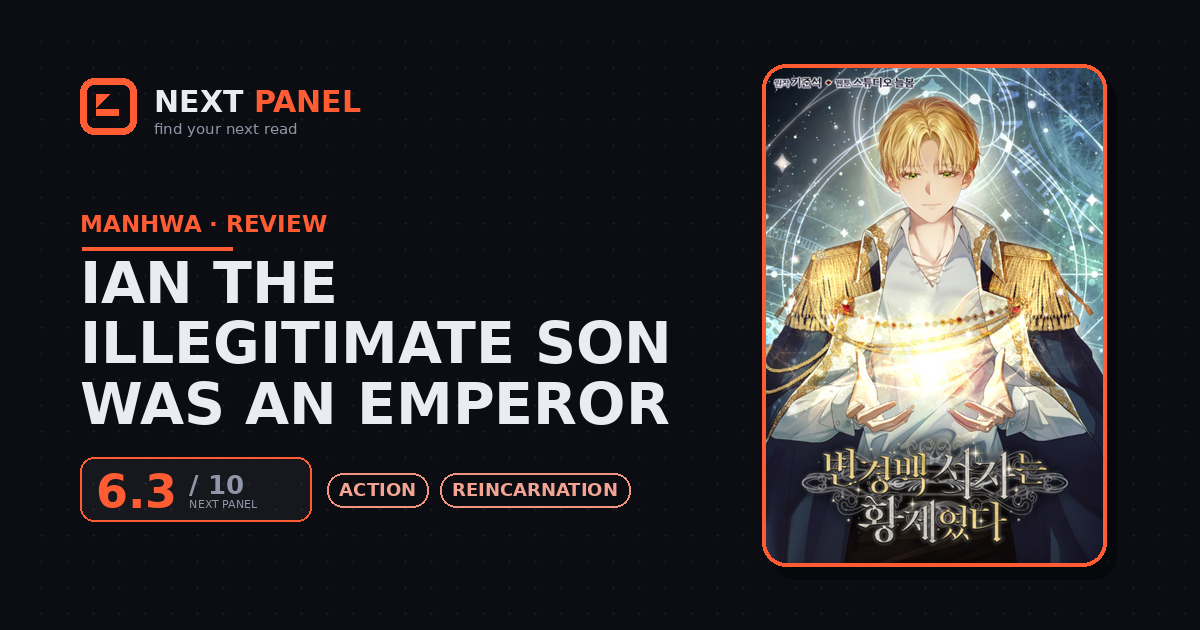
Is Ian the Illegitimate Son Was an Emperor Worth Reading? Review & Where to Read
Quick Answer
With real reservations — the political setup is genuinely smart, but the pacing is uneven enough across its run that it's a harder recommendation than most of this genre.
Quick Verdict
“Sharper political plotting than the average reincarnation manhwa, dragged down by a pace that keeps stalling right when it should be accelerating.”
Best for: Readers who want political maneuvering and slow-built power over instant strength and fast action.
Not for: Readers who want overpowered fight scenes early or a consistently brisk pace from chapter one.
- Type
- Manhwa
- Genres
- Reincarnation, Action
- Status
- Ongoing
- This review
- Minor Spoilers
- Author
- Ki Junseok
- Artist
- Studio Neulbom
- Publisher
- Kakao
- Platform
- Tapas
| Quick facts | |
|---|---|
| Format | Manhwa (seinen), 118 chapters |
| Run | 2024–present · ongoing |
| Community score | AniList 6.6 · MangaUpdates 6.5 |
| Content | Family abuse, betrayal |
| Where to read | Tapas — official |
Overview
Ian the Illegitimate Son Was an Emperor is an ongoing Korean manhwa by Ki Junseok with art by Studio Neulbom, published in English on Tapas. Betrayed and dying as Emperor Ian Verocian, a powerful mage sends himself back a hundred years with a forbidden spell — and wakes up as Ian Vratz, the illegitimate son of a margrave, with none of his old power, army, or standing. Worse, he learns he's about to be sent off to a desert tribe as a political pawn in a treaty he has no say in. With only his memories of the future and his wits to work with, Ian has to claw his way from powerless bastard son toward something resembling the position he lost.
It's a familiar reincarnation-in-the-past setup, but the choice to strip the protagonist of power rather than let him keep it gives the story a different texture than most of its genre neighbors.
What it does well
The smartest choice here is restraint: Ian doesn't retain his old magic or army, just his knowledge and judgment, so his early victories come from reading people, spotting plots, and playing a weak hand well rather than steamrolling obstacles with strength he shouldn't have yet. That makes the political maneuvering — between his own hostile family, the desert tribe he's traded to, and the wider imperial court — feel like it actually matters, since Ian genuinely can't just fight his way out of trouble. Plans set up early pay off several chapters later instead of resolving in the same scene, which is a level of patience this genre doesn't always bother with.
The art also grows noticeably stronger as the series goes on. The opening arc has solid, if fairly standard, manhwa art that suits its somber tone, but later chapters show a clear jump in polish and confidence. And through all of it, Ian stays an active protagonist — thinking several steps ahead rather than reacting to the plot around him.
Where it falls short
The pacing is the series' biggest weak point, and it's not a minor complaint. There are real stretches where very little happens across multiple chapters, and one long run of the story compresses an unusual amount of plot into a single winter season in-universe, which reads as sluggish even by slow-burn political-drama standards. The second arc, while it has real high points, doesn't consistently match the sharpness of the opening — a few plot turns lean on characters making avoidable mistakes rather than the smarter plotting the first arc established. And if you're picking this up expecting overpowered magic or frequent action, that payoff is a long way off; this is a political thriller wearing a reincarnation-fantasy premise.
Verdict
This is a smarter-than-average political reincarnation manhwa when it's firing — the powerless-protagonist setup forces genuinely interesting plotting instead of easy power fantasy. But the uneven pacing and a dip in quality partway through keep it from being an easy recommendation. Worth trying if slow-burn court intrigue appeals to you; skip it if you want action up front.
Strengths & Weaknesses
Strengths
- The premise avoids the genre's usual instant power-up — Ian wakes up as a powerless illegitimate son with no army and no standing, so his early wins come from reading people and situations correctly, not from combat strength he doesn't have yet.
- The political maneuvering between his own hostile family, a desert tribe he's sent to as a treaty pawn, and the wider empire is genuinely well constructed, with plans that pay off a few chapters later instead of resolving instantly.
- The art visibly improves across the run, especially once the story shifts into its second arc, giving later chapters a more polished look than the already-solid opening.
- Ian himself stays consistently sharp and proactive rather than becoming a passive observer once the political stakes escalate.
Weaknesses
- The pacing is a real problem in stretches — entire chapters pass with minimal plot movement, and one particularly slow run compresses an unusual amount of story into a single in-universe season, which readers have flagged as a genuine drag.
- The second arc's quality dips compared to the strong opening, with some plotting choices (like key characters forgetting basic precautions) feeling like a step down from the sharper first arc.
- If you're hoping for early action or overpowered fight scenes, you'll be waiting a long time — this is a slow-burn political story first.
Similar Titles
Similar political-outsider-rebuilding-power structure with an emphasis on maneuvering over raw strength.
Same appetite for court intrigue and long-game political plotting in an imperial setting.
Where to Read Officially
| Platform | Format | Pricing | Region notes | Link |
|---|---|---|---|---|
| Tapas | Digital chapters (free with wait, or unlocked with Ink) | Free + Paid | Region availability varies | Open |
Frequently Asked Questions
Does Ian get his memories and magic from his life as emperor?
Yes — he retains full knowledge of his future as Emperor Ian Verocian, but wakes up in a powerless position as a margrave's illegitimate son, so he has to rebuild standing and influence from near-zero rather than starting strong.
Is this more action or more political intrigue?
Political intrigue, clearly. Early chapters focus on family conflict and a political marriage-treaty plot; direct combat and action take a back seat to maneuvering and information.
Is the pacing consistent throughout?
No — reader reception specifically flags the pacing as uneven, with slower stretches that some readers find genuinely frustrating alongside sharper, tighter arcs.