Is Magus of the Library Worth Reading? Review & Where to Read
Quick Answer
Yes, especially if you love books and libraries as a subject in their own right -- this is one of the most thoughtful, lovingly-drawn 'love of reading' stories currently running, with real substance behind the premise.
Quick Verdict
“Built around the idea that access to books and knowledge is worth fighting for, and drawn with enough craft to make that argument land.”
Best for: Readers who love stories about libraries, books, and the fight for access to knowledge, told with real emotional and social stakes.
Not for: Readers who want fast-paced action or a plot-heavy fantasy rather than a slower, character- and theme-driven one.
- Type
- Manga
- Genres
- Drama, Fantasy
- Status
- Ongoing
- This review
- Minor Spoilers
- Author
- Mitsu Izumi
- Publisher
- Kodansha
- Platform
- Kodansha
| Quick facts | |
|---|---|
| Format | Manga (seinen) |
| Run | 2017–present · ongoing |
| Community score | AniList 8.3 |
| Content | Discrimination, poverty |
| Where to read | Kodansha — official |
Overview
Magus of the Library follows Theo, a half-elf boy growing up poor in a small village, barred from using its library because of what he is rather than who he is. His only escape is dreaming of Aftzaak, the legendary city of books, until he meets Sedona, a Kafna -- one of the great library's traveling librarians -- and his life starts moving toward the world he'd only imagined. Written and drawn by Mitsu Izumi, it's been running in Kodansha's Good! Afternoon since 2017, is up to ten volumes and still ongoing, and placed in the top five of Japan's prestigious 2025 Manga Taishou Award.
What it does well
What separates this from other "kid who loves books" fantasies is how seriously it takes the idea that access to knowledge is something people are denied, not just something some people happen to enjoy more than others. Theo's exclusion from his village library isn't a throwaway detail -- it's tied directly to prejudice against his heritage, and the story uses that thread to explore discrimination and class without ever turning into a lecture. The Arabian Nights-inspired setting gives it a distinct visual identity that Western-medieval fantasy rarely reaches for, and Izumi uses it well.
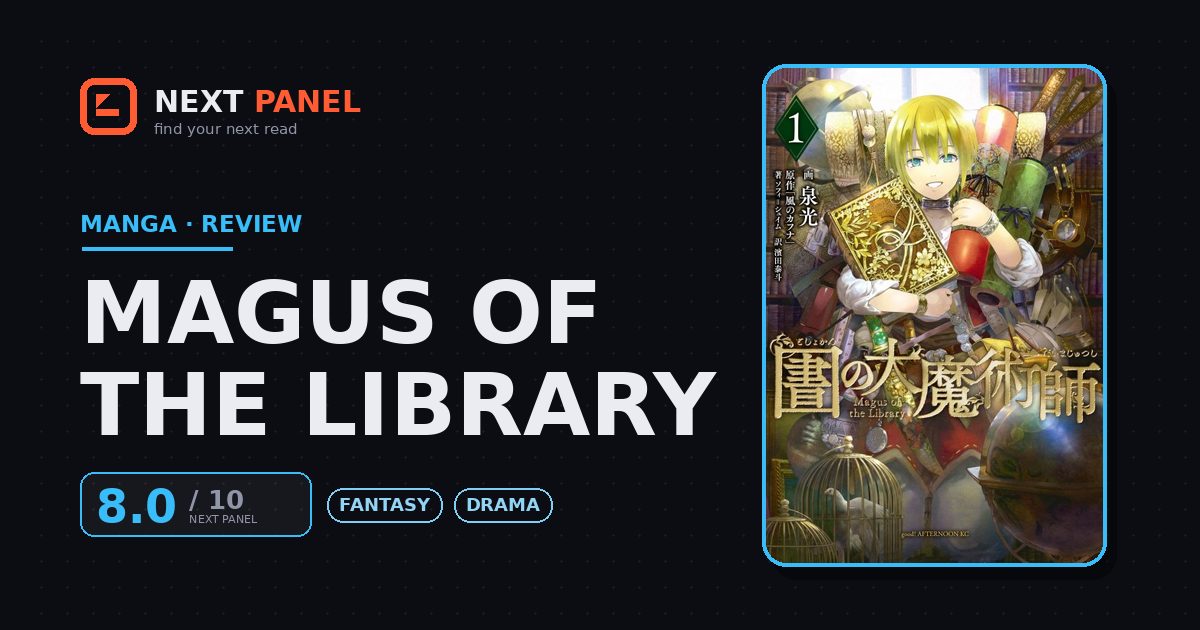
The art is the other major draw. Library interiors, city architecture, and costume design are rendered with a level of care that makes the world feel genuinely lived-in, and because libraries are functionally the emotional center of the story, that visual investment pays off constantly rather than just in the occasional splash page. It's not an exaggeration to say the art does real narrative work here -- you believe Theo's longing for Aftzaak because the book makes you feel it too.
The pacing, while unhurried, is purposeful. Character relationships and worldbuilding get room to breathe, and the emotional beats around Theo's growth land because the story earns them instead of rushing past them.
Where it falls short
That same patience is going to be a real sticking point for some readers. This isn't a fantasy built on escalating action or twist-driven plotting -- it moves slowly and trusts the reader to stay invested in ideas and relationships, and if that's not what you're looking for, the early volumes especially can feel like a lot of setup. At ten volumes in and still ongoing, several bigger worldbuilding questions clearly haven't been answered yet, so it's a story you're joining mid-journey rather than one you can experience as a complete arc right now. And the same lush, detailed art that makes the book so distinctive can occasionally slow a reader down if you're moving through it quickly rather than lingering on the pages.
Verdict
Magus of the Library is a patient, gorgeously drawn fantasy that treats books and libraries as something worth genuinely fighting for, and it backs that idea up with real craft. If you want a slower fantasy with real thematic weight behind its beauty, this belongs near the top of your list.
Strengths & Weaknesses
Strengths
- The premise -- a poor, half-elf boy who idolizes books he isn't allowed to touch -- gives the fantasy setting real social stakes from the first chapter, instead of treating 'love of reading' as a shallow character quirk.
- Mitsu Izumi's art is genuinely gorgeous, especially the architecture and library interiors, which matter enormously in a story where libraries themselves are practically characters.
- It uses its Arabian Nights-inflected setting to explore prejudice and access to knowledge without turning preachy, letting the worldbuilding carry the theme instead of stating it outright.
- The series was ranked in the top five of Japan's 2025 Manga Taishou Award, a strong signal of how well the wider manga industry rates its craft.
Weaknesses
- The pace is deliberate -- this is a slow-building fantasy about ideas and relationships more than plot momentum, so readers who want quick escalation may find the early volumes too patient.
- As an ongoing series with ten volumes released so far, some larger worldbuilding questions are clearly still being saved for later, so it doesn't yet offer a complete arc.
- The dense visual detail that makes the art so striking can occasionally slow down a casual read-through.
Similar Titles
shares a similarly lush, detailed fantasy art style and a thoughtful, character-first approach to its world
Frieren: Beyond Journey's End
for readers who want another slower, reflective fantasy that trusts its themes over constant plot escalation
Where to Read Officially
| Platform | Format | Pricing | Region notes | Link |
|---|---|---|---|---|
| Kodansha | Digital chapters | Print volumes | Paid | Region availability varies | Open |
Frequently Asked Questions
Is Magus of the Library finished?
No, it's still ongoing, currently at 10 volumes in Japan.
Is it appropriate for younger readers?
It's rated as seinen and deals with themes like poverty and discrimination, but it isn't graphic -- mature teens and up should be fine with it.
Where can I read it officially in English?
Kodansha publishes it officially in English, both digitally and in print volumes.