Is Mazinger Z Worth Reading? Review & Where to Read
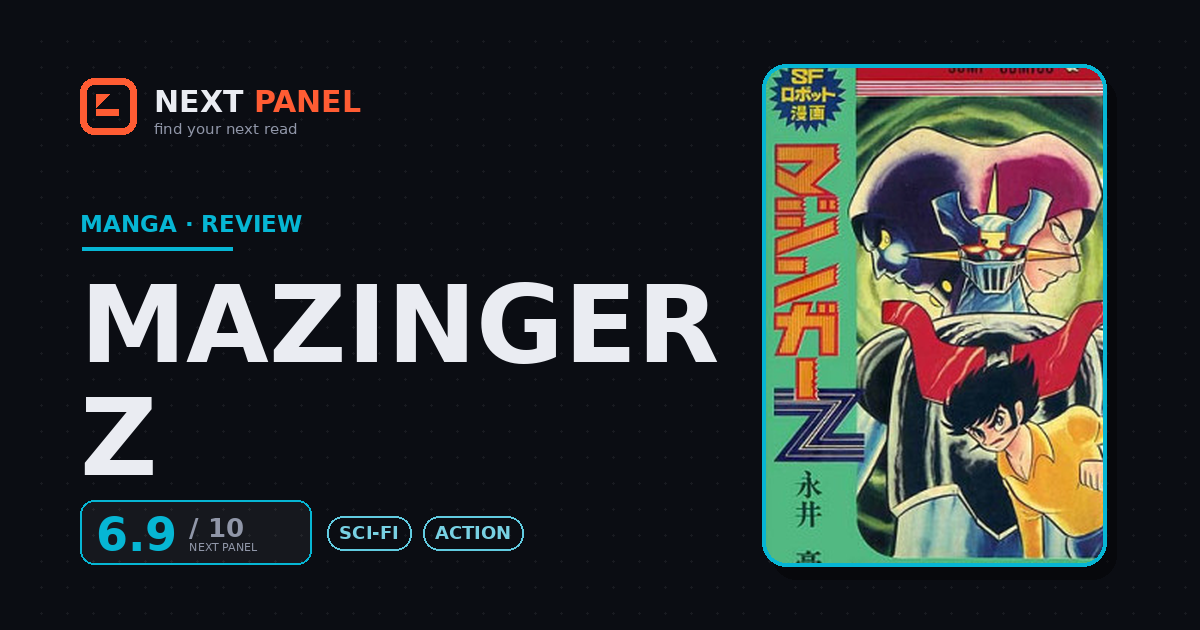
Quick Answer
If you want to see where the whole idea of a person piloting from inside a giant robot actually started, yes — this is ground zero. As a standalone read it's rougher and thinner than what it inspired, but it moves fast and never overstays its welcome.
Quick Verdict
“Short, mean, and historically enormous — read it for what it started, and you'll still have fun along the way.”
Best for: Readers curious about the actual origin of the pilot-inside-a-giant-robot mecha genre.
Not for: Readers who want deep characterization or a slower, more deliberately plotted story.
- Type
- Manga
- Genres
- Sci-Fi, Action
- Status
- Completed
- This review
- Minor Spoilers
- Author
- Go Nagai
- Publisher
- Shueisha (Weekly Shōnen Jump)
| Quick facts | |
|---|---|
| Format | Manga (shōnen), 45 chapters, 5 volumes |
| Run | 1972–1973 · completed |
| Community score | AniList 6.3 · MangaUpdates 6.5 |
| Content | Violence |
Overview
Every giant robot anime where a kid climbs inside a machine and fights with a joystick owes something to Mazinger Z. Go Nagai's 1972 manga is the one that put a human pilot literally inside a giant robot's head for the first time, and everything from Gundam to Neon Genesis Evangelion traces a line back to that idea. Kouji Kabuto inherits his grandfather's creation, Mazinger Z, and uses it to fight off the mechanical monsters of the villainous Dr. Hell, who wants the same Photonic Power technology for his own conquest of the world.
What it does well
The historical weight here is real, but it's not the only reason to read it, the manga is also just a fun, fast action comic. Nagai draws fights with a nasty energy that keeps every chapter moving, and Dr. Hell's rotating cast of monstrous machines gives each arc a distinct, memorable threat rather than a repeat of the last one. Kouji is a hot-blooded, uncomplicated hero who throws himself at problems without overthinking them, which suits the manga's breakneck pace perfectly, there's no wasted time on hand-wringing before the next fight starts.
The Photonic Power Lab setup, with its mix of scientists, rival machines, and escalating threats, still reads like a genuinely inventive toy box of ideas even decades later. Nagai was clearly having fun coming up with new ways for Dr. Hell's forces to attack and new tricks for Mazinger Z to counter them with, and that inventiveness carries the reading experience even when the character writing around it stays simple. There's also a real sense of scale to the destruction on the page, buildings and cities get wrecked in ways that make the stakes feel immediate rather than abstract.
Where it falls short
This isn't a manga built for characterization. Kouji and the supporting cast get one or two defining traits each and rarely more, and the plot is almost entirely episodic, beat the monster, move to the next chapter, repeat. If you're used to modern mecha stories with slower-building drama and political intrigue, this earlier, rawer version will feel thin by comparison. Some of the period-specific humor and side material hasn't aged especially well either, and a few of the female characters are written in ways that reflect the era more than they'd fly in a comic published today.
The pacing, while brisk, also means the story rarely lingers on consequences. Villages get destroyed and rebuilt within a chapter or two, and there's little sense of an ongoing world reacting to the war between Mazinger Z and Dr. Hell beyond the next battle.
Verdict
Mazinger Z is short enough to read in an afternoon and genuinely worth it for anyone curious where the mecha genre's most basic idea actually came from. It's not a deep read, but it's a fast, mean one, and its fingerprints are all over almost everything that followed it.
Strengths & Weaknesses
Strengths
- This is literally the manga that invented the idea of a human pilot sitting inside a giant robot, and its influence on the entire mecha genre is hard to overstate.
- Nagai's action is fast and mean, with Dr. Hell's monster-of-the-week machines giving each chapter a clear, escalating threat.
- Kouji Kabuto is an appealingly hot-blooded lead who throws himself into fights without hesitation, keeping the pace brisk.
- The Photonic Power Lab setup and rogue's gallery of mechanical beasts still feel like a genuinely fun toy box of ideas.
Weaknesses
- Characterization is thin even by early-'70s shōnen standards — most of the cast exists to react to the next monster attack.
- The plotting is episodic and rarely builds toward anything beyond the next fight.
- Some of the humor and side material hasn't aged especially gracefully.
Similar Titles
Getter Robo
The other foundational mecha manga from the same era, sharing Nagai's brutal, kinetic energy.
Cyborg 009
Another early team-of-heroes action manga with a similar comic-book pace.
Space Pirate Captain Harlock
A fellow 1970s sci-fi landmark, though far moodier and slower in tone.
Frequently Asked Questions
Is the Mazinger Z manga finished?
Yes — it ran in Weekly Shōnen Jump and TV Magazine from 1972 to 1974 and tells a complete story in five collected volumes.
Where can I read Mazinger Z in English?
The original manga has never had an official English release. Seven Seas has licensed other Go Nagai classics like Devilman and Getter Robo Devolution, so it's possible Mazinger Z could get a similar release someday, but nothing is confirmed as of now.
Do I need to watch the anime to understand the manga?
No — the manga and the 1972 anime were produced around the same time and tell different versions of the story, so you can read this on its own.