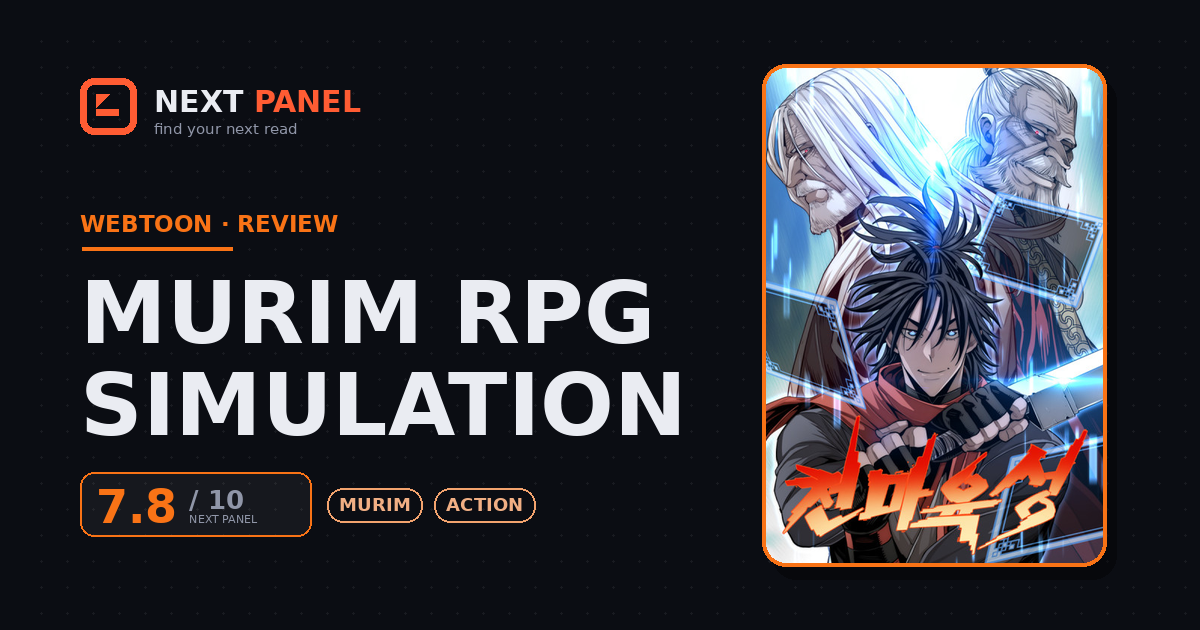
Is Murim RPG Simulation Worth Reading? Review & Where to Read
Quick Answer
Yes, especially if you like murim regression stories with a literal game-system hook. Starting from the bottom of the Demon Cult's hierarchy makes Seolhwi's growth feel gradual and earned rather than instant.
Quick Verdict
“Give a disposable soldier an actual game interface instead of vague foreknowledge, and his climb through a crowded organization feels sharper than the usual regression story.”
Best for: Readers who enjoy murim regression fantasy with clear game-system mechanics and a lead who starts from genuine nothing.
Not for: Readers who want a wholly original premise rather than a well-executed version of the regression-through-a-system genre.
- Type
- Webtoon
- Genres
- Action, Murim
- Status
- Ongoing
- This review
- Minor Spoilers
- Author
- Hyung Geun Cho
- Artist
- Kwang Hwi
- Publisher
- Naver Webtoon
- Platform
- WEBTOON
| Quick facts | |
|---|---|
| Format | Webtoon, 187 chapters |
| Run | 2021–present · ongoing |
| Community score | AniList 7.4 · MangaUpdates 7.4 |
| Where to read | WEBTOON — official |
Overview
Seolhwi is a low-ranking scout for the Demon Cult, the kind of soldier who exists to die quietly on routine patrols. That's exactly what happens when his squad runs into a Mount Hua Sect master and gets slaughtered on the spot. But as Seolhwi bleeds out, something impossible happens: a video game prompt asks if he wants to start again. He takes the offer, wakes up back at the beginning, and this time he's not going to be the disposable scout who dies in the first skirmish. He's going to climb the Demon Cult from the bottom up, using knowledge no one else in this world could possibly have.
It's a murim regression story wrapped in literal game mechanics — stats, prompts, restart options — which gives Seolhwi's climb a different texture than the usual "reincarnated genius" version of this premise.
What it does well
The game-system framing does real work here. Seolhwi isn't just remembering a past life, he's operating with an actual interface — stats to build, choices that visibly branch, a system nudging him toward specific outcomes — and that gives his decision-making a clarity and stakes that a looser "I remember everything" regression story doesn't have. Starting from the literal bottom of the Demon Cult's hierarchy also means his early growth feels gradual and earned rather than an instant jump to relevance.
The Demon Cult itself is drawn with real internal texture — factions, rivalries, and power struggles that Seolhwi has to navigate carefully rather than just fight through, with allies like So Ryeong giving him support and stakes beyond his own survival. Action is a strength throughout: fights are choreographed clearly, and the martial arts have a distinct, grounded weight to them that a lot of murim webtoons reach for but don't always land.
Where it falls short
The regression-through-a-game-system setup is one of several similar premises currently crowding the murim genre, and the broad shape — climb from nothing, use foreknowledge, avoid past mistakes — will feel familiar if you've read a few of these already. The game-mechanic framing, while a nice hook, doesn't always integrate as tightly into the plot's stakes as it could; some chapters lean on it more as flavor than as a driving mechanic. A few of the Demon Cult's rank-and-file characters blur together early on before the story gives them room to stand out.
Verdict
A disposable soldier climbing his own organization from the bottom, armed with literal game-system knowledge instead of just vague foreknowledge, gives Murim RPG Simulation a clear hook within a crowded genre. If murim regression stories are already your thing, Seolhwi's climb through the Demon Cult is a well-executed, long-running entry worth the time.
Strengths & Weaknesses
Strengths
- The literal game-system framing (stats, prompts, restarts) gives Seolhwi's decisions more clarity and stakes than a looser foreknowledge-based regression story.
- Starting from the actual bottom of the Demon Cult's hierarchy makes his climb feel gradual and earned rather than an instant jump to relevance.
- The Demon Cult is drawn with real internal texture — factions and rivalries Seolhwi has to navigate rather than just fight through.
- Action is clearly choreographed, with martial arts that carry real grounded weight.
Weaknesses
- The regression-through-a-game-system setup is one of several similar premises in a currently crowded murim genre.
- The game-mechanic framing doesn't always integrate as tightly into the plot's stakes as it could, sometimes reading as flavor rather than a driving mechanic.
- Several of the Demon Cult's rank-and-file characters blur together before getting room to stand out individually.
Similar Titles
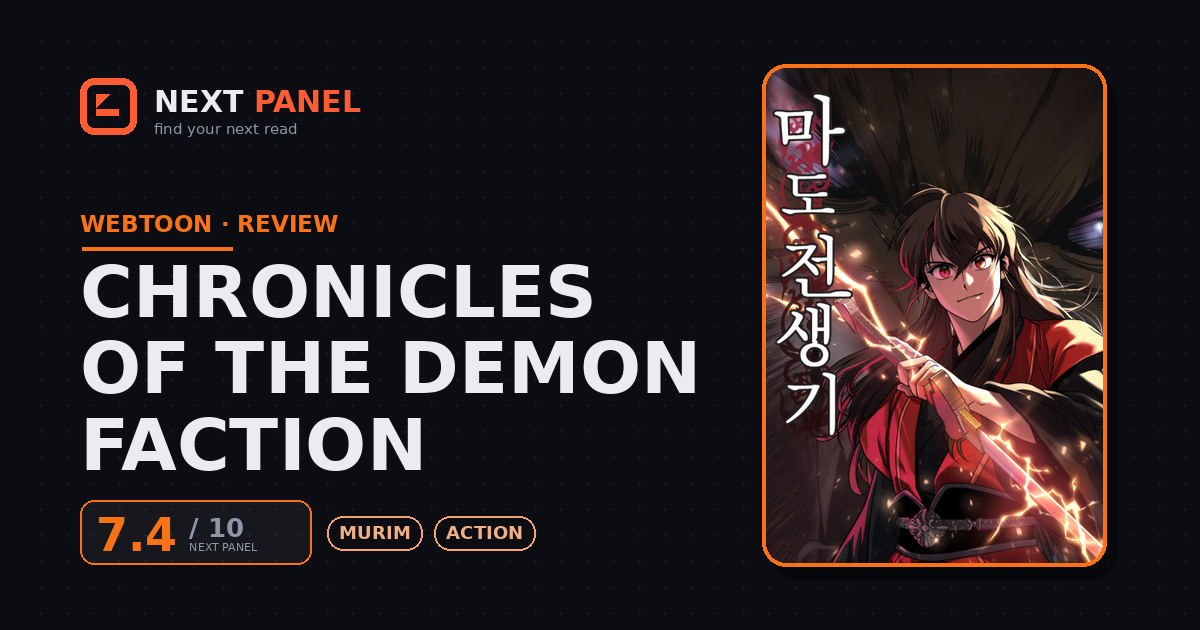
Chronicles of the Demon Faction
Same Heavenly/Demon Cult murim backdrop with a body-swap hook instead of a regression one.
Another climb-the-hostile-organization murim story, played more for comedy.
Where to Read Officially
| Platform | Format | Pricing | Region notes | Link |
|---|---|---|---|---|
| WEBTOON | Digital chapters | Free | Region availability varies | Open |
Frequently Asked Questions
Is Murim RPG Simulation finished?
No, it's ongoing and continues to release new chapters weekly on WEBTOON.
Do I need to read the novel first?
No, the webtoon adaptation stands on its own and doesn't require the source novel.
Is this the same as Heavenly Demon Cultivation Simulation?
Yes, that's an alternate title used by some fan translations for the same series.