Is My Girl Worth Reading? Review & Where to Read
Quick Answer
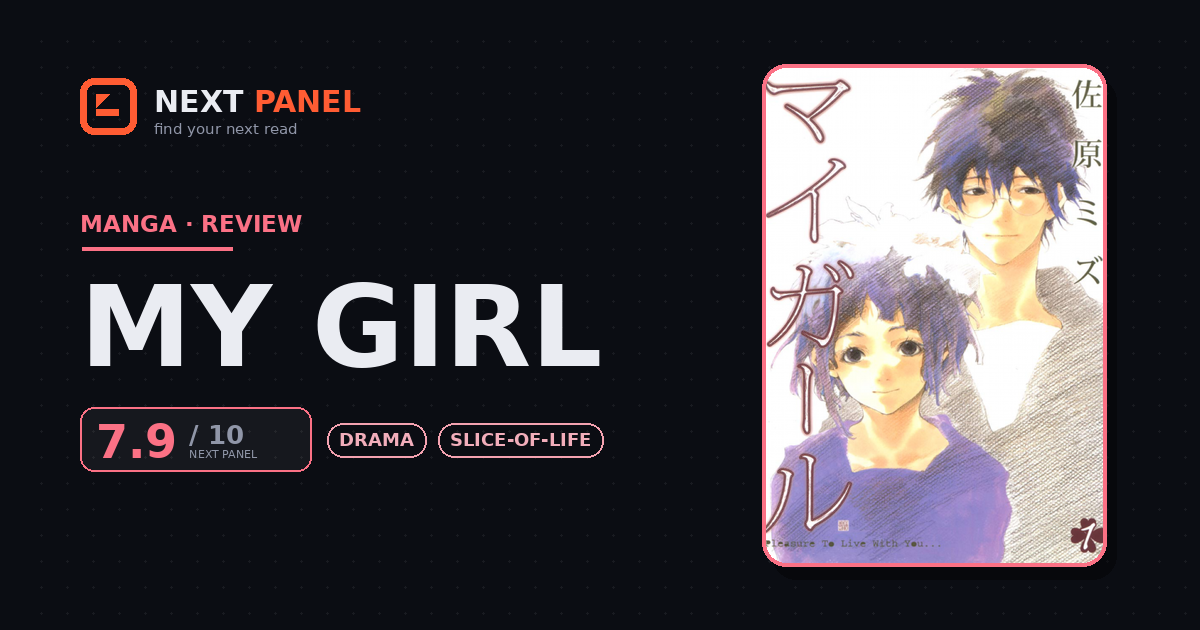
Yes, if you're in the mood for something gentle. My Girl is a quiet single-dad drama about a grieving young man learning to raise the five-year-old daughter he didn't know he had. It's short, warm, and quietly devastating in the best way.
Quick Verdict
“Small, slow, and quietly heartbreaking — a cozy grief-and-parenting story that does exactly what it sets out to do.”
Best for: Readers who want a quiet, tender family drama and don't need plot fireworks to stay hooked.
Not for: Readers who want strong plot momentum, conflict, or a fast pace.
- Type
- Manga
- Genres
- Drama, Slice of Life
- Status
- Completed
- This review
- Minor Spoilers
- Author
- Mizu Sahara
- Publisher
- Shinchosha
| Quick facts | |
|---|---|
| Format | Manga (seinen), 44 chapters, 5 volumes |
| Run | 2006–2010 · completed |
| Community score | AniList 8.2 · MangaUpdates 7.5 |
| Content | Grief, death of a loved one |
Overview
My Girl is a quiet family drama about the kind of loss most stories skip past. Kazama Masamune is a soft-spoken twenty-three-year-old whose first love, Youko, walked out of his life years ago with no explanation. Then he learns she has died, and that she left behind a five-year-old daughter, Koharu, who he never knew existed. The girl is his. The book is about what happens next: a young man who was barely holding himself together now has to become someone's father, while both of them grieve a person they loved in completely different ways. It runs five volumes and never raises its voice.
What it does well
The reason this works is Koharu. Mizu Sahara writes her like an actual small child, not a plot device or a bundle of cuteness. She's bright and weirdly composed, but she's still five, and her grief comes out sideways in the way real kids' grief does, in a stray question or a quiet moment rather than a big teary scene. Every time you brace for the story to get sentimental, it does something smaller and truer instead, and that restraint is what makes it land.
Masamune is just as carefully drawn. He's shy, a little lost, and clearly making it up as he goes, and watching him slowly figure out how to be a parent, one clumsy attempt at a time, is the whole appeal. The bond between the two of them builds so gradually you almost don't notice it happening until it hits you.
The art carries a lot of this. Sahara is great at quiet faces and small gestures, and since the story runs on ordinary moments rather than big events, that's exactly the skill it needs. Panels of the two of them just existing together do more emotional work than most manga get out of a dramatic climax. And at five volumes it stays lean, so the feeling never gets diluted.
Where it falls short
This is a gentle book by design, and that's also its ceiling. If you want plot, tension, or any real conflict, there's almost none here, and some readers will find it too slight to hold them. It asks you to be in the mood for it.
A few of the side threads are thin next to the central relationship. The workplace scenes and a slow-building adult romance never get the room they'd need to matter, so they read as background more than story.
And the pace is deliberately slow and episodic. It drifts from one small moment to the next, which is lovely if you're settled in and a little aimless if you're not.
Verdict
My Girl is a small story told very well. It's not trying to be an epic or surprise you with twists; it just wants to sit with a grieving father and daughter as they slowly become a family, and it does that with more honesty and tenderness than most bigger books manage. The main catch is practical: there's no official English release yet, so it's hard to read legally right now, which is a shame for a gem this quietly good. If you like slow, warm, bittersweet slice-of-life, it's well worth seeking out.
Strengths & Weaknesses
Strengths
- Koharu is written like a real five-year-old rather than a cute plot device, so her grief and small joys land instead of feeling saccharine.
- It handles loss with restraint, always reaching for a smaller, truer beat instead of a big teary scene, which makes the emotion hit harder.
- Mizu Sahara's soft, clean art excels at quiet faces and body language, which is exactly what a story built on ordinary moments needs.
- At five tight volumes with no filler, the father-daughter arc stays focused and never gets diluted.
Weaknesses
- It's very low-stakes and gentle by design, so readers who want plot, tension, or conflict will find almost none here.
- A few side threads, like the workplace beats and a slow adult romance, feel thin next to the central relationship.
- The pacing is slow and episodic, which can read as slight or aimless if you're not in the mood for a quiet story.
Similar Titles
A widowed dad learning to cook for his young daughter — the same warm single-parent tenderness.
A single dad and an irrepressible little girl in a gentle, funny slice-of-life about everyday wonder.
A quiet, beautifully drawn drama about grief and a found family healing each other slowly.
Frequently Asked Questions
Is My Girl available in English?
Not officially, at least not yet. My Girl was published in Japan and later in Spanish and French, but there's no licensed English edition as of now. We'll update this if that changes.
How long is My Girl?
It's short and complete: 5 volumes, 44 chapters. You can comfortably finish it in a couple of sittings.
Is it as sad as it sounds?
It's bittersweet more than bleak. The mother's death hangs over everything, but the story is really about healing and the small warm moments of raising a kid, so it lands gentle rather than crushing.