Is My Dearest Self With Malice Aforethought Worth Reading? Review & Where to Read
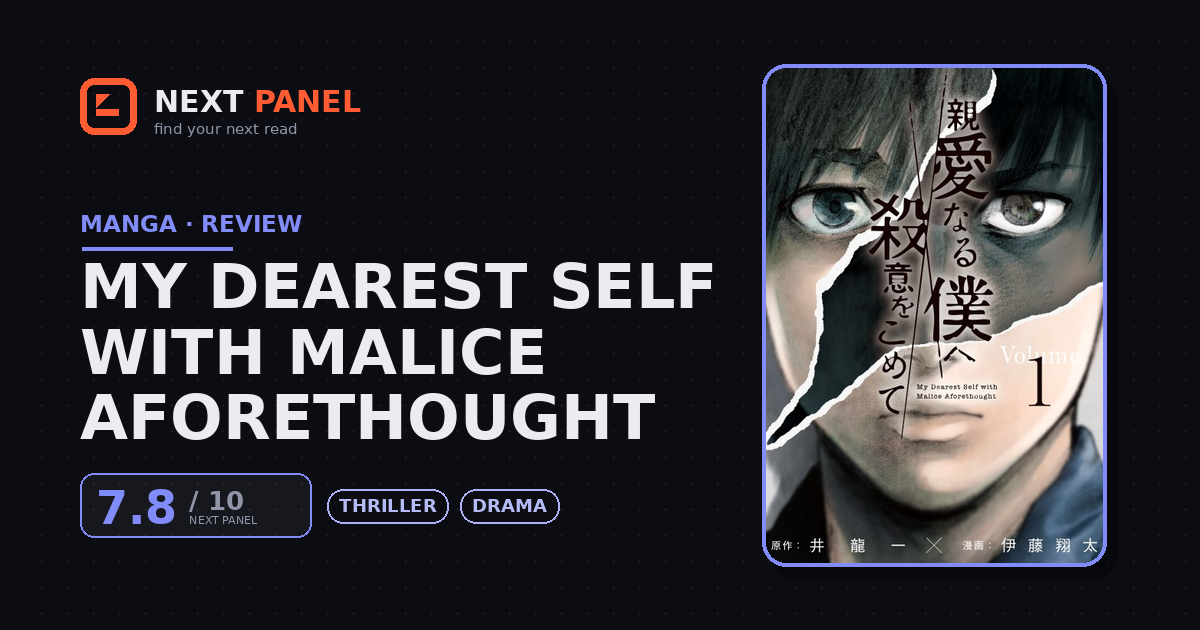
Quick Answer
For thriller fans, yes. It's a tightly plotted identity mystery that uses its serial-killer premise to ask real questions about nature versus nurture, and it sticks the landing better than most manga in this genre.
Quick Verdict
“Eiji's slow unraveling is genuinely tense chapter to chapter, even when a couple of the twists feel more convenient than earned.”
Best for: Readers who want a fast-moving psychological mystery with a genuinely unsettling hook.
Not for: Readers who want a slow character study and a plot that leans less on twist reveals.
- Type
- Manga
- Genres
- Drama, Thriller
- Status
- Completed
- This review
- Minor Spoilers
- Author
- Hajime Inoryu
- Artist
- Shota Ito
- Publisher
- Kodansha
- Platform
- Kodansha
| Quick facts | |
|---|---|
| Format | Manga (seinen), 98 chapters, 11 volumes |
| Run | 2018–2020 · completed |
| Community score | AniList 8.1 |
| Content | Violence, disturbing psychological themes, murder |
| Where to read | Kodansha — official |
Overview
Eiji Urashima has spent his whole life trying to live down the fact that his father was LL, a serial killer who terrorized the country before being caught. Eiji's built a quiet, unremarkable life for himself — until he starts waking up with no memory of the last few days, a girlfriend he doesn't remember getting, and a bloody bat hidden in his closet. Someone, or something, has been using his body while he's been gone, and the manga spends its run figuring out exactly who and why.
What it does well
The premise is the strongest thing about this series, and Hajime Inoryu and Shota Ito know it — the story gets moving fast and rarely lets up. Instead of stretching the "who's been controlling my body" question out for the sake of it, new information keeps arriving at a pace that makes each volume feel like it's earning its place. That's rarer than it should be in this genre.
What keeps it grounded is Eiji himself. He's not a chosen-one type or a genius detective — he's a scared, ordinary guy who's spent years terrified that his father's violence is somehow inside him too, and every twist in the plot gets filtered through that specific fear. The mystery isn't just "what happened," it's "am I becoming him," and that personal stake is what makes the more outlandish plot turns land instead of feeling like pure spectacle.
Shota Ito's art deserves credit here too. A story built around blackouts, stolen time, and unreliable memory lives or dies on whether the reader can track what's real, and the linework stays clean and expressive even when the narrative is deliberately disorienting. Faces do a lot of work carrying tension in the quieter chapters between big reveals.
Where it falls short
The final stretch leans harder on twist mechanics than the earlier volumes did, and a couple of the reveals only work because a character conveniently didn't mention something they had every reason to bring up sooner. It's the kind of thing you can forgive in the moment but that doesn't hold up much under scrutiny afterward. The supporting cast also thins out in terms of characterization — several people orbiting Eiji exist mainly to supply plot information rather than feel like they have lives of their own outside the mystery.
Verdict
This is a genre thriller that mostly does exactly what it sets out to do: hook you with a disturbing premise and keep tightening the screws until the reveal. It's not going to redefine the identity-thriller manga space, but it's tense, well-paced, and takes its central question seriously enough to be worth the ride.
Strengths & Weaknesses
Strengths
- The central hook — a young man losing days at a time while someone else appears to be using his body — is set up cleanly and pays off with real momentum instead of stalling for volumes.
- Eiji is a sympathetic lead precisely because he's ordinary; his fear of becoming his father is the emotional engine of the whole series, not just a backstory footnote.
- The mystery structure rewards attentive readers, dropping clues early that click into place later without feeling like cheating.
- Shota Ito's art keeps faces expressive and legible even in the story's more frantic, disorienting sequences, which matters a lot for a plot built on unreliable perception.
Weaknesses
- A few late reveals lean on convenient timing or characters withholding information for no reason beyond keeping the mystery going.
- Some supporting characters exist mainly to move the plot and don't get much room to feel like real people.
- Readers who've read a lot of split-personality thrillers will see a couple of the bigger beats coming.
Similar Titles
Shares an interest in how guilt over a specific past act reshapes a young protagonist's whole identity, though the genre is different.
A longer, denser take on the same core question — how much of a violent parent's nature gets passed down.
Where to Read Officially
| Platform | Format | Pricing | Region notes | Link |
|---|---|---|---|---|
| Kodansha | Digital chapters (K MANGA) & digital volumes | Free + Paid | Region availability varies | Open |
Frequently Asked Questions
Is My Dearest Self With Malice Aforethought finished?
Yes — the manga ran for 11 volumes and is complete, with the full run available in English from Kodansha.
Do I need to read the light novel or watch anything first?
No, the manga stands on its own and is the primary version most English readers access.
Is this more mystery or more horror?
It's closer to a psychological thriller/mystery — there's violence and disturbing subject matter, but the focus is on the whodunit and identity question, not scares.