Is Nana Worth Reading? Review & Where to Read
Quick Answer
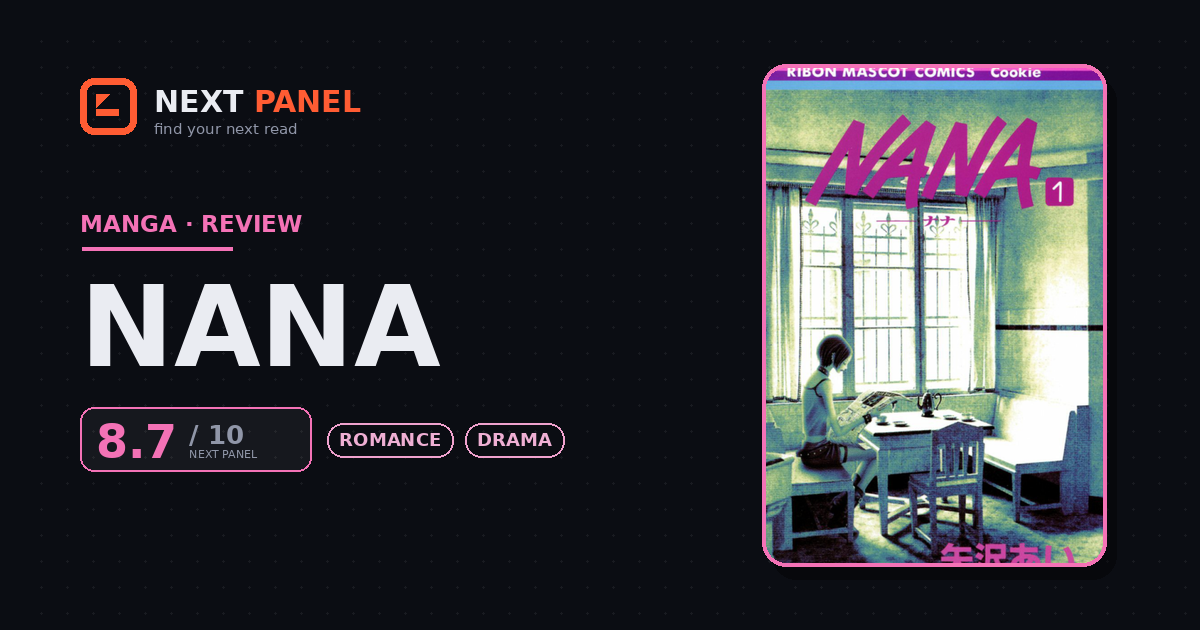
Yes, with one big caveat. Nana follows two twenty-year-old women who share a name and an apartment but little else: Hachi, a romantic drifting after love, and Nana, a fierce punk singer chasing stardom. Ai Yazawa turns their friendship, romances, and the rise of Nana's band into one of the most emotionally honest, stylish, and devastating dramas in manga. The catch: it's been on hiatus since 2009 and is unfinished. The existing 21 volumes are extraordinary, but there's no ending — yet.
Quick Verdict
“Two women named Nana, one punk dream, and some of the most achingly real relationships in manga — a stone-cold classic, with the heartbreaking catch that it may never be finished.”
Best for: Readers who want a raw, emotionally rich josei drama about friendship, love, music, and the messiness of your twenties.
Not for: Readers who need a finished story, a light tone, and likable, drama-free relationships.
- Type
- Manga
- Genres
- Romance, Drama
- Status
- On Hiatus
- This review
- Minor Spoilers
- Author
- Ai Yazawa
- Publisher
- Shueisha / Viz Media
- Platform
- Viz Media
| Quick facts | |
|---|---|
| Format | Manga (josei), 84 chapters, 21 volumes |
| Run | 2000–present · on hiatus |
| Community score | AniList 8.8 · MAL 8.8 · MangaUpdates 8.6 |
| Content | Mature themes, including drug use |
Overview
Nana is Ai Yazawa's landmark josei drama, one of the most beloved and emotionally raw comics ever made — and one of the most heartbreaking, for reasons both inside and outside the story. It begins with a chance meeting: two twenty-year-old women, both named Nana, sit beside each other on a train to Tokyo and later end up sharing an apartment. Nana Komatsu — nicknamed "Hachi" — is sweet, impulsive, and forever chasing love and belonging. Nana Osaki is guarded, magnetic, and fiercely ambitious, a punk vocalist determined to make her band famous on her own terms. From that odd-couple friendship, Yazawa spins a sprawling, intimate saga of love, music, fame, jealousy, and the bittersweet ache of growing up. It ran in Cookie, is published in English by Viz, and stands at 21 volumes.
What it does well
Its characters are astonishingly real. Yazawa writes people — flawed, contradictory, achingly human — with a precision that makes Nana feel less like fiction than like eavesdropping on real lives. The two Nanas and the messy constellation of lovers, bandmates, and friends around them are so fully realized that their joys and heartbreaks land with overwhelming force. Few manga capture the emotional texture of your twenties this truthfully.
It's also gorgeously stylish. Yazawa came from fashion, and it shows — the clothes, the punk-rock aesthetic, the cool, expressive art give the series an unmistakable identity, and the music scene it depicts feels alive. It's a mood as much as a story.
And it's emotionally fearless. Nana digs into toxic relationships, ambition versus love, codependency, and self-destruction without flinching or moralizing, and the result is a drama of rare honesty and devastating power. When it hurts, it hurts because it's true.
Where it falls short
The enormous catch is that it's unfinished. Yazawa halted Nana in 2009 due to illness, and despite saying she hopes to complete it, no new chapters have come in over fifteen years. The story stops mid-stream, with major arcs unresolved — and because the series is built on a framing device hinting at heartbreak to come, that lack of an ending is genuinely painful. You will get deeply invested in a story that, for now, has no conclusion.
It's also heavy and mature, not a comfort read. The relationships can be toxic and the tone is often melancholy, with smoking, sex, drug use, and emotional damage throughout; readers wanting lightness or healthy romance should look elsewhere. This is raw, adult, sometimes harrowing drama.
Verdict
Nana is a masterpiece — a stylish, emotionally devastating, profoundly human drama that ranks among the best manga ever made, and essential reading for anyone who loves character-driven stories. The catch is enormous: it's been unfinished since 2009, and you'll invest everything in a story with no current ending. If you can accept that, the existing volumes are unforgettable and well worth your heart. Just go in knowing it may break it twice.
Strengths & Weaknesses
Strengths
- Its characters are astonishingly real — flawed, contradictory, and human enough that their joys and heartbreaks land with overwhelming force.
- It's gorgeously stylish — Yazawa's fashion background shows in the clothes, the punk aesthetic, and the cool, expressive art that give it an unmistakable identity.
- It's emotionally fearless — digging into toxic love, ambition, and self-destruction without flinching, for drama of rare honesty.
- Few manga capture the bittersweet texture of your twenties this truthfully.
Weaknesses
- The enormous catch: it's unfinished, on hiatus since 2009, so the story stops mid-stream with major arcs unresolved.
- It's heavy and mature — toxic relationships, melancholy, smoking, sex, and drug use throughout, not a comfort read.
- Its framing device promises heartbreak the story hasn't yet reached, making the lack of an ending especially painful.
Similar Titles
Ai Yazawa's own fashion-world josei drama — the same stylish art and raw, bittersweet emotion.
Another raw, unflinching drama that digs into damaged relationships with devastating honesty.
A tender, beautifully observed character drama if you want more of that deep emotional truth.
Frequently Asked Questions
Is Nana finished?
No, and this is the crucial caveat: Nana has been on hiatus since 2009, when Ai Yazawa paused it due to illness, stopping at 21 volumes. She has said she still intends to finish it, but no new chapters have appeared, so it currently has no ending.
Is it still worth reading unfinished?
Most fans say yes — the existing volumes are a masterpiece and deeply rewarding on their own. But go in knowing the story stops mid-stream, which can be painful given how invested you'll be.
Is there an anime?
Yes, a beloved anime (2006-2007) that adapts roughly the first half. Like the manga, it doesn't reach a conclusion.