Is Platinum End Worth Reading?
Quick Answer
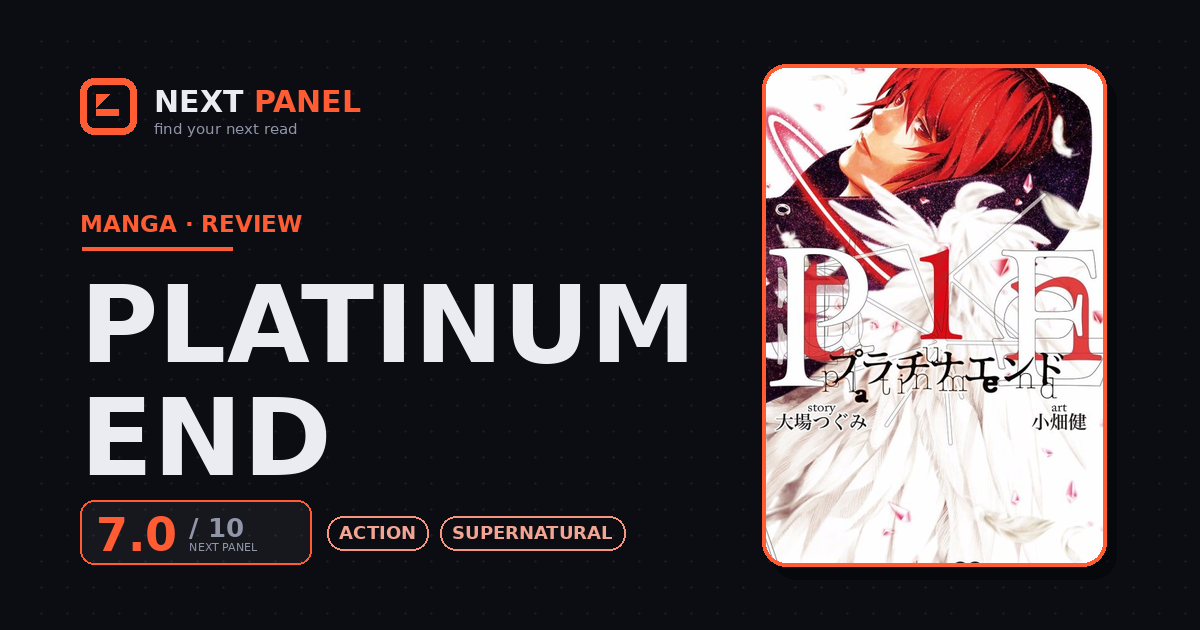
Platinum End is worth reading for Obata's art and a genuinely strong opening premise, though the story loses its footing as the cast and philosophical ambitions expand.
Quick Verdict
“Visually stunning premise from the Death Note team that starts strong and loses its grip as the candidate roster expands.”
Best for: Readers who want striking art and a dark, psychologically sharp opening arc more than a tightly plotted ending.
Not for: Readers who want consistent pacing all the way through, or who want every side character's arc to pay off.
- Type
- Manga
- Genres
- Action, Supernatural
- Status
- Completed
- Author
- Tsugumi Ohba
- Artist
- Takeshi Obata
- Publisher
- Viz Media
- Platform
- VIZ
| Quick facts | |
|---|---|
| Format | Manga, 58 chapters, 14 volumes |
| Run | 2015–2021 · completed |
| Community score | AniList 6.1 · MangaUpdates 6.3 |
| Content | Suicide themes |
| Where to read | VIZ — official |
Overview
Platinum End starts with Mirai Kakehashi attempting suicide after years of isolation and abuse, only to be saved by a guardian angel who hands him god-tier powers and drops him into a competition against twelve other candidates to become the next god of the world. Tsugumi Ohba and Takeshi Obata, the Death Note team, build the premise around a genuinely dark hook: near-limitless power, flight, and an arrow that forces anyone to fall in love with you for 33 days, handed to a suicidal teenager, and the ethical mess that follows from other candidates using the same tools far less responsibly.
What it does well
Takeshi Obata's art is the most consistent reason to read this. Character designs, angel wing effects, and the sheer scale of god-candidate battles are drawn with the same polish that made Death Note and Bakuman visually distinctive. The opening arc is genuinely strong, using Mirai's suicidal despair and sudden god-tier power as a real psychological hook rather than just a shonen power-up, and the love-arrow mechanic raises uncomfortable, well-explored questions about consent and manufactured feeling that the story doesn't shy away from. Mirai's reunion and eventual relationship with his childhood friend Saki also gives the story a genuine emotional throughline underneath all the power-system chaos, and their history together, including the guilt Saki carries from how she treated him as a kid, adds real weight to a romance that could have otherwise felt purely mechanical given how it starts.
Where it falls short
The story loses its early focus once the candidate roster fully expands. New powers, new philosophies, and new subplots pile on faster than the manga develops any of them, and pacing becomes genuinely erratic in the later volumes. Several candidates get introduced with real potential and then sidelined or dispatched without much payoff, and one particular late-story detour, an extended, unprompted rant from a side character about her dislike of gay people, has been widely and fairly criticized as a bizarre, disconnected low point that adds nothing to the plot. The ending itself is divisive: some readers find its bittersweet resolution earned, others find it a letdown after the ambition of the setup, and how you land on it will likely depend on how much goodwill the earlier volumes bought with you.
Verdict
A visually stunning premise that starts as one of Obata and Ohba's more interesting ideas and loses its grip as the candidate roster and philosophical ambitions outpace the plotting. Worth it for the art and the opening volumes' genuine psychological hook, with the expectation that the story's final chapters won't hold together as well as it starts.
Strengths & Weaknesses
Strengths
- Takeshi Obata's art is consistently excellent, from character design to the scale of the god-candidate battles.
- A genuinely dark, well-earned opening hook: god-tier power handed to a suicidal teenager.
- The 'love arrow' mechanic raises real questions about consent and manufactured feeling that the story takes seriously.
- Mirai and Saki's relationship gives the story a steady emotional throughline underneath the power-system chaos.
Weaknesses
- Pacing grows erratic as the candidate roster expands faster than the story can develop each new character.
- Several candidates are introduced with real potential and then sidelined or dispatched without much payoff.
- A widely criticized late-story detour into an unprompted, disconnected rant that adds nothing to the plot.
Similar Titles
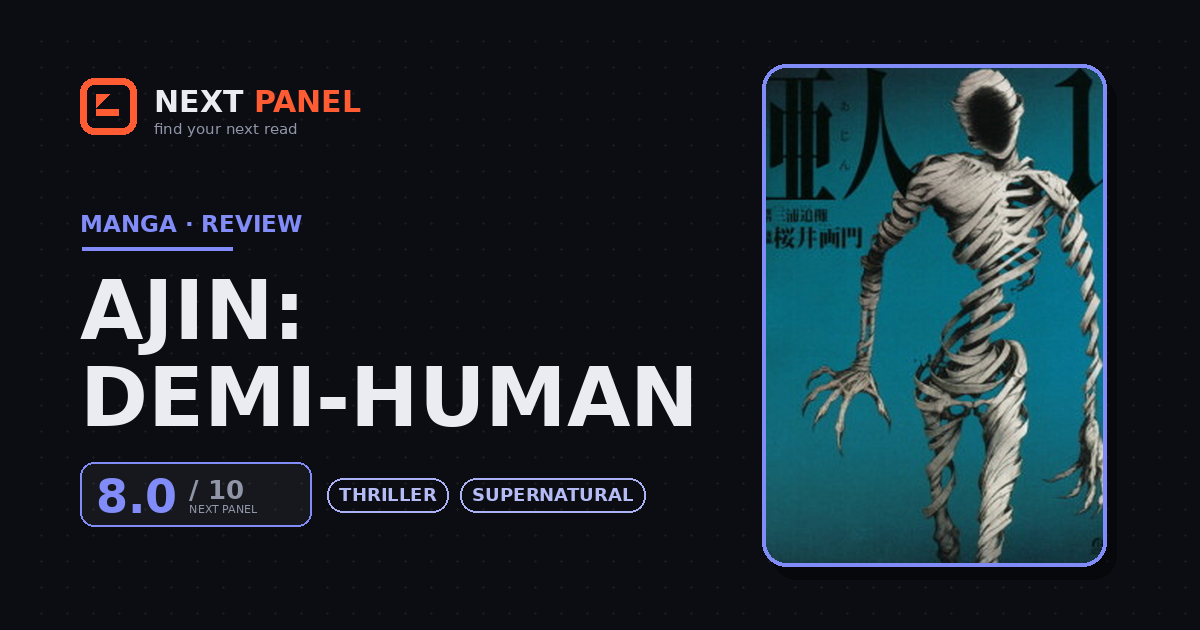
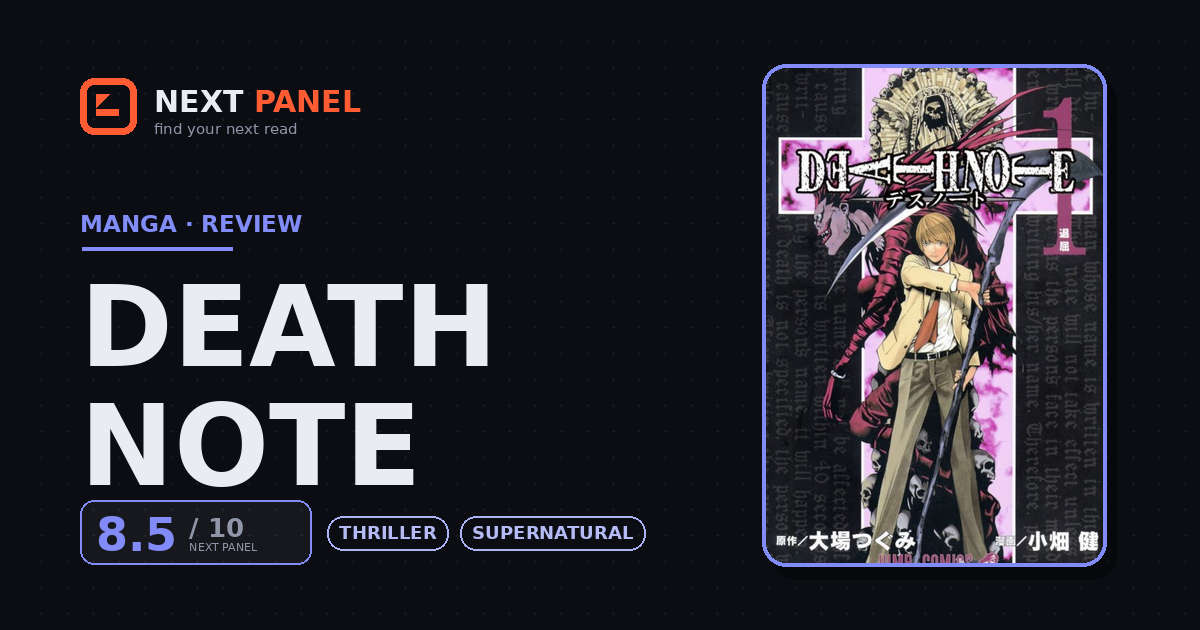
The same creative team's earlier, tighter psychological thriller, for readers who want their best-known work.
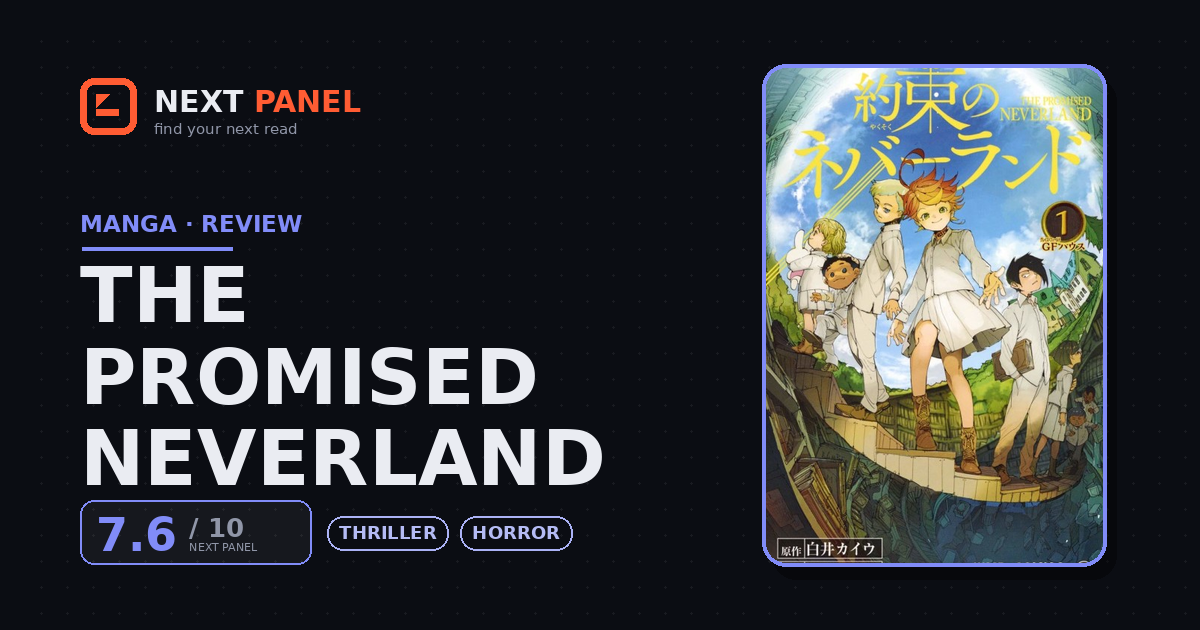
A different premise, but a similarly dark psychological hook driving a life-or-death game.
Another power-driven thriller willing to sit with the ethics of who gets to use god-tier abilities.
Where to Read Officially
| Platform | Format | Pricing | Region notes | Link |
|---|---|---|---|---|
| VIZ | Digital & Print | Free + Paid | Region availability varies | Open |
Frequently Asked Questions
Is Platinum End finished?
Yes. It ran from 2015 to 2021 and is complete at fourteen volumes, fully released in English by Viz Media.
Is Platinum End by the same creators as Death Note?
Yes. Tsugumi Ohba writes and Takeshi Obata draws both series.
Is Platinum End's anime worth watching instead?
The anime covers the same story but is generally considered a rougher, less-polished adaptation; the manga is the stronger version, especially for Obata's art.