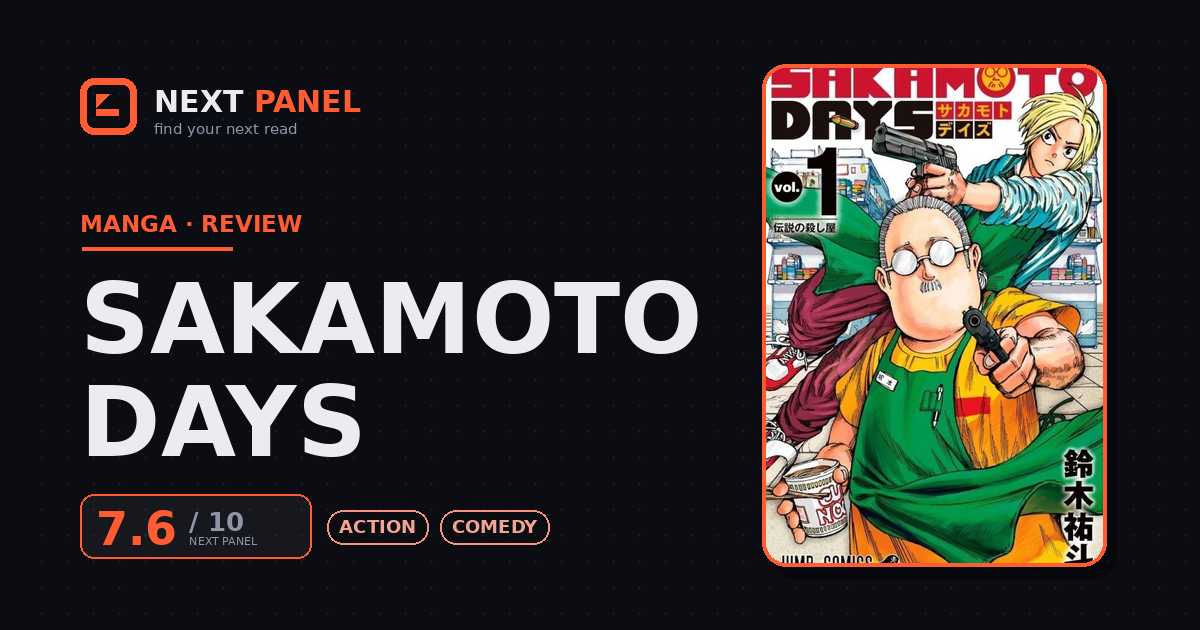
Is Sakamoto Days Worth Reading? Action-Comedy Manga Review
Quick Answer
Sakamoto Days is a clean recommendation for readers who enjoy assassins, slapstick timing, found-family warmth, and hand-to-hand action that turns ordinary locations into playgrounds.
Quick Verdict
“The fight choreography is the real draw, and the retired-hitman gag holds up because Sakamoto is more than a punchline — it just drifts toward straight action over time.”
Best for: Readers who want stylish combat with jokes that land quickly.
Not for: Readers who need gritty assassin realism or slow character introspection from chapter one.
- Type
- Manga
- Genres
- Action, Comedy
- Status
- Ongoing
- This review
- Minor Spoilers
- Author
- Yuto Suzuki
- Publisher
- Shueisha
- Platform
- VIZ Media / MANGA Plus
| Quick facts | |
|---|---|
| Format | Manga, 27 volumes |
| Run | 2020–present · ongoing |
| Community score | AniList 8.0 · MAL 8.1 · MangaUpdates 7.7 |
| Where to read | VIZ Media / MANGA Plus — official |
Overview
Taro Sakamoto used to be the most feared name in the assassin underworld, the kind of legend other killers traded stories about. Then he fell in love, made a vow never to kill again, and settled down to run a small neighborhood convenience store. He's also gained a lot of weight and lost none of his skill, which is the whole engine of the manga: the old world keeps finding him, and he has to solve every fight without breaking his one rule.
What it does well
The choreography is the reason Sakamoto Days gets talked about. Suzuki treats ordinary spaces, a convenience store aisle, a city bus, a crowded museum, as full action sets, using price tags, mop buckets, and shopping carts as legitimate weapons. The gag of an overweight ex-legend taking down professional killers with a well-placed can of tuna keeps landing because the fight choreography underneath it is genuinely clever, not just silly.
The premise doesn't wear thin because Sakamoto isn't only a punchline. His restraint carries real weight: every fight is a puzzle about how to win without killing, and that constraint gives the comedy an actual stake instead of a repeating joke. His quiet devotion to his wife and daughter grounds the manga, so the domestic scenes land with real warmth instead of feeling like padding between fights.
The supporting cast keeps pace with the premise instead of coasting on it. Shin, the mind-reading partner who can't stand violence, and the widening cast of assassins-turned-allies each arrive with a distinct combat gimmick and a clear reason to be there, which keeps new arcs feeling fresh rather than repeating the last one with a new face.
Where it falls short
The series leans harder into straight action as it goes, and the balance shifts away from the workplace-comedy rhythm of the earliest chapters. Readers who came for the convenience-store gag specifically may find the later material, longer fights, higher stakes, more assassin-world politics, a noticeably different read than where the story started.
The assassin-world logic is also heightened by design, killers with cartoonish specialties, contracts that escalate improbably fast, and readers looking for grounded realism about how an underworld like this would actually function should adjust expectations early. The story is built for momentum and comic timing over plausibility, and it doesn't pretend otherwise, but it's worth knowing going in.
Verdict
Sakamoto Days is stylish, quick-witted action-comedy that earns its central gimmick through genuinely inventive fight choreography and a lead character with more emotional ballast than the premise first suggests. It shifts more toward action than comedy as it runs, so it rewards readers who want both halves of that mix rather than just the workplace joke. For anyone who wants John Wick-style violence filtered through Weekly Shonen Jump's warmth, it's an easy recommendation.
Strengths & Weaknesses
Strengths
- The choreography is the selling point.
- The central gag does not wear out as quickly as it could because Sakamoto is not only a joke.
- The supporting cast keeps the pace fresh.
Weaknesses
- The story leans more into action as it goes, so readers expecting a pure gag manga may find later material heavier.
- The assassin-world logic is intentionally heightened. Do not come in looking for realism; come in looking for clever momentum.
Similar Titles
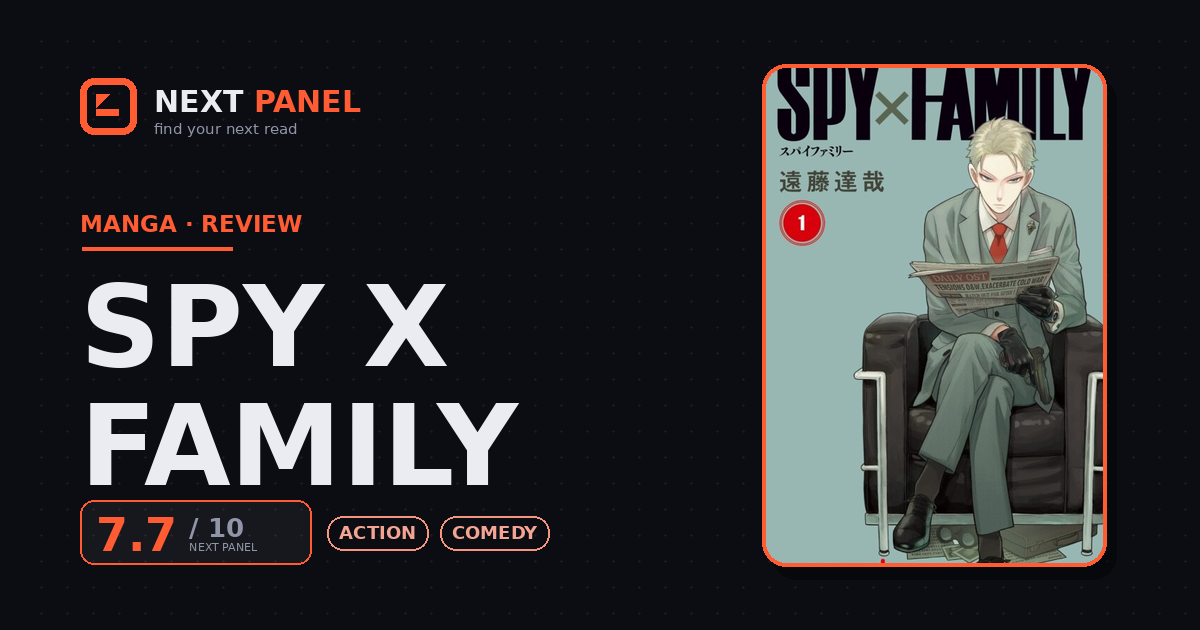
Spy x FamilyManga
Action plus found-family comedy.
Where to Read Officially
Frequently Asked Questions
Is Sakamoto Days good for beginners?
Usually yes if the “Best for” section sounds like you. New readers should start with official preview chapters when available, because tone matters more than hype.
Is this review spoiler-free?
It is spoiler-light. It discusses the premise, style, reader fit, and general strengths without explaining major twists or late-arc reveals.
Where should I read it?
Use the official links in the Basic facts section. Availability can vary by country and app, so check the linked platform directly before buying or subscribing.