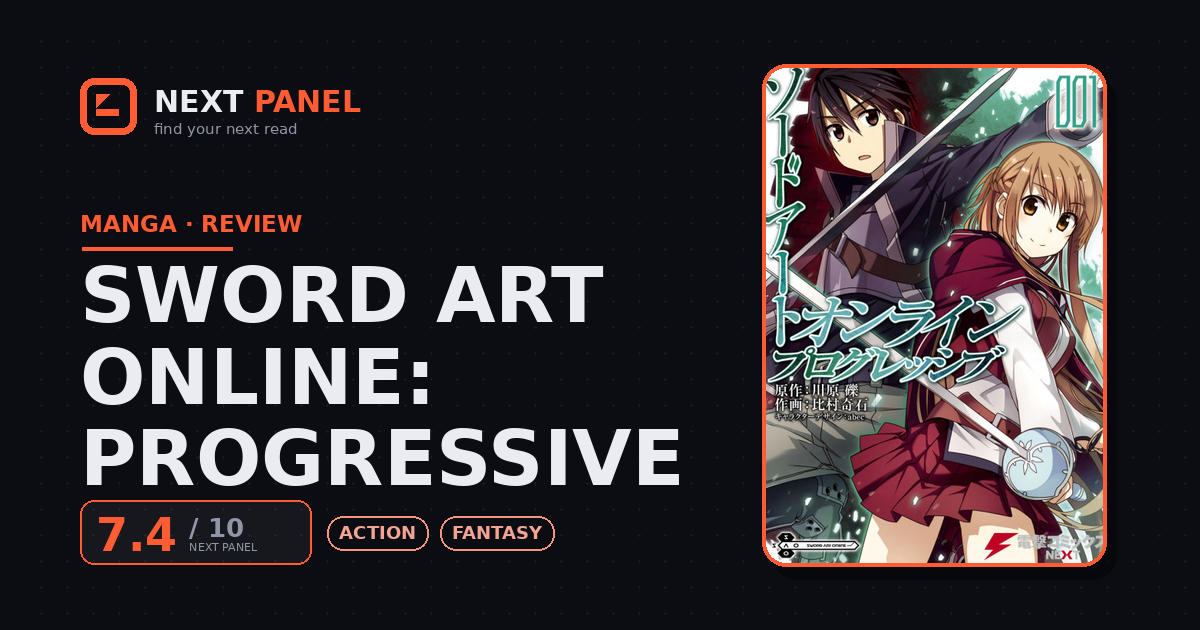
Is Sword Art Online: Progressive Worth Reading? Review & Where to Read
Quick Answer
Yes, especially if the original Aincrad arc felt rushed to you. Progressive rebuilds the death game floor by floor with real strategy, side characters, and stakes, and Kiseki Himura's art handles the dungeon-crawling and combat cleanly. It's a genuine improvement on pacing, though it moves slowly by design.
Quick Verdict
“Aincrad done right — floor by floor, with room to actually explain the strategy instead of skipping to the next boss. Slower than the original, but that's the whole point.”
Best for: Readers who want a grounded, tactically detailed retelling of Aincrad, including SAO fans who felt the original glossed over the early floors.
Not for: Readers who want a fast story or who are looking for content beyond the Aincrad arc.
- Type
- Manga
- Genres
- Fantasy, Action
- Status
- Ongoing
- This review
- Minor Spoilers
- Author
- Reki Kawahara
- Artist
- Kiseki Himura
- Publisher
- Kadokawa
- Platform
- Yen Press
| Quick facts | |
|---|---|
| Format | Manga (shōnen), 47 chapters, 7 volumes |
| Run | 2013–2018 · ongoing |
| Community score | AniList 7.6 · MangaUpdates 7.5 |
| Where to read | Yen Press — official |
Overview
Kirito and ten thousand other players are trapped inside Sword Art Online, a virtual-reality MMO where death in the game means death in real life. The only way out is to clear all one hundred floors of the floating castle Aincrad. Sword Art Online: Progressive retells that death game from the very beginning, but where the original story blitzed through most of the climb in a handful of chapters, Progressive slows all the way down and rebuilds the early floors one at a time, in far more detail.
What it does well
The floor-by-floor structure is the whole point, and it works. Boss fights get real strategic buildup — scouting, party composition, trap awareness — instead of arriving as a surprise the story skips past. You get a genuine sense of Aincrad as a puzzle players are solving together, not just a backdrop for Kirito to solo.
That extra room pays off for the cast, too. Kirito and Asuna's early partnership develops in actual steps here rather than jumping straight to established trust, and minor players from the original story get expanded roles and arcs of their own, giving the death game more of an ensemble feel. It reframes Aincrad as a shared crisis instead of one protagonist's highlight reel.
Kiseki Himura's art is a strong match for the material. Combat reads clearly, dungeon layouts are easy to track, and the game's UI and mechanics — health bars, skill systems, item drops — are worked into the art without cluttering it. For a story built around understanding a game's rules, that clarity matters.
Where it falls short
The deliberate pacing is a real ask. This is a series built on floor-by-floor detail, and readers who want the story to move will feel the slowdown compared to the original's breakneck version of the same arc.
It's also still mid-story. Progressive is nowhere near catching up to where the original Aincrad arc ends, so committing to it means a long wait before you see the full climb resolved. And because plenty of readers already know how the Aincrad arc turns out from the original novels or anime, some of the survival tension is softened — you're reading for the texture and the characters more than the outcome.
Verdict
Progressive takes the parts of the original Aincrad story that felt rushed and gives them the room they always needed. If the appeal of a death-game story is watching people actually solve it — floor by floor, fight by fight — this is the better version of that story. Just go in knowing it's a patient, ongoing retelling, not a quick read.
Strengths & Weaknesses
Strengths
- Rebuilding Aincrad floor by floor gives the death game actual strategic texture — traps, boss patterns, and party tactics get real explanation instead of a montage.
- Kirito and Asuna's partnership develops gradually here, with more room for them to earn each other's trust than the original's compressed timeline allowed.
- Side characters who were footnotes in the original story get proper introductions and arcs of their own.
- Kiseki Himura draws clean, legible dungeon and combat sequences that make the game's mechanics easy to follow.
Weaknesses
- The pace is a real trade-off — if you want the story to move, floor-by-floor detail can feel like a lot of setup for familiar beats.
- It's still mid-adaptation, covering only the early floors, so it's a long-term commitment before it catches up to the original's ending.
- Some fatalistic tension is softened simply because many readers already know how the Aincrad arc resolves.
Similar Titles
Another trapped-in-a-game story, more focused on economics and politics than combat.
A different trapped-in-a-game premise, leaning into power fantasy rather than tactical survival.
Slower, world-detail-focused fantasy for readers who liked Progressive's patient pacing.
Where to Read Officially
| Platform | Format | Pricing | Region notes | Link |
|---|---|---|---|---|
| Yen Press | Print & digital volumes | Paid | Region availability varies | Open |
Frequently Asked Questions
Do I need to read the original Sword Art Online manga first?
No. Progressive retells the Aincrad arc from the start in more detail, so it works as its own entry point into the story.
Is Sword Art Online: Progressive finished?
No, it's ongoing. It's still working through the early floors of Aincrad, with new volumes continuing to release in Japan and English.
How is this different from the original Aincrad story?
The original moved through Aincrad quickly, skipping most floors. Progressive slows down to cover nearly every floor in detail, with more focus on strategy, side characters, and Kirito and Asuna's relationship.