Is Takemitsu Zamurai Worth Reading? Review & Where to Read
Quick Answer
Yes, if you like slow, literary samurai stories and don't need constant action. It's an award-winning character study with some of the most striking art in the genre, though the pace and Taiyō Matsumoto's unconventional style aren't for everyone. Note that the official English release from Viz isn't out until 2027.
Quick Verdict
“Taiyō Matsumoto draws Edo like no one else, and the quiet story of a violent man trying to live gently sneaks up on you. It's slow on purpose, so come ready to sink in rather than race through.”
Best for: Readers who love slow, literary character studies and distinctive art, and who don't need regular action to stay hooked.
Not for: Readers who want frequent sword fights, fast pacing, and clean, conventional artwork.
- Type
- Manga
- Genres
- Drama, Historical
- Status
- Completed
- This review
- Minor Spoilers
- Author
- Issei Eifuku
- Artist
- Taiyō Matsumoto
- Publisher
- Shogakukan
| Quick facts | |
|---|---|
| Format | Manga (seinen), 84 chapters, 8 volumes |
| Run | 2006–2010 · completed |
| Community score | AniList 8.3 · MangaUpdates 8.4 |
Overview
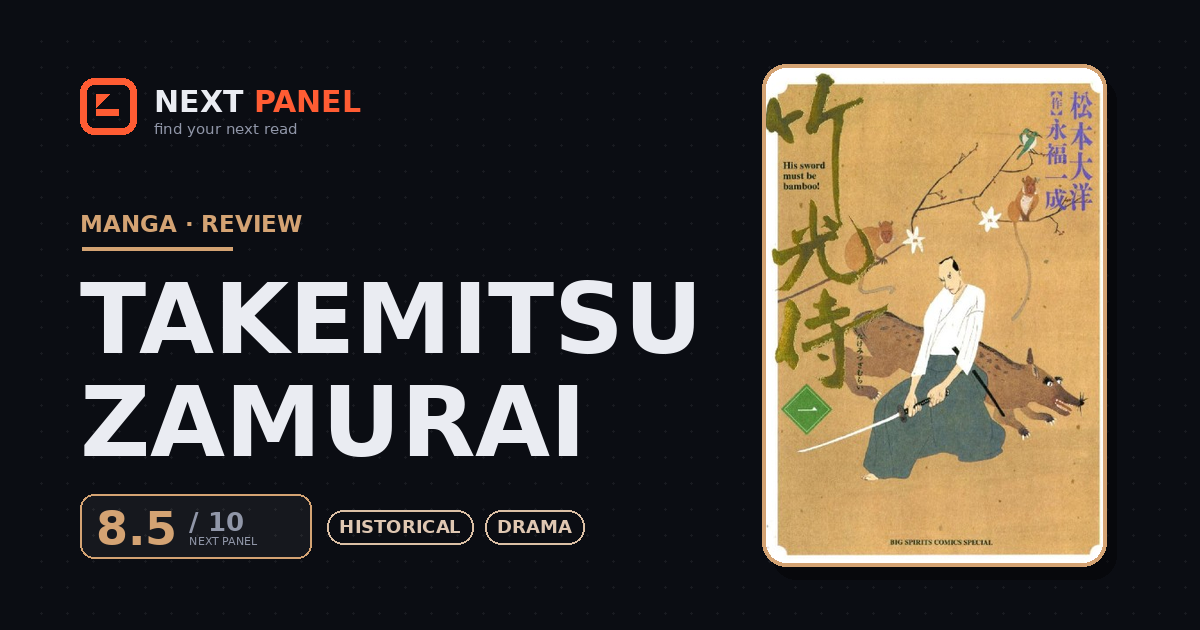
Takemitsu Zamurai is an Edo-period samurai drama written by Issei Eifuku and drawn by Taiyō Matsumoto, the artist behind Tekkonkinkreet and Ping Pong. A ronin named Senō Sōichirō turns up in a poor Edo tenement around New Year's, quiet and a little strange, and settles in among the carpenters, landladies, and kids. He has sold his real katana and carries a "takemitsu," a bamboo sword, and he takes work tutoring children. Most of the book is simply him living day to day: sweeping, teaching, chatting with a curious boy next door named Kankichi. But there's a shadow over him. Rumors follow him about his past, and something violent stirs when he's pushed to actually fight.
If you come in expecting sword battles every chapter, adjust your expectations. This is a slow, watchful character study that happens to be about a swordsman. It ran in Big Comic Spirits from 2006 to 2010, won the Japan Media Arts Festival Grand Prize and the Shogakukan Manga Award, and Viz has finally licensed it for English, with the first volume due in early 2027.
What it does well
Matsumoto's art is the main reason to be here. It looks like nothing else on the shelf: loose, scratchy, almost childlike in places, then suddenly precise and terrifying when a blade comes out. He draws the ordinary parts of Edo life (a shared well, a rainstorm, a bowl of rice) with as much care as the fights, so the whole town feels lived-in and real. When violence does break out it's genuinely scary, partly because the rest of the book is so calm.
The writing is patient and humane. Eifuku builds Senō slowly, through small gestures and the way other people react to him, so by the time you understand his past it lands hard. The supporting cast, especially Kankichi, the boy who decides this odd samurai is worth following around, gives the book its warmth. And underneath the quiet, it's really about a violent man trying to live a gentle life, which gives the slow chapters their weight.
There's craft in the structure too. Small moments early on come back to matter, and the contrast between Senō's peaceful days and the danger he's running from builds a steady, low tension.
Where it falls short
The pace is the obvious hurdle. Long stretches are pure daily life, and if you don't click with the tone you'll find it dull rather than calming. This is a book you sink into, not one that pulls you along.
The art is going to split people too. Matsumoto's style is an acquired taste, and readers who want clean, conventional linework may bounce off it hard. Some of the more abstract, dreamlike sequences ask you to just go with them rather than fully explaining themselves. And the honest note for English readers: there's been no official translation until now, so unless you read Japanese you're waiting on Viz's 2027 release.
Verdict
This is a slow, beautiful, grown-up samurai story that cares more about a man's soul than his sword. If you loved the quieter chapters of Vagabond, or you'll follow Taiyō Matsumoto anywhere, it's a treasure. If you need action or clean art, it will test your patience. With Viz finally bringing it over in English, it's a great time to put it on your radar.
Strengths & Weaknesses
Strengths
- Taiyō Matsumoto's art is unlike anything else in the genre: loose and gentle for daily life, then sharp and frightening the moment a blade appears.
- The story is patient and human, building its lead through small moments so his past hits hard once you understand it.
- The Edo setting feels genuinely lived-in, with as much care given to a rainstorm or a shared well as to any fight.
- Underneath the calm it's about a violent man trying to live gently, which gives even the quiet chapters real weight.
Weaknesses
- The pace is very slow, and readers who don't click with the tone may find long daily-life stretches dull rather than meditative.
- Matsumoto's scratchy, unconventional style is an acquired taste that some readers will bounce off.
- There's no official English release out yet (Viz's edition is due in 2027), so it's hard to read legally in English for now.
Similar Titles
The other great meditative samurai epic, obsessed with the same question of whether a killer can find peace.
Another Edo-period samurai story with bold, unconventional art and a literary streak.
For the same quiet, atmospheric take on old Japan, told in patient episodic chapters.
Frequently Asked Questions
Is Takemitsu Zamurai finished?
Yes. It ran from 2006 to 2010 and is complete in eight volumes.
Is there an official English release?
Not yet, but one is coming. Viz Media has licensed it, with the first English volume slated for early 2027. Until then there's no legal English edition, so we'll update this once it's out.
Is it an action manga?
Not really. There are tense, brutal fights, but most of the book is a slow slice-of-life character study. The sword action is the exception, not the rule.