Is The Apothecary Prince Worth Reading? Review & Where to Read

Quick Answer
Worth reading if you want an isekai that swaps out the usual sword-and-magic power fantasy for a genuinely novel healing-and-medicine hook, especially if you've already read its predecessor series.
Quick Verdict
“Solving an empire's worth of political intrigue one acupuncture session at a time sounds like a gimmick, but the medical detail is specific enough to carry it.”
Best for: Readers who want an isekai built around a genuinely different power set -- medical knowledge and meridian manipulation instead of combat magic.
Not for: Readers who haven't read The Greatest Estate Developer and want every reference and callback to land on a first read.
- Type
- Manhwa
- Genres
- Fantasy, Isekai
- Status
- Ongoing
- This review
- Minor Spoilers
- Author
- kangho HA
- Artist
- BK Moon
- Publisher
- Dadang
- Platform
- WEBTOON
| Quick facts | |
|---|---|
| Format | Manhwa (unknown), 127 chapters |
| Run | 2023–present · ongoing |
| Community score | AniList 6.6 · MangaUpdates 6.2 |
| Content | None significant |
| Where to read | WEBTOON — official |
Overview
Doctor Han Lee, a practitioner of Korean medicine, dies and wakes up as Lachiel, the sickly Crown Prince of the Empire of Magentano. Rather than reaching for combat magic to survive his new circumstances, Han turns to what he actually knows -- acupuncture, meridian theory, and the medical knowledge that defined his old life -- to treat both his own failing body and the empire's ailments, political and literal. Written by kangho HA with art by BK Moon, The Apothecary Prince is a far-future sequel to the popular manhwa The Greatest Estate Developer, set roughly 300 years later in the same world, and is available free on WEBTOON.
What it does well
The biggest thing this has going for it is a genuinely distinct hook. Isekai protagonists reach for swords or overpowered magic systems constantly; Han Lee instead treats his new world with the specific, grounded toolkit of a doctor, and watching meridian manipulation and acupuncture-based "magic" solve problems that a typical fantasy hero would punch through gives the series real novelty. That medical framing also ties directly into the story's stakes -- Han's position at court and his own survival are both bound up in how well he can actually heal people, which keeps the plot grounded in something more specific than generic power fantasy.
Setting the story centuries after The Greatest Estate Developer is a smart structural choice too, letting the manhwa function as a legacy sequel within a shared timeline rather than needing a hard reboot, which rewards long-time readers of the earlier series with a sense of a living, expanding world.
Where it falls short
Some of that reward is specifically for people who've already read The Greatest Estate Developer -- newcomers can follow the story fine on its own, but certain callbacks and worldbuilding touches will land with less weight without that context. The medical focus, while distinctive, also means the series leans less on traditional action spectacle than a lot of isekai readers might expect, which is a trade-off rather than a flaw but worth knowing going in. And since the series is still ongoing, several of the larger political threads around the empire are still being laid out rather than resolved.
Verdict
This is an isekai that earns its distinct identity by swapping out swords and magic for a doctor's actual toolkit, and the political stakes tied to Han's medical skill keep the story grounded even as the fantasy elements build out. It's an easy, free read that rewards fans of its predecessor especially, but stands reasonably well on its own too.
Strengths & Weaknesses
Strengths
- The medicine-based power set is a genuinely fresh spin on isekai -- instead of another sword or magic system, Han Lee's Korean-medicine and acupuncture knowledge becomes his actual toolkit for solving problems, which gives the story a distinct identity.
- The political and court intrigue surrounding the sickly Crown Prince gives Han real, tangible stakes beyond just "survive in a new world," since his medical skill directly determines his position and safety.
- Being set roughly 300 years after The Greatest Estate Developer gives long-time readers of that series a rewarding sense of a shared, expanded timeline without requiring a hard reboot of the world.
- The art renders the meridian-manipulation visuals in a way that makes an inherently cerebral, diagnostic power set feel visually dynamic rather than static.
Weaknesses
- Some of the appeal is clearly aimed at readers who've already read The Greatest Estate Developer, and the connective tissue and callbacks land with less weight for newcomers.
- The medical-focused power system, while novel, means fewer traditional action set-pieces than a typical isekai, which may disappoint readers expecting more combat-driven spectacle.
- As an ongoing series, some plot threads around the empire's politics are still being set up rather than paid off.
Similar Titles
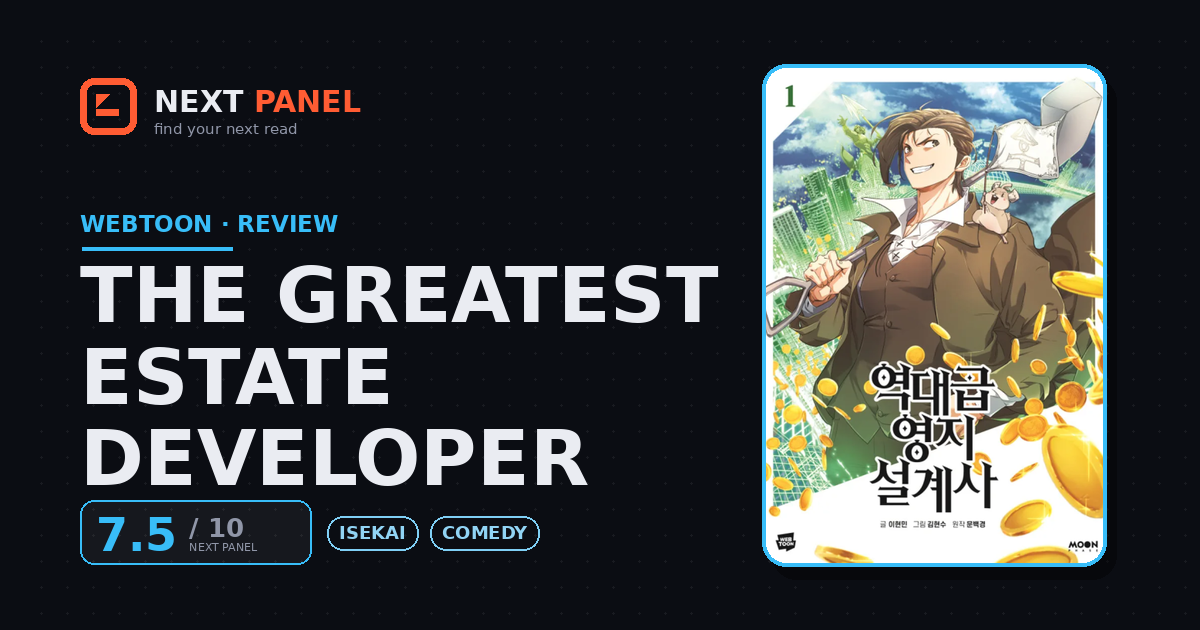
The predecessor series set centuries earlier in the same shared world.
Doctor Elise: The Royal Lady with the Lamp
Shares the isekai-doctor hook of using modern medical knowledge to navigate a fantasy court.
The Remarried Empress
For readers who want another fantasy webtoon steeped in imperial court politics and intrigue.
Where to Read Officially
| Platform | Format | Pricing | Region notes | Link |
|---|---|---|---|---|
| WEBTOON | Free webtoon episodes | Free | Region availability varies | Open |
Frequently Asked Questions
Is The Apothecary Prince free to read?
Yes -- it's available free on WEBTOON.
Do I need to read The Greatest Estate Developer first?
No, but it helps -- this is a far-future sequel set in the same world, and some references land better if you've read the earlier series.
Is the series finished?
No, it's still ongoing.