Is Tokyo Crazy Paradise Worth Reading? Review & Where to Read
Quick Answer
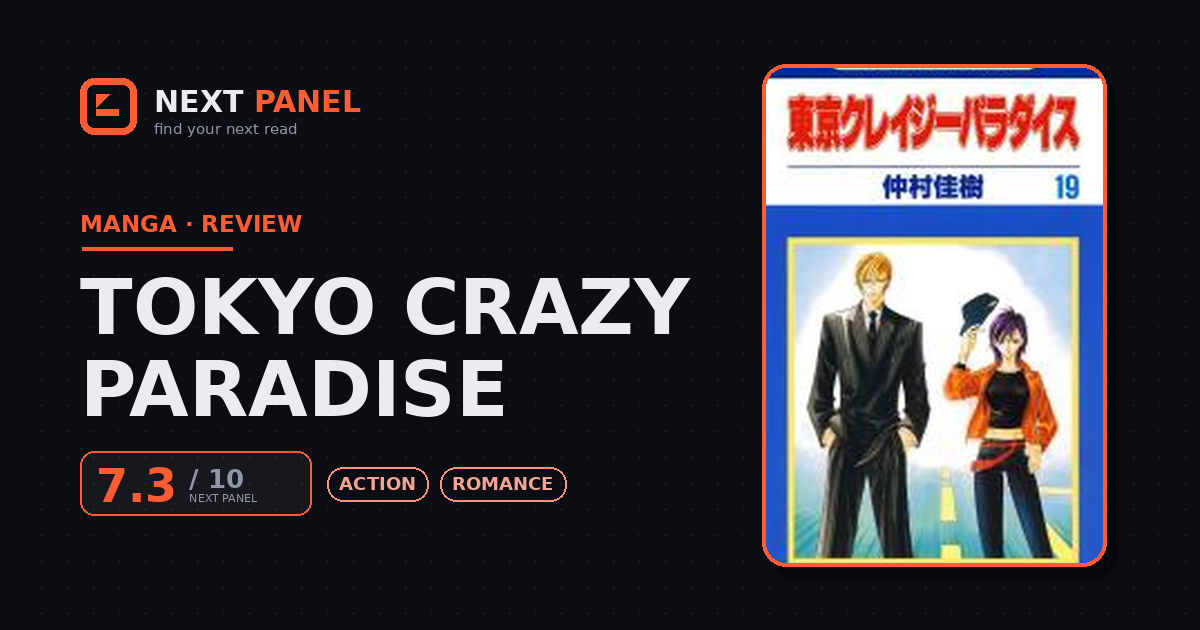
If you want an unusually tough, self-reliant shoujo heroine driving a yakuza-action plot instead of waiting to be rescued, this delivers, though the storytelling gets messier as it goes.
Quick Verdict
“Genuinely tough heroine, plot that loses its grip on pacing the longer it runs.”
Best for: Readers who want a shoujo heroine who fights her own battles, wrapped in a pulpy yakuza-action plot with real momentum.
Not for: Readers who need tight, consistent pacing and full arc resolutions rather than threads that quietly drop and resurface later.
- Type
- Manga
- Genres
- Romance, Action
- Status
- Completed
- This review
- Minor Spoilers
- Author
- Yoshiki Nakamura
- Publisher
- Hakusensha
| Quick facts | |
|---|---|
| Format | Manga (shōjo), 19 volumes |
| Run | completed |
| Community score | MangaUpdates 8.7 |
Overview
In a near-future Tokyo overrun by crime, Tsukasa Kozuki's police-officer parents raise her as a boy to keep her safe from the violence targeting women in the streets. When they're killed in a yakuza conflict, Tsukasa turns to the one person she can think of for help: Ryuji Shirogami, her longtime classmate and the head of the powerful Kuryu-gumi yakuza clan. Ryuji takes her on as his personal bodyguard, and Tokyo Crazy Paradise spends its run on their partnership as they hunt down the people responsible for both their parents' deaths, while Ryuji piles on debts and pretexts to keep the reluctant Tsukasa close.
Yoshiki Nakamura, later known for Skip Beat!, builds this as a pulpy blend of yakuza action, shoujo romance, and comedy that rarely slows its pace.
What it does well
Tsukasa is the reason this one has stuck with readers for decades. She's a shoujo heroine who actually fights her own battles and spends most of the story protecting Ryuji rather than the other way around, which was a genuinely unusual dynamic for the genre at the time and still reads as refreshing now. The yakuza-conflict plot gives the story real stakes and forward motion, and Nakamura balances that tension well against a steady stream of comedy, particularly Ryuji's escalating, increasingly absurd jealousy whenever another man gets close to Tsukasa.
The manga also does right by its large supporting cast. Side characters who disappear for stretches of the story get remembered and brought back with real follow-through, which gives Tokyo Crazy Paradise's world a lived-in quality a lot of long-running shoujo series don't bother with.
Where it falls short
The plotting loosens considerably as the series goes on. Story arcs introduced with real momentum sometimes trail off without clear resolution, with the manga simply moving on to its next conflict rather than closing the loop. The central romantic obstacle between Tsukasa and Ryuji also drags well past the point of building tension, and by the time it resolves, the payoff feels muted compared to how strong their earlier chemistry was.
The series' central relationship also carries a real dissonance for modern readers given the ages involved relative to some of its content, which is worth going in aware of.
Verdict
Tokyo Crazy Paradise is a genuinely fun, action-driven shoujo classic anchored by one of the more capable heroines the genre has produced. The loose plotting and dragged-out romantic tension keep it from greatness, but Tsukasa alone makes this worth the read for fans of tougher shoujo leads.
Strengths & Weaknesses
Strengths
- Tsukasa is a genuinely rare shoujo lead for her era — she fights her own battles and spends most of the series protecting the male lead rather than the reverse.
- The yakuza-action plot gives the story real tension and momentum that a lot of straightforward shoujo romance doesn't bother chasing.
- The comedy lands consistently, with Ryuji's jealousy and the cast's banter providing a reliable counterweight to the heavier plot threads.
- Nakamura remembers and revisits side characters instead of discarding them, which gives the large cast a surprisingly lived-in feel.
Weaknesses
- The plotting gets noticeably looser as the series runs — some story arcs trail off without a clear resolution before the manga moves to the next one.
- A central romantic obstacle drags on well past the point of adding tension, and the payoff for the central couple ends up feeling muted rather than earned.
- The central couple's ages relative to the story's content will read as a real dissonance for modern readers.
Similar Titles
A different, more career-focused shoujo from the same creator if you want similarly sharp character writing.
A different era and setting, but another shoujo classic built around an unusually capable heroine.
A different genre of action manhwa, but a similar case of real momentum undercut by looser plotting later on.
Frequently Asked Questions
Is Tokyo Crazy Paradise finished?
Yes, it's complete at 19 volumes (10 in the later omnibus edition).
Is Tokyo Crazy Paradise licensed in English?
No, there's no official English release, so it's only available through fan scanlations.
Is this more action or romance?
It leans action first, with a yakuza-conflict plot driving most chapters, while the romance between Tsukasa and Ryuji develops as an ongoing thread alongside it.