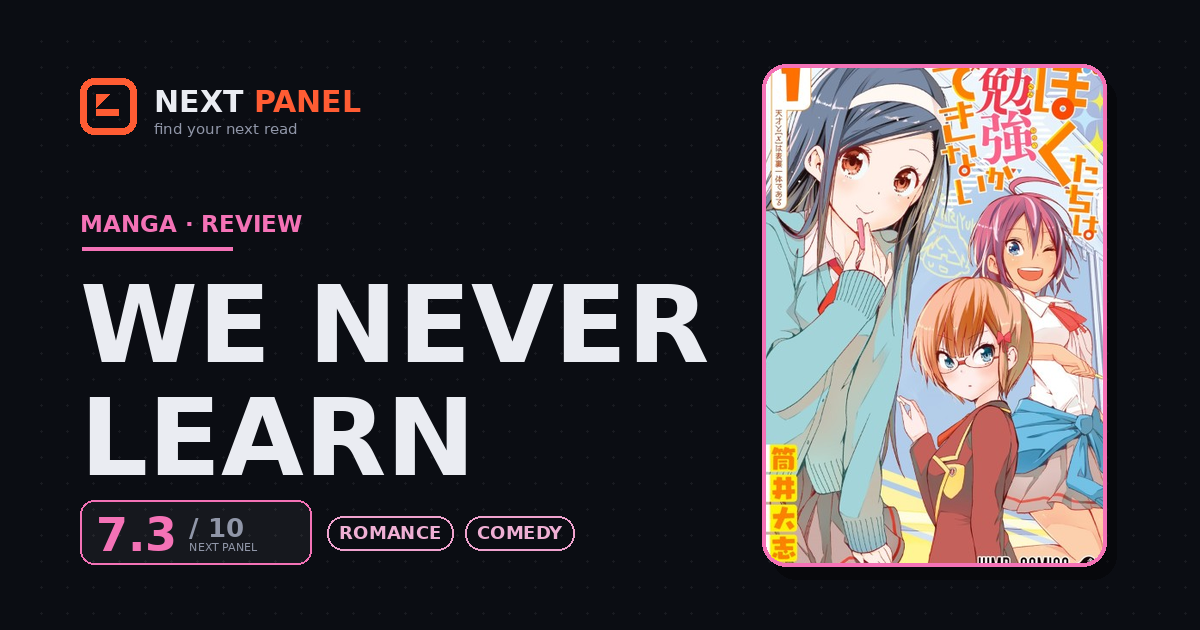
Is We Never Learn Worth Reading? Review & Where to Read
Quick Answer
Yes, if you like the genre. We Never Learn is a well-drawn, competently paced harem rom-com with a likable cast, even if it doesn't do much to stand out from other tutor-and-student setups until its later volumes.
Quick Verdict
“Solid, good-looking harem rom-com that plays its genre's greatest hits well without reinventing much of anything.”
Best for: Readers who want a classic harem structure with a big, distinct cast of love interests and plenty of study-themed banter.
Not for: Readers who want a story to commit to one pairing early or a plot beyond the central romance.
- Type
- Manga
- Genres
- Romance, Comedy
- Status
- Completed
- This review
- Minor Spoilers
- Author
- Taishi Tsutsui
- Publisher
- Shueisha / VIZ Media
- Platform
- VIZ Shonen Jump
| Quick facts | |
|---|---|
| Format | Manga (shōnen), 187 chapters, 21 volumes |
| Run | 2017–2020 · completed |
| Community score | AniList 7.5 · MangaUpdates 7.4 |
| Content | Mild fanservice |
| Where to read | VIZ Shonen Jump — official |
Overview
Nariyuki Yuiga is a genius at everything except picking a specialty, which is a problem when his only shot at college is a scholarship that requires him to tutor his school's two top students toward their own dream schools. The catch: Fumino Furuhashi is a science prodigy who's hopeless at humanities, and Rizu Ogata is a math genius who can't handle science, so Nariyuki has to somehow cover both of their weak subjects himself. As the story goes on, more girls -- each brilliant in her own specific way and each increasingly interested in Nariyuki -- join the cast, and the tutoring premise becomes the backbone for a fairly traditional harem rom-com.
What it does well
Tsutsui uses the academic angle well: every heroine's subject specialty doubles as a way to characterize her, so study sessions become actual character scenes instead of just an excuse to get everyone in one room. The art is a genuine strength here, clean and expressive, equally good at exaggerated comedy faces and the quieter, more sincere romantic beats the story occasionally slows down for. The comedy lands consistently, especially anything filtered through Nariyuki's increasingly exhausted, overworked perspective as he juggles tutoring, his own studies, and a part-time job. To its credit, the manga also gives its heroines real struggles beyond just liking the lead -- career pressure, family expectations, and self-doubt all get real page time.
Where it falls short
The harem structure is the story's biggest limitation: because the whole cast is competing for the same outcome, the central romance can't meaningfully progress for a very long time, which will test the patience of readers who want the story to actually move. Later-introduced girls, added as the cast grows, get noticeably less development than the original pair, reduced closer to genre archetypes -- the reliable joke, the obvious rival -- than fully realized characters in their own right. The ending, when it finally resolves the central question, plays it in a way a lot of readers found underwhelming given how long the build-up ran.
Verdict
We Never Learn is a well-made example of a genre that lives or dies on execution, and the execution here is genuinely good -- sharp comedy, strong art, and a cast that's more than just a collection of tropes even if it doesn't fully escape them. If you're already tired of the harem-rom-com format, this won't convert you, but if you like the genre and want one with real craft behind the jokes and the character writing, it delivers on its own terms.
Strengths & Weaknesses
Strengths
- Each of the main girls has a distinct academic specialty and personality, so the tutoring scenes double as real character work instead of filler.
- Taishi Tsutsui's art is clean, expressive, and good at both comedy faces and quieter romantic beats.
- The comedy timing is sharp, especially around Nariyuki's exhausted, overworked-tutor perspective.
- The series is willing to let its heroines have real academic and personal struggles, not just crushes.
Weaknesses
- The core harem structure means the central romance stalls for a long time, which will frustrate readers who want forward movement.
- A few of the later-introduced girls get noticeably less development than the original cast.
- The ending resolves the central question in a way plenty of readers found unsatisfying after that much build-up.
Similar Titles
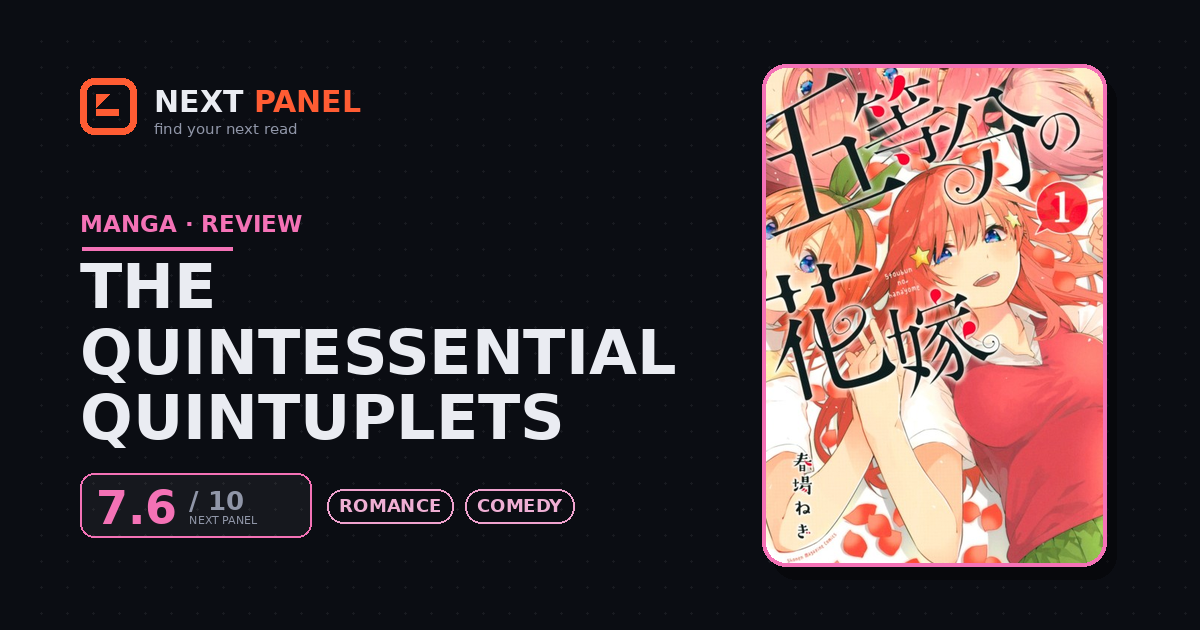
The Quintessential Quintuplets
A similar 'one guy, several distinct girls' harem structure with a comparable emphasis on character-driven comedy.
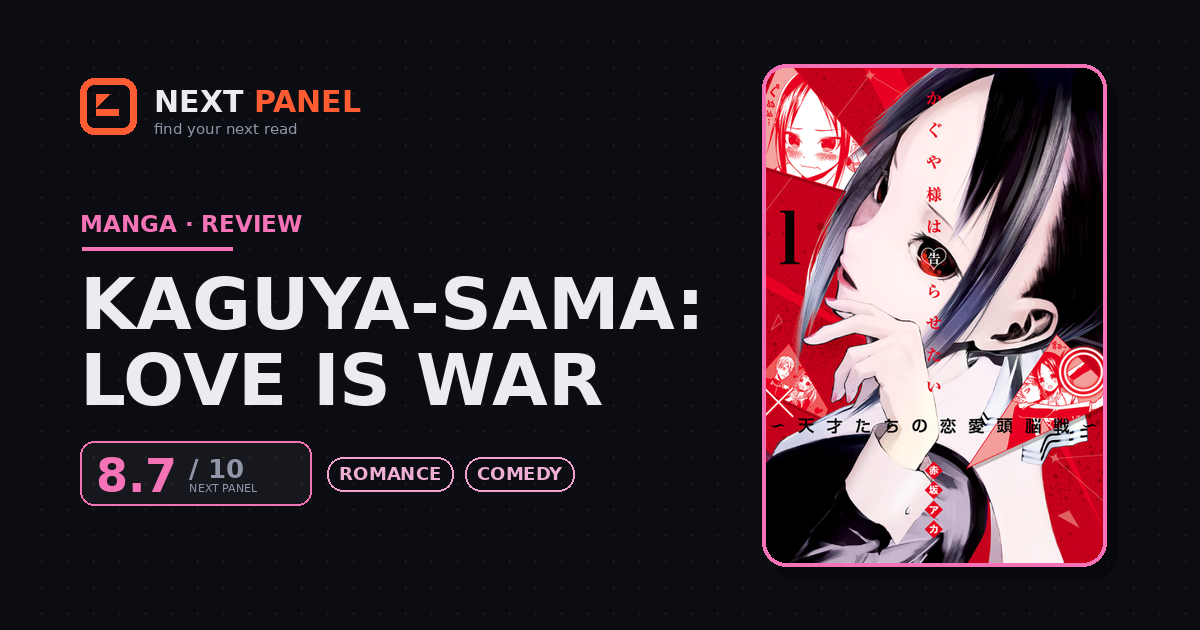
Sharper and more focused as a two-person rom-com, if the harem structure here isn't for you.
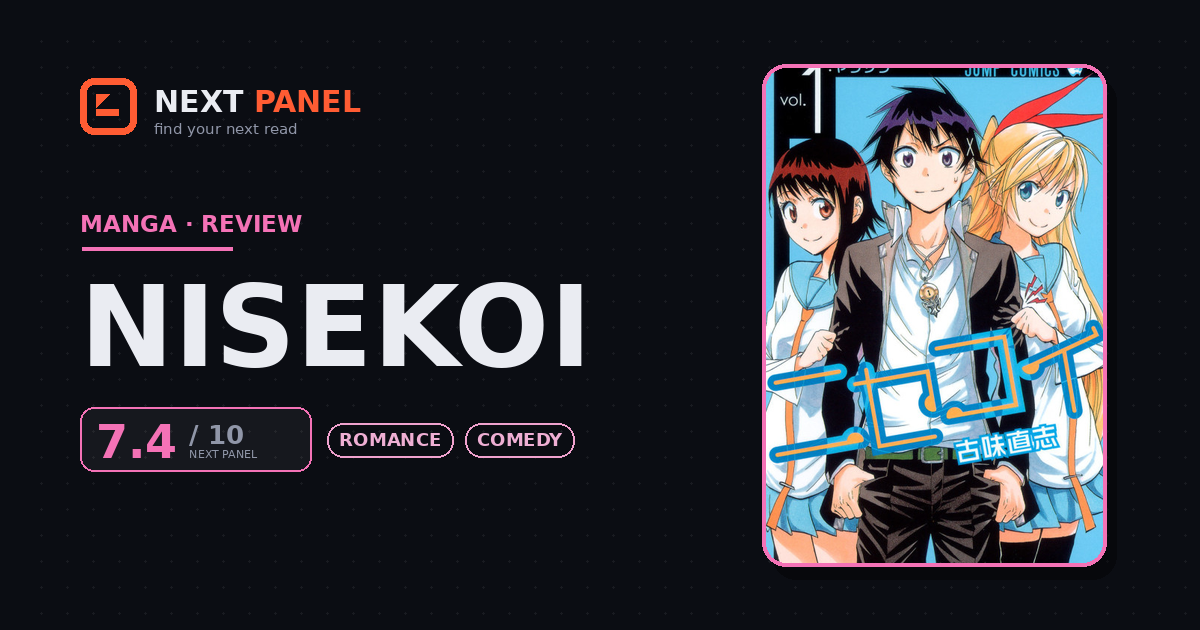
Another long-running harem rom-com built around a slow-burn central choice.
Where to Read Officially
| Platform | Format | Pricing | Region notes | Link |
|---|---|---|---|---|
| VIZ Shonen Jump | Digital chapters & volumes | Free + Paid | Region availability varies | Open |
Frequently Asked Questions
Is We Never Learn finished?
Yes, the main series is complete at 21 volumes, with a couple of bonus one-shot follow-ups released afterward.
Does the story pick a girl in the end?
Yes, without spoiling which one — the ending does resolve the central romance, though reactions to how it gets there are mixed.
Is there an anime?
Yes, a two-season anime adaptation aired covering a good portion of the manga's story.