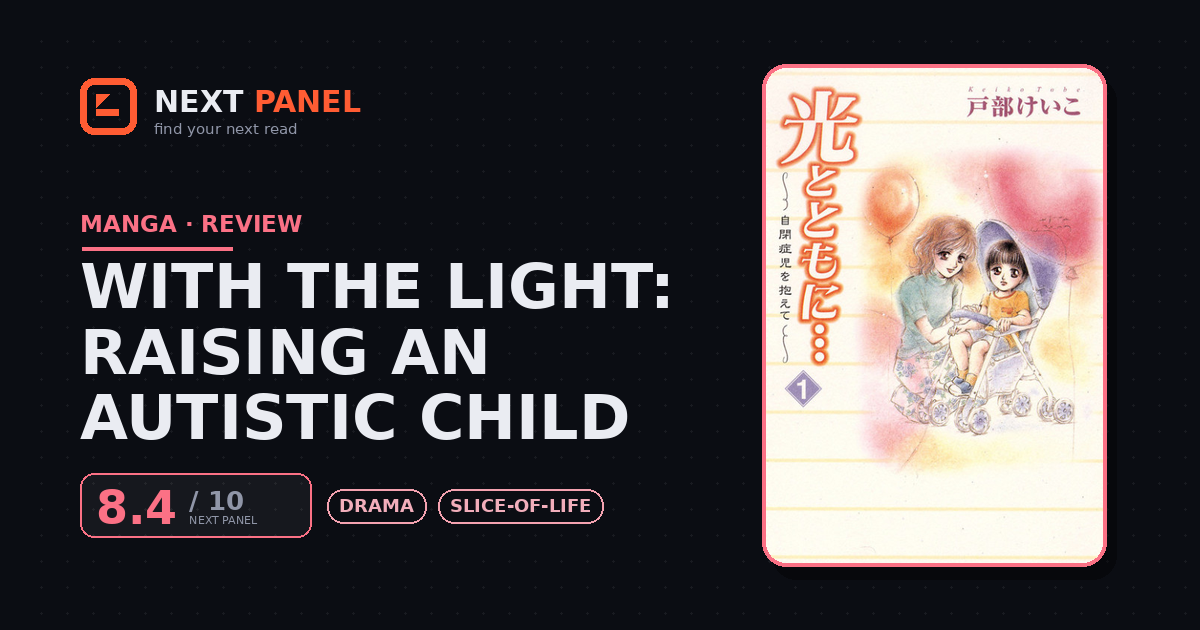
Is With the Light: Raising an Autistic Child Worth Reading? Review & Where to Read
Quick Answer
Yes, especially for readers with any personal or professional connection to autism or special-needs parenting. It's detailed, well-researched, and treats its subject with real seriousness rather than turning it into an inspirational simplification.
Quick Verdict
“Few manga commit to a single real-world subject with this much patience and research, and that commitment is exactly what makes Sachiko's years-long fight for her son land as hard as it does.”
Best for: Readers who want a detailed, well-researched drama about autism and special-needs parenting, especially those with a personal or professional connection to the subject.
Not for: Readers who want a fast-paced, plot-driven story with a consistently light emotional tone.
- Type
- Manga
- Genres
- Drama, Slice of Life
- Status
- On Hiatus
- This review
- Minor Spoilers
- Author
- Keiko Tobe
- Publisher
- Akita Shoten
- Platform
- Yen Press
| Quick facts | |
|---|---|
| Format | Manga (josei), 93 chapters, 15 volumes |
| Run | 2000–2009 · on hiatus |
| Community score | AniList 7.8 · MangaUpdates 8.0 |
| Content | Depictions of bullying, ableism, and institutional failure toward a disabled child |
| Where to read | Yen Press — official |
Overview
Sachiko Azuma expects the ordinary joys of new motherhood when her son Hikaru is born. Instead, she notices early on that something is different — he doesn't want to be held, doesn't respond the way other babies do, and doctors initially misread the signs. Once Hikaru is diagnosed with autism, the manga follows Sachiko across years of his life as she learns what he actually needs, fights schools and relatives who don't understand him, and works toward the goal that drives the whole series: helping Hikaru grow into a capable, independent adult.
Written and illustrated by Keiko Tobe, the series was serialized in Akita Shoten's For Mrs. starting in 2000 and published in English by Yen Press across eight collected volumes. Tobe went on hiatus in 2009 due to illness and died in January 2010, leaving the story without a full ending.
What it does well
What sets this manga apart is how specific it gets. Rather than treating autism as a vague source of sentimental drama, Tobe walks through the real, granular details of Sachiko's fight — the misdiagnoses, the schools without any real plan for a child like Hikaru, the family members who mean well but don't know how to adjust. That specificity is clearly the product of real research, and it gives the story a weight that a more generalized approach couldn't.
Sachiko herself is written honestly. She gets things wrong, loses patience, and has to unlearn her own assumptions alongside everyone else in Hikaru's life, which keeps her from becoming a flattened, saintly caretaker figure. Her growth over the course of the series feels earned because the manga is willing to show her struggling with it.
The series is also unflinching about how the people around Hikaru fail him, from classmates and teachers to extended family, which gives the story real stakes beyond just the Azuma household — this is as much about a community's failure to accommodate a child as it is about one family's journey. And Tobe's art does real work in rendering Hikaru's own sensory experience, giving readers a way to understand his perspective directly rather than only watching him from the outside.
Where it falls short
This is a heavy, sustained read. It isn't built for escapism, and readers should go in knowing the manga is going to sit with difficult material — bullying, institutional failure, and the exhaustion of caregiving — for the long haul rather than resolving it quickly.
The pacing is deliberate and detail-oriented in a way that reads closer to long-form documentary than plot-driven drama, which may not suit readers looking for narrative momentum. And because Tobe died before finishing the story, the English release doesn't reach a full conclusion — that's worth knowing before committing to the whole run.
Verdict
With the Light takes its subject as seriously as any manga could, and that seriousness is exactly what makes it worth reading if the subject matter speaks to you. If you want a detailed, honestly observed drama about autism and special-needs parenting, this remains one of the strongest examples of the form, even unfinished; if you're looking for something lighter or plot-driven, this isn't the right shelf.
Strengths & Weaknesses
Strengths
- The manga treats autism with real specificity rather than vague sentimentality, walking through the practical, everyday details of Sachiko's fight to get Hikaru understood, from misdiagnosis to unequipped schools to family members who don't know how to help.
- Sachiko herself is written as a full, sometimes frustrated, sometimes wrong person rather than a saintly caretaker, which makes her growth alongside Hikaru's feel honest instead of performative.
- The series doesn't flinch from showing how the people around Hikaru fail him — bullying classmates, dismissive teachers, well-meaning but clueless relatives — which gives the story real stakes beyond the family's own household.
- Tobe's art renders Hikaru's inner experience and sensory world with real care, helping readers understand his perspective rather than only observing him from the outside.
Weaknesses
- The subject matter is heavy and sustained — this isn't a manga to read for entertainment or escapism, and readers should know that going in.
- The pacing is deliberate and detail-focused, closer to a long-form documentary than a plot-driven drama, which may test readers expecting more narrative momentum.
- The series was left unfinished after creator Keiko Tobe's death in 2010, so readers should know upfront that the English release doesn't reach a full conclusion.
Similar Titles
Another manga grounded in disability and how a community fails or supports a child who needs understanding, if you want a similarly serious drama.
Sweetness & Lightning
A gentler family-focused slice-of-life if you want a lower-intensity story about parenting under difficult circumstances.
A different, warmer slice-of-life drama for a lower-stakes read on the same general shelf.
Where to Read Officially
| Platform | Format | Pricing | Region notes | Link |
|---|---|---|---|---|
| Yen Press | Print volumes | Paid | Region availability varies | Open |
Frequently Asked Questions
Is With the Light finished?
No. Creator Keiko Tobe went on hiatus in 2009 due to illness and died in January 2010, leaving the series without a full conclusion.
Where can I read it officially?
Through Yen Press, which published the English translation in print volumes.
Is this based on a real family?
It's fiction, but Tobe created it after meeting the mother of an autistic classmate of her own son, and drew on extensive research into autism.