Is Yomawari Sensei Worth Reading? Review & Where to Read
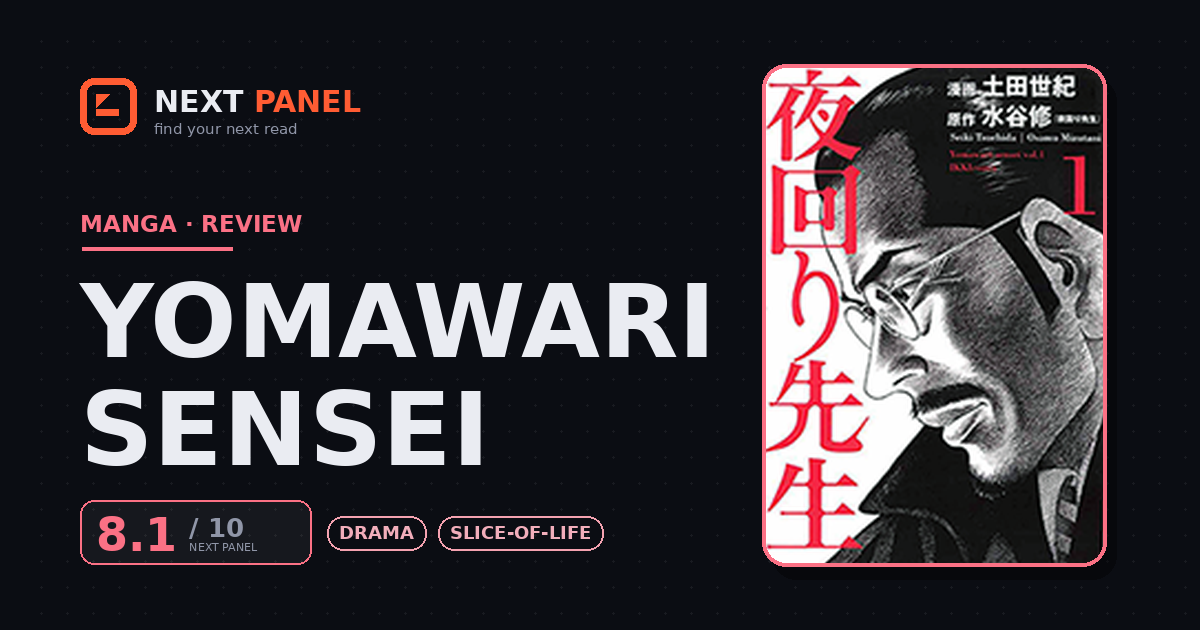
Quick Answer
One of the most quietly devastating manga you can read if you want something grounded in real experience instead of fiction -- go in knowing the subject matter is genuinely heavy.
Quick Verdict
“Every chapter ends with the same small act of someone refusing to give up on a kid, and that's what makes this hit as hard as it does.”
Best for: Readers who want unflinching, true-to-life drama about troubled youth and the adults who actually show up for them.
Not for: Readers who want a fictional plot to follow and a lighter emotional tone from what they're reading.
- Type
- Manga
- Genres
- Drama, Slice of Life
- Status
- Completed
- This review
- Minor Spoilers
- Author
- Osamu Mizutani
- Artist
- Seiki Tsuchida
- Publisher
- Shogakukan
| Quick facts | |
|---|---|
| Format | Manga (seinen), 45 chapters, 9 volumes |
| Run | 2004–2008 · completed |
| Community score | AniList 8.1 · MangaUpdates 7.6 |
| Content | Self-harm, drug abuse, abuse, suicide themes |
Overview
Yomawari Sensei isn't fiction dressed up as realism -- it's a direct account, adapted into manga form, of Osamu Mizutani's twelve years walking the streets of Yokohama at night, looking for teenagers that everyone else had already written off. Runaways, kids cutting themselves, kids deep into drug use, kids who just needed one adult to notice them before it was too late -- each chapter follows one of these encounters, drawn by Seiki Tsuchida with a restraint that lets the real subject matter carry the weight instead of leaning on melodrama.
What it does well
What makes this manga hit as hard as it does is exactly what makes it hard to categorize: it isn't building toward a plot twist or an arc, it's recounting things that actually happened to actual kids, and that grounding changes how every chapter lands. These aren't cautionary tales about troubled teens as a category -- they're specific people with specific reasons for where they've ended up, and Mizutani treats them with a level of respect and patience that a lot of fictional "issues" manga never manage.
The episodic format works in the manga's favor too. Each chapter is a self-contained story, which means you can read one at a time and let it sit before moving to the next, rather than getting swept along by momentum that might undercut how heavy the material is. And the small, hard-won words of encouragement Mizutani offers at the close of each chapter never come off as a lecture -- they read like exactly what they are: a man who's spent over a decade doing this work, saying the thing he's learned actually helps.
Where it falls short
This needs to be said plainly: the content here is genuinely heavy, presented without much softening -- self-harm, drug abuse, and suicidal ideation are all handled directly rather than implied, and that's simply not going to be a manga everyone is in a place to read. There's also no ongoing plot or character arc connecting the chapters, since this is autobiographical and episodic by nature, so don't come to it looking for a traditional story to follow across the whole run. And currently there's no official English license, so English-reading access depends on older fan translations rather than a reliable ongoing release.
Verdict
Yomawari Sensei is one of the most quietly devastating things you can read in manga form, precisely because none of it is invented -- it's a real teacher's account of showing up, over and over, for kids nobody else would. It asks a lot of its reader, but it earns every bit of that weight.
Strengths & Weaknesses
Strengths
- Every episode is grounded in the real author's actual 12 years of night patrol work, which gives the manga a weight and specificity fiction can't easily fake.
- The manga treats troubled teenagers as full people with real reasons for their struggles, rather than cautionary-tale stereotypes.
- Mizutani's closing words at the end of each chapter land as genuine, hard-won encouragement rather than a moralizing lecture.
- The episodic structure lets each chapter stand on its own as a complete, emotionally resonant story, making it easy to read in whatever doses you can handle.
Weaknesses
- The subject matter -- self-harm, drug abuse, suicidal ideation -- is presented directly and without much softening, which some readers will find genuinely difficult.
- Because it's episodic and autobiographical, there's no ongoing plot or character arc to follow across the whole book.
- There's no official English release, so English-reading access currently depends on older fan translations.
Similar Titles
Very different setting, but shares an unflinching willingness to put real weight and consequence behind its darker subject matter.
For a tonal palate cleanser after -- unrelated in content, but a good contrast if you need something lighter next.
Frequently Asked Questions
Is Yomawari Sensei finished?
Yes, it's complete at 9 volumes.
Is there an official English release?
No, there's currently no official English license; older fan translations exist but availability isn't guaranteed.
Is this a true story?
Yes -- it's based on author Osamu Mizutani's own 12 years working night patrols as a real high school teacher in Yokohama.