Is Tsumiki Ogami's Not-So-Ordinary Life Worth Reading? Review & Where to Read
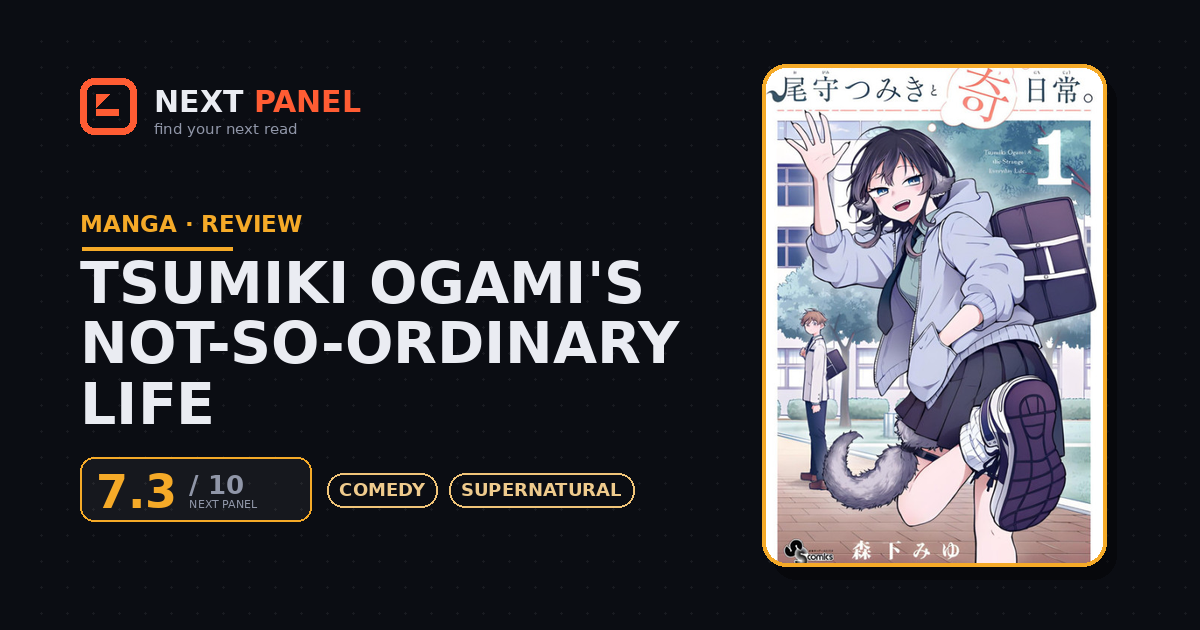
Watching an anxious new kid try to keep up with a fearless werewolf girl who treats every day like an adventure makes for a surprisingly sweet school comedy.
Spoiler-light · Honestly rated
Every review labels its spoiler level, separates art from writing, and ends with an official way to read.
We use the whole 1–10 scale and judge each title against the best version of what it is trying to be — a comedy on how funny it is, a thriller on its tension — not against some other genre. As a rough guide: 9+ is all-time great, 8 excellent, 7 a solid recommendation with caveats, 5–6 mixed or average. A 7 is a genuine yes, not a knock. The “Community score” in each review is the crowd rating from AniList, MAL, and MangaUpdates, shown next to ours for comparison.

Three genius sisters who can't quite function without their new, utterly average roommate turns out to be a sweeter hook than it sounds on paper.

Blind-date mixer farce where half the 'guys' are secretly women in disguise, and somehow the romance still works underneath it all.

The 'which one of these four girls is my childhood radio crush' hook is a genuinely clever twist on a genre that usually skips the mystery part entirely.

Office rom-com comfort food for anyone tired of the will-they-won't-they dragging on for volumes of high schoolers instead of actual adults.

Comfort-food isekai for anyone who wants low stakes, big laughs, and a heroine too oblivious to notice she's the center of everyone's attention.

Norihiro Yagi's pre-Claymore comedy turns a simple joke, a gentle boy who looks like a yakuza nightmare, into a genuinely sturdy shonen comedy that holds up decades later.

Yuuki Kodama's demon-world action comedy follows an otaku vampire boss on a genuinely inventive quest to resurrect the human girl he fell for and lost in the same chapter.

Akiko Higashimura's josei comedy follows a shy otaku illustrator out of her shell, using fashion and self-transformation as the engine for real personal growth instead of a makeover-trope punchline.

Aya Nakahara's height-gap romantic comedy turns an old shojo joke, a tall girl and a short boy, into one of the genre's most durable will-they-won't-they pairings.

Koucha Agasawa's opposites-attract romcom uses its extrovert-introvert pairing as a way into genuinely well-observed social anxiety, not just a gimmick.