Manga7.8Minor SpoilersCompleted
Is Hi Score Girl Worth Reading? Review & Where to Read
Nostalgic without being hollow about it, and the romance actually earns its slow burn instead of just stalling for volumes.
Spoiler-light · Honestly rated
Every review labels its spoiler level, separates art from writing, and ends with an official way to read.
We use the whole 1–10 scale and judge each title against the best version of what it is trying to be — a comedy on how funny it is, a thriller on its tension — not against some other genre. As a rough guide: 9+ is all-time great, 8 excellent, 7 a solid recommendation with caveats, 5–6 mixed or average. A 7 is a genuine yes, not a knock. The “Community score” in each review is the crowd rating from AniList, MAL, and MangaUpdates, shown next to ours for comparison.

Almost nothing happens, and that's the entire point — it's comfort reading done right.

It's basically whipped cream: light, a little sweet, and gone before you notice how much of it you ate.
This is comfort food — silly, sprawling, and genuinely funny as long as you don't ask it to go anywhere in particular.

The setup is rough on purpose, and it pays that roughness off better than you'd expect over eight volumes.
Nothing bad happens in this manga on purpose, and that's exactly the appeal.

The premise is a gimmick, but Morimoto commits to it hard enough that the gimmick works for fifteen volumes.
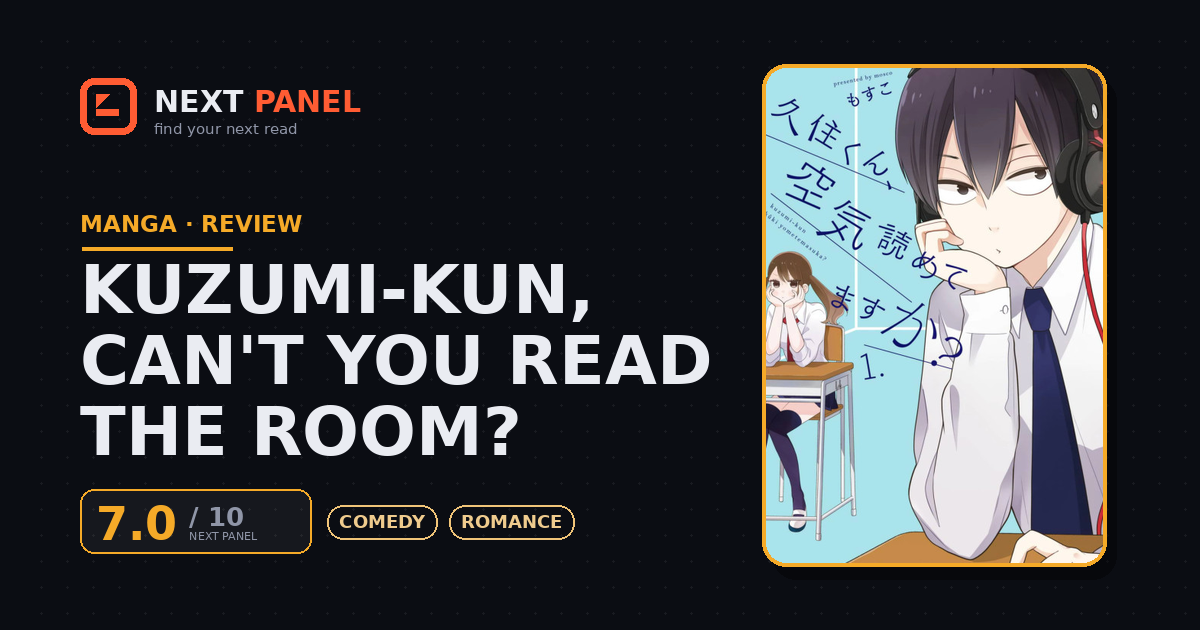
Erika throws everything she has at Kuzumi and he catches none of it, and somehow watching that happen chapter after chapter never quite stops being funny.
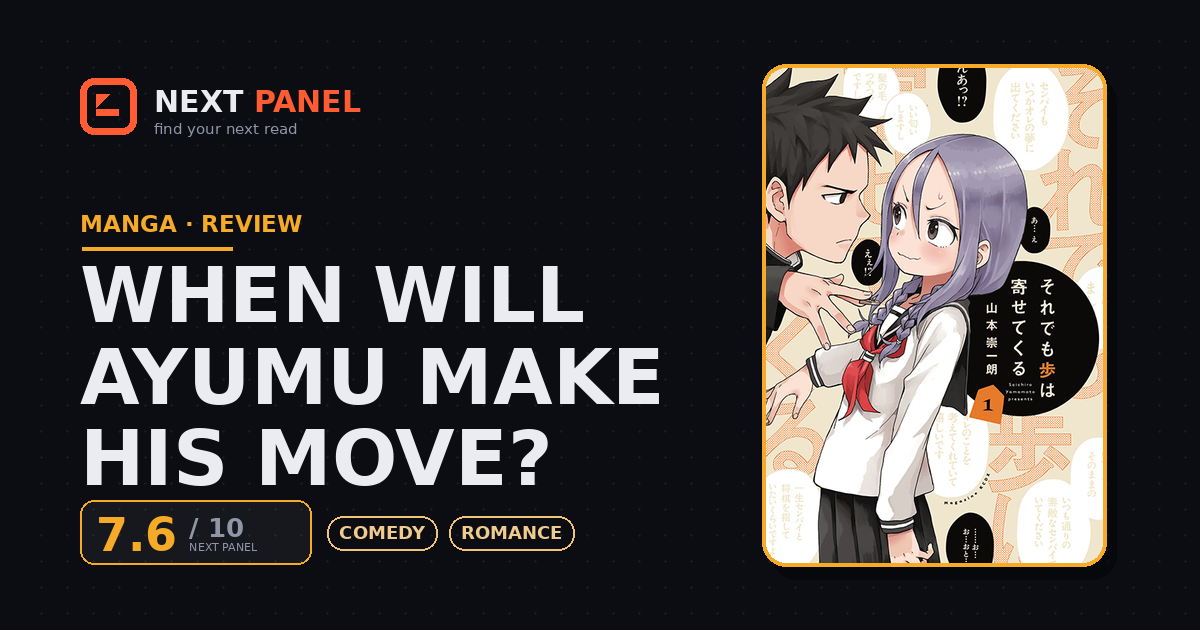
One joke, one goal, one shogi board — and somehow that's enough to carry a complete, consistently charming romantic comedy without ever wearing out its premise.
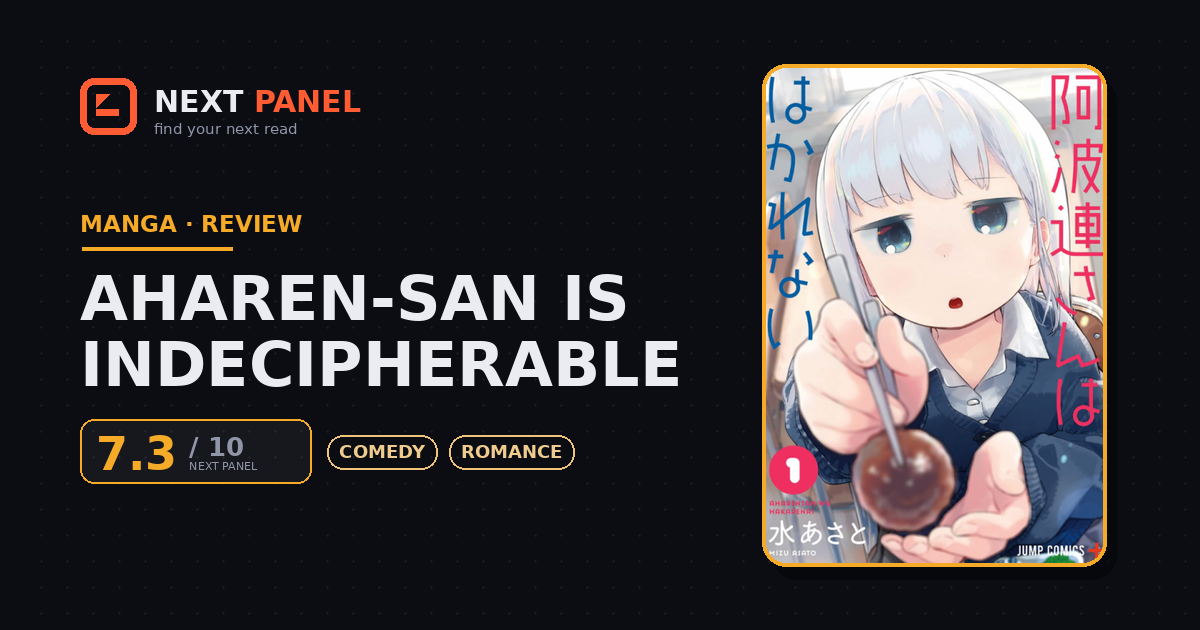
This one lives entirely in its central joke — Aharen's broken sense of personal space — and it's funny and sweet enough, chapter after chapter, that the joke never quite wears out.

It shouldn't work as well as it does — a gag-per-chapter monster comedy that slowly turns into a genuine will-they-won't-they with real stakes, and Shinohara's art sells every tonal swing.