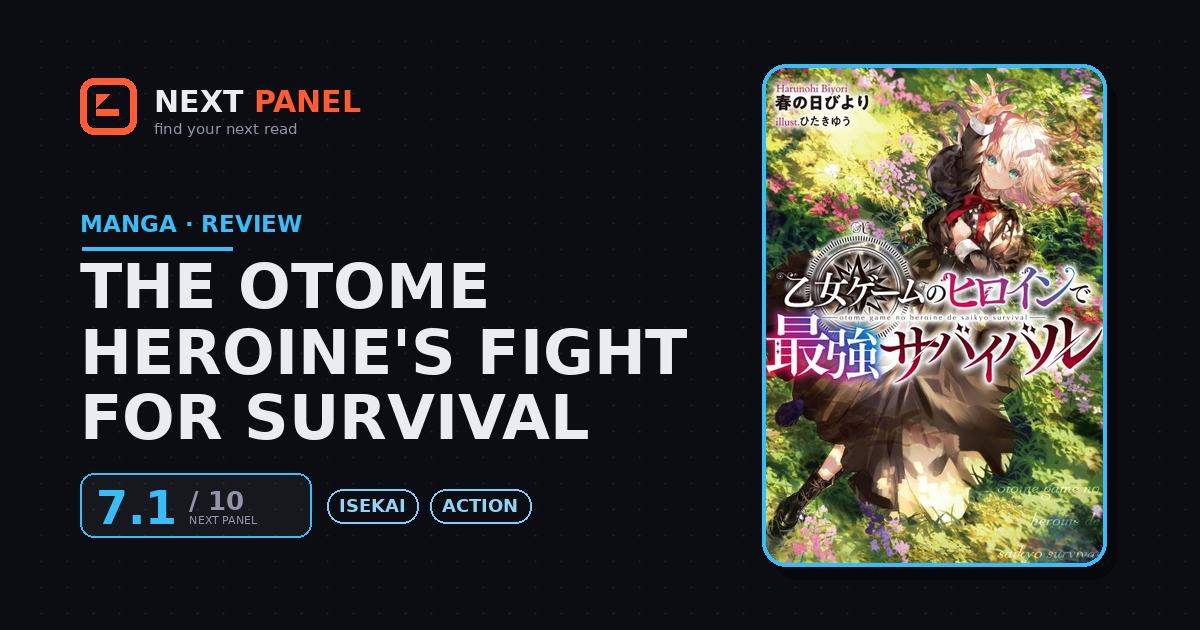
Manga7.1Minor SpoilersOngoing
Is The Otome Heroine's Fight for Survival Worth Reading? Review & Where to Read
Alicia's refusal to play the romance game she's been dropped into is the whole appeal, and the manga is smart enough not to walk that back.
Spoiler-light · Honestly rated
Every review labels its spoiler level, separates art from writing, and ends with an official way to read.
We use the whole 1–10 scale and judge each title against the best version of what it is trying to be — a comedy on how funny it is, a thriller on its tension — not against some other genre. As a rough guide: 9+ is all-time great, 8 excellent, 7 a solid recommendation with caveats, 5–6 mixed or average. A 7 is a genuine yes, not a knock. The “Community score” in each review is the crowd rating from AniList, MAL, and MangaUpdates, shown next to ours for comparison.
The father-daughter thread is doing more emotional work here than the romance is, and that's the part worth sticking around for.

Rebuilding a merchant empire through smarter trades and better-read contracts turns out to be just as tense as any sword fight once you know exactly how much Seoho has already lost by trusting the wrong people.

Making a man who already saved one world go back to work fighting monsters for hourly pay turns the usual hunter-power-fantasy formula into something much funnier than it has any right to be.

Refusing to die on schedule for someone else's story turns a familiar reincarnated-necromancer setup into something with actual teeth once the manor's curses start revealing what's really going on.

Trading superpowers for spreadsheets and loan contracts as a revenge tool sounds like it would drain the tension, but watching Muhyeok outmaneuver people twice his age keeps it sharp.

Watching Daichi get flustered by Akira's rare girly side shouldn't work in a childhood-friends romance where the couple already knows everything about each other, but it finds a new angle anyway.

Forcing two people who can't stand each other into a shared house, shared meals, and a shared secret turns out to be a much better engine for romantic tension than another slow-burn confession arc.

Building a forced-marriage plot around a princess everyone's written off as broken shouldn't be this compelling, but the question of what she's actually hiding behind that act carries the whole story.

Solving an empire's worth of political intrigue one acupuncture session at a time sounds like a gimmick, but the medical detail is specific enough to carry it.

Dragging a homesick transfer student around Hokkaido could have been a one-note gimmick for a loud gyaru with a thick regional accent, but the specificity of the setting is what makes it charming.