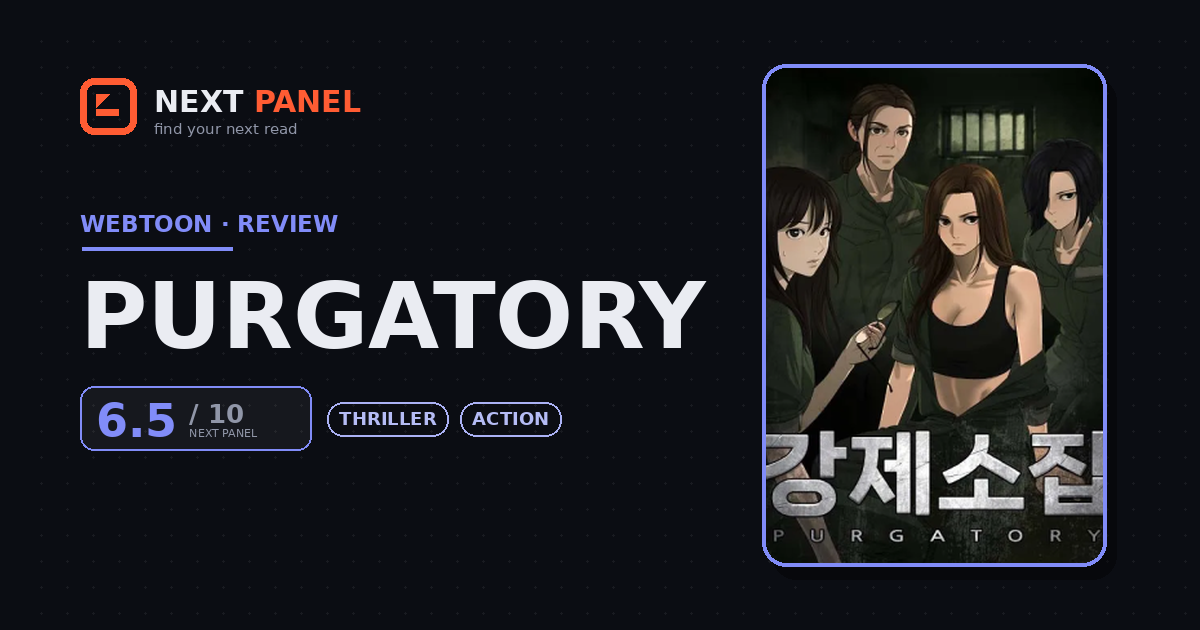
Webtoon6.5Minor SpoilersCompleted
Is Purgatory Worth Reading? Review & Where to Read
Does the death-game formula efficiently rather than ambitiously, and finishes before that becomes a real problem.
Spoiler-light · Honestly rated
Every review labels its spoiler level, separates art from writing, and ends with an official way to read.
We use the whole 1–10 scale and judge each title against the best version of what it is trying to be — a comedy on how funny it is, a thriller on its tension — not against some other genre. As a rough guide: 9+ is all-time great, 8 excellent, 7 a solid recommendation with caveats, 5–6 mixed or average. A 7 is a genuine yes, not a knock. The “Community score” in each review is the crowd rating from AniList, MAL, and MangaUpdates, shown next to ours for comparison.
Forty chapters of lean, mean revenge plotting that knows exactly what kind of story it's telling.
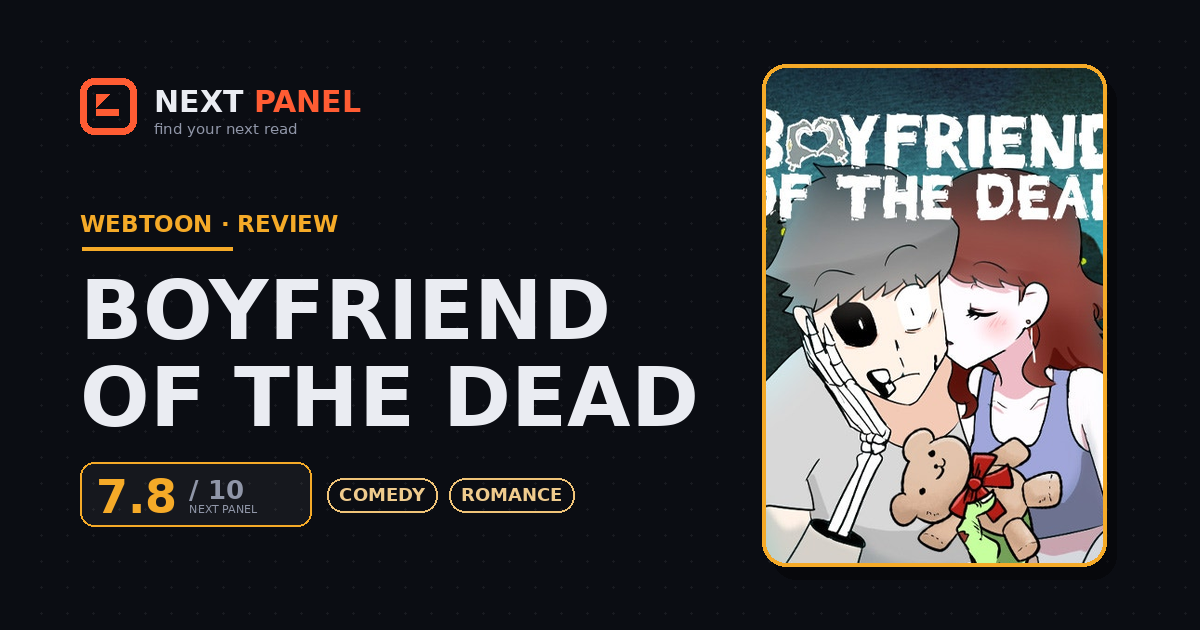
One of WEBTOON's better rom-coms precisely because it never forgets the apocalypse part of its premise.

Spends as much time on its odd-couple chemistry as on its murder case, and somehow that's the right call.

Orhun spends less time monologuing about being underestimated than most of this subgenre, and the fights are sharper for it.

Competent, unhurried isekai that's better at court intrigue than at convincing you Allen's ever actually in danger.
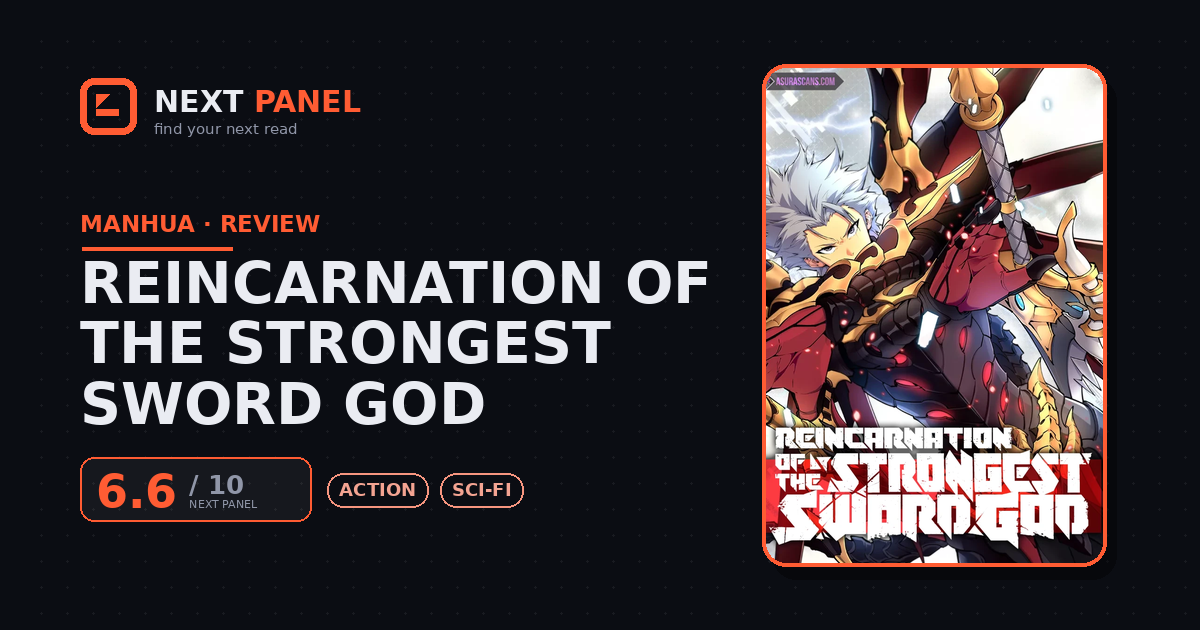
Reincarnation of the Strongest Sword God is a familiar VRMMO regression premise executed with real attention to game-system detail, letting Shi Feng's decade of foreknowledge feel earned rather than just a blanket power advantage.
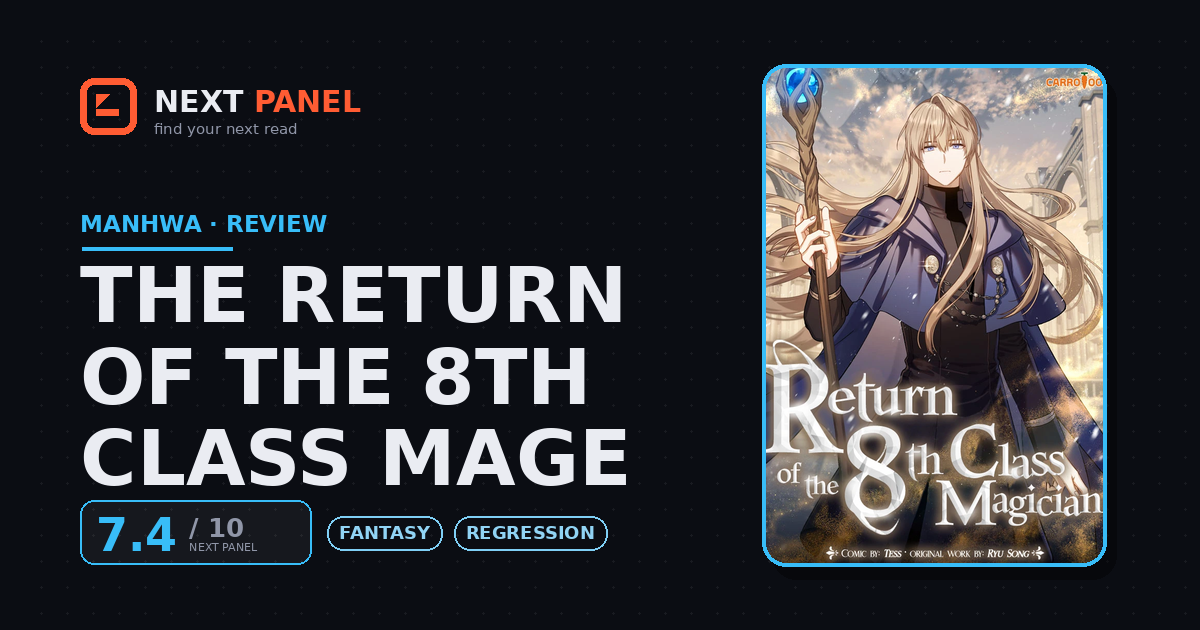
The Return of the 8th Class Mage runs on a familiar betrayal-then-second-chance premise, but executes it with real precision: Ian's foreknowledge is used deliberately, the antagonist feels earned, and the story actually commits to finishing its arc instead of escalating indefinitely.
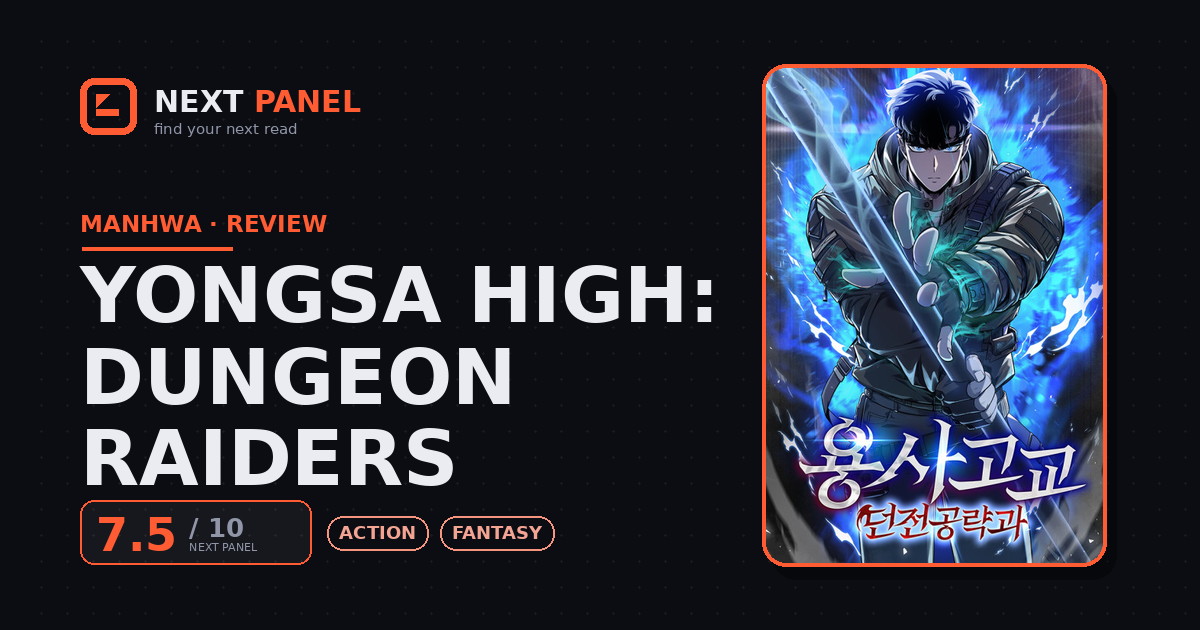
Yongsa High: Dungeon Raiders runs on a familiar poor-secretly-strong-student premise. The specific mystery behind Yoo Jaryong's father's disgrace and Mun-Sik's grounded character writing keep it from feeling like a genre placeholder.
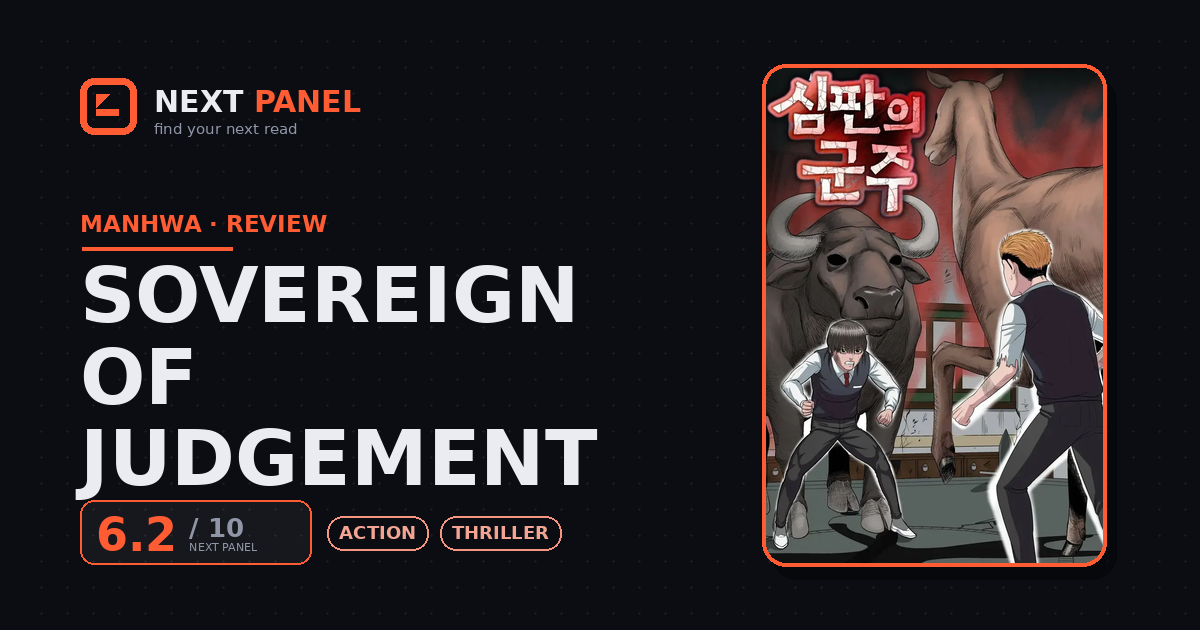
Sovereign of Judgement starts as a tightly-wound moral trap for a protagonist who already knows exactly what killing costs, then gradually loosens into a more familiar survival-with-powers plot once the classroom setting falls away.

Rule Makers uses its odd-jobs agency premise as a frame for a tighter question: what is Roman actually running from, and it answers that question in a compact 24 chapters instead of stretching the mystery out.