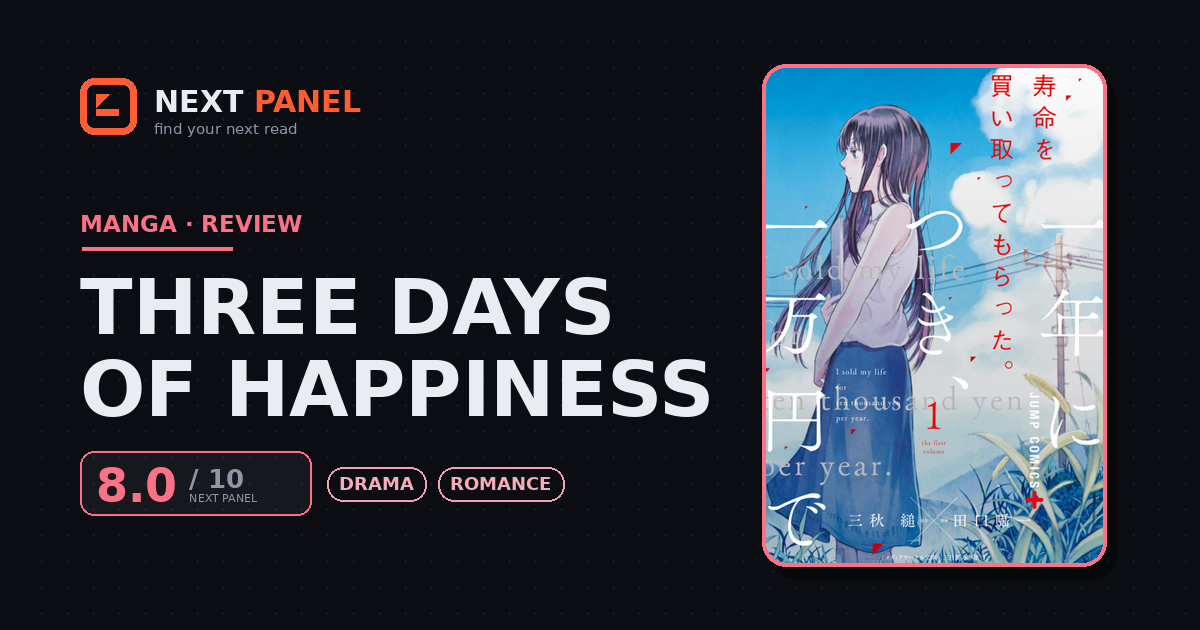
Manga8.0Minor SpoilersCompleted
Is Three Days of Happiness Worth Reading? Review & Where to Read
This three-volume gut-punch treats its premise as an excuse for real emotional honesty, not a gimmick.
Spoiler-light · Honestly rated
Every review labels its spoiler level, separates art from writing, and ends with an official way to read.
We use the whole 1–10 scale and judge each title against the best version of what it is trying to be — a comedy on how funny it is, a thriller on its tension — not against some other genre. As a rough guide: 9+ is all-time great, 8 excellent, 7 a solid recommendation with caveats, 5–6 mixed or average. A 7 is a genuine yes, not a knock. The “Community score” in each review is the crowd rating from AniList, MAL, and MangaUpdates, shown next to ours for comparison.

Bread turns out to be a surprisingly great engine for shonen tournament comedy, right up until the reaction-shot gag runs out of new ideas.
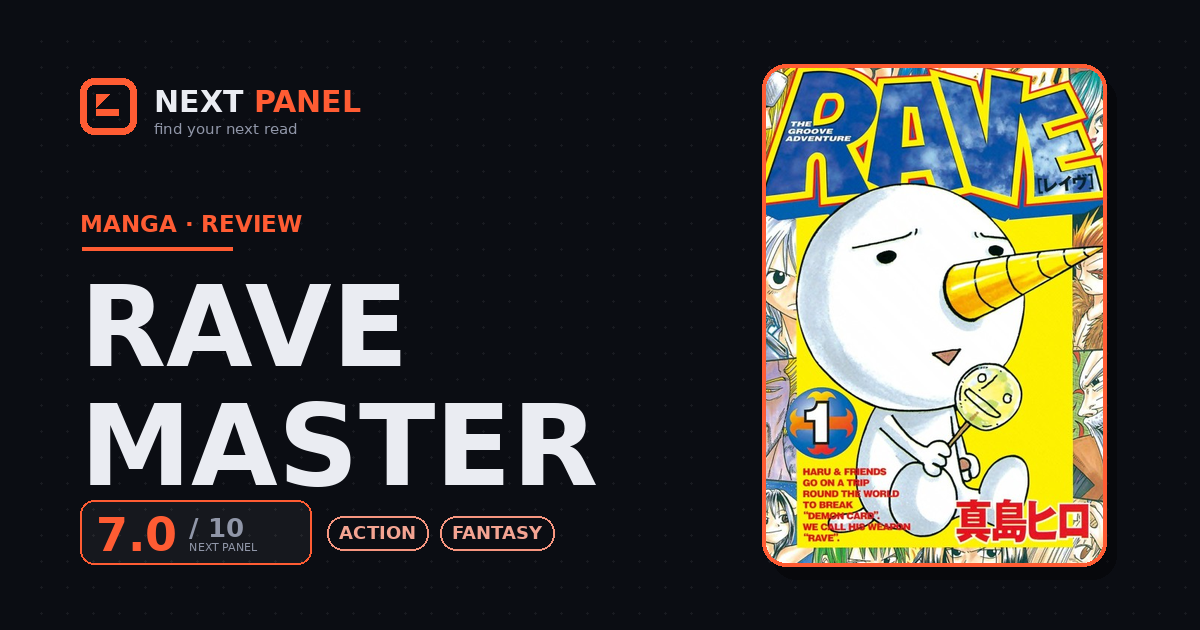
Mashima's other magnum opus has a better villain than most of Fairy Tail and a finale that needed twice the room it got.
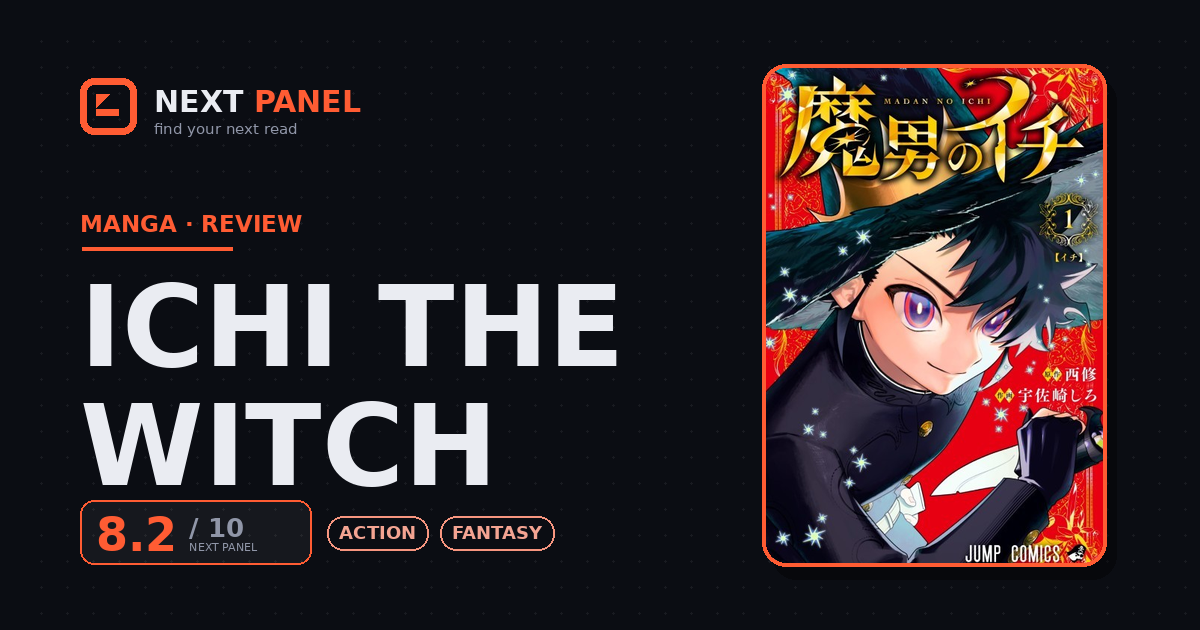
Breaking a boy into a magic system built entirely around women could easily be played as a gimmick, but Ichi the Witch treats it as a real disruption with real consequences for how the world responds to him.

Getting the proposal out of the way in chapter one sounds like it removes all the tension, but Fly Me to the Moon uses that structure to build something warmer: a couple actually getting to know each other.

New Jump Square action series get compared to whatever's currently popular almost by reflex, but Gokurakugai earns the attention on its own art and the specific, lived-in bond between Tao and Alma.
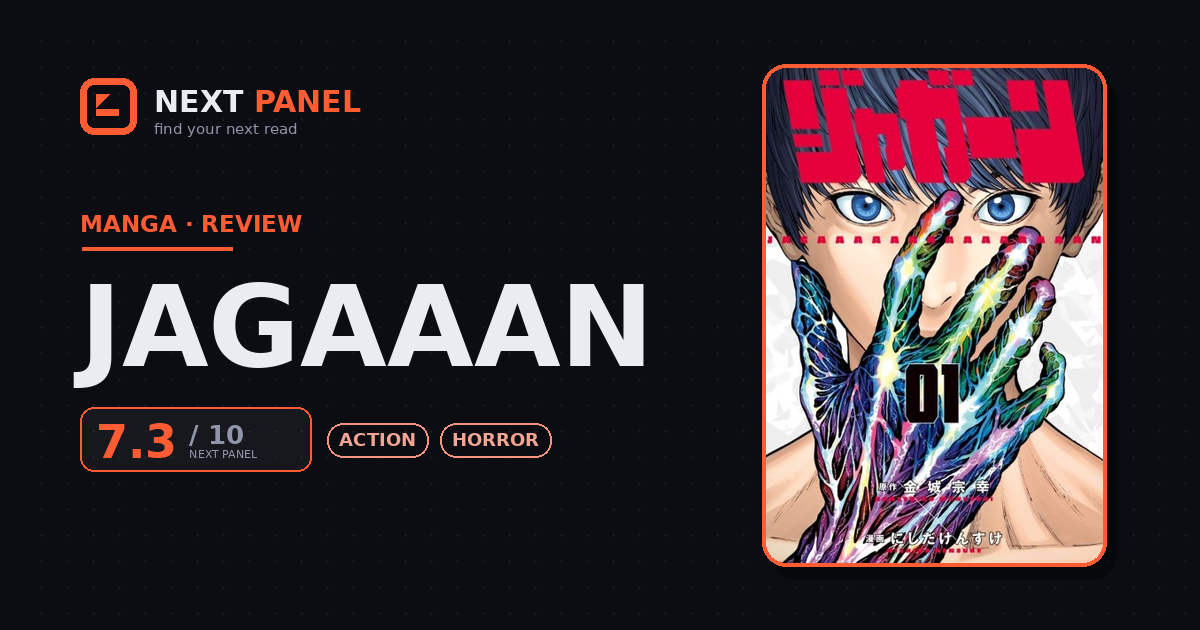
Turning a bored cop's right hand into a gun sounds like a gag premise, but Jagaaan uses it to launch straight into body horror and grief, forcing its lead to kill the person he loves in the first act and build from there.

Following a heartbroken teenager as he stumbles into running a Korean crime syndicate sounds like a farce, and it starts as one, but Sun-Ken Rock gradually earns real stakes as Ken's gang war escalates.

Talking-animal high school drama sounds like a hard sell for anything serious, but BEASTARS turns predator-and-prey biology into a real, uncomfortable metaphor for desire and repression, and commits to it completely.

Small-town entrapment stories are common, but pairing Reiji's slow suffocation with Nagi's own escape from a curated public image gives Boy's Abyss two collapsing lives instead of one, and that's what makes it hit as hard as it does.

Nobody notices Junta except Kubo, and watching her chip away at that invisibility one small moment at a time is a slow burn that actually earns its patience.

Skipping the will-they-won't-they entirely and just watching a couple be genuinely good to each other, with Shikimori as the composed one and Izumi as the anxious one, is a small swap that goes a long way.