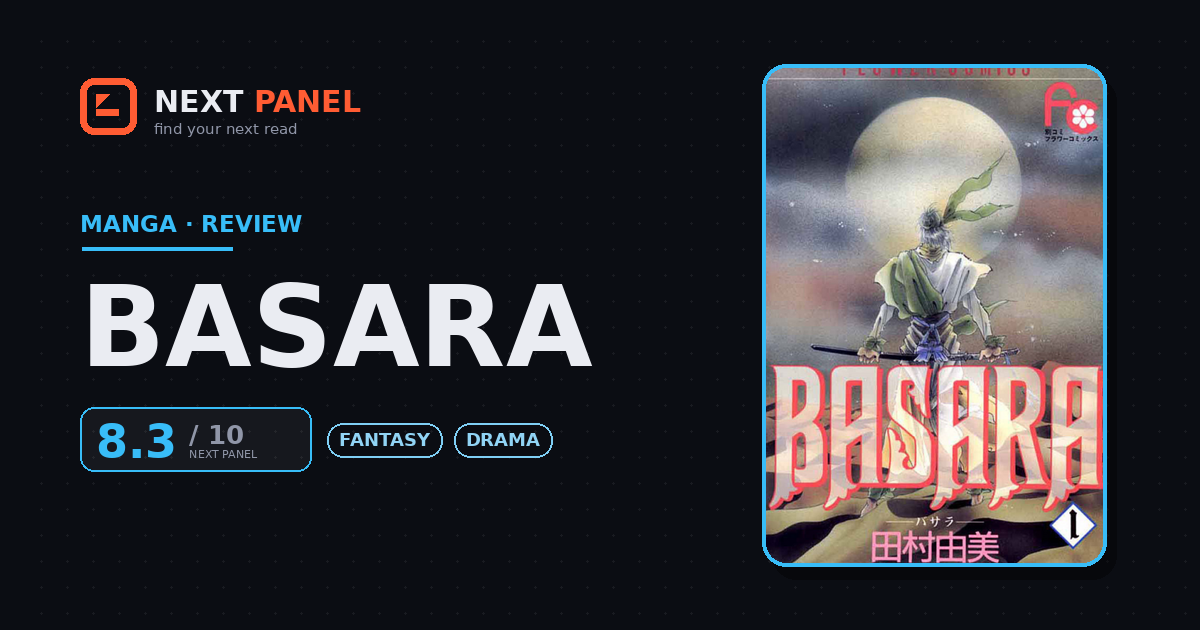
Is Basara Worth Reading? Review & Where to Read
Quick Answer
Yes, if you're up for a long one. Basara is one of the defining shoujo epics of the 90s, a 27-volume revolution story built around a heroine posing as her dead brother and the enemy king she accidentally falls for. It asks for patience and pays it back.
Quick Verdict
“The middle drags and the art shows its age, but nothing else on the shelf does the enemies-to-lovers epic quite this well.”
Best for: Readers who want a sweeping, character-driven epic with a strong heroine and a slow-burn enemies-to-lovers romance at its center.
Not for: Readers who want a short, fast-moving story or clean, modern art.
- Type
- Manga
- Genres
- Drama, Fantasy
- Status
- Completed
- This review
- Minor Spoilers
- Author
- Yumi Tamura
- Publisher
- Shogakukan / Viz Media
- Platform
- Viz Media
| Quick facts | |
|---|---|
| Format | Manga (shōjo), 107 chapters, 27 volumes |
| Run | 1990–1998 · completed |
| Community score | AniList 8.3 · MangaUpdates 8.8 |
| Content | Violence, sexual assault |
| Where to read | Viz Media — official |
Overview
Basara is Yumi Tamura's big post-apocalyptic shoujo epic from the 90s, and it's exactly as ambitious as that sounds. Japan is a broken desert ruled by a cruel emperor and his warring kings. A village prophecy says a "child of destiny" will be born there to lead a rebellion. Everyone assumes it's the boy twin, Tatara, so when the Red King's army burns the village and kills him, his sister Sarasa cuts her hair, takes his name, and picks up the sword herself. The hook that made the series famous: Sarasa keeps sneaking off to a hot spring to feel like a girl again, meets a charming young man named Shuri, and falls for him, neither of them knowing he's the Red King she's sworn to kill. It runs 27 volumes, and it uses every one of them.
What it does well
The heart of it is Sarasa. Tamura doesn't write her as an instant badass. She cries, freezes up, second-guesses herself, and leans hard on the people around her, and then, slowly, over dozens of chapters, she becomes someone who can actually carry a revolution. Because you watched her get there, the leadership lands. It's one of the better reluctant-hero-grows-up arcs in the genre.
The romance is the other engine, and it's the real thing. The setup could have been a cheap gimmick: two people in love who'd have to destroy each other if they knew the truth. Instead Tamura plays the long game. Every near-miss and half-revelation tightens the screw, and when things finally start to shift, it hurts in the way you want it to.
And it's an actual epic, not two leads with scenery behind them. The whole country is mapped out: pirate crews, desert cities, Okinawa, a huge cast of rebels and rival kings. Most of those side characters get their own arcs, their own losses, and their own payoffs instead of just filling space. Tamura keeps the tone moving too, so a gut-punch chapter can sit next to a genuinely funny one without whiplash. For something this long, it stays alive.
Where it falls short
It's long, and you feel it. The middle stretch has more than one "travel somewhere new, meet allies, win them over" arc, and the momentum sags before the ending pulls everything tight again. If you bounce off slow patches, there are a few here.
The art is very of its era. Lots of screentone, lots of pretty faces that look alike, and early on the big cast is genuinely hard to tell apart. It's expressive and it does the job, but it isn't modern polish.
The whole thing also runs hot. Feelings get shouted, speeches get made, and the melodrama is cranked to the top of the dial. That's part of the appeal for a lot of readers, but if you want restraint, this isn't it.
Verdict
Basara is one of the shoujo greats and it mostly earns the reputation. It asks for real commitment, 27 volumes with a saggy middle and dated art, but Sarasa's growth and that slow-burn enemies-to-lovers romance pay it all back. One frustrating catch: Viz published the full English run years ago and it's long out of print, so tracking down volumes takes some effort. If you like sprawling, emotional adventure manga with a strong heroine at the center, put up with the length and read it.
Strengths & Weaknesses
Strengths
- Sarasa is a terrific lead who starts out scared and unsure and grows into a real leader over the long haul, so her competence feels earned rather than handed to her.
- The enemies-to-lovers romance plays the long game: she and Shuri fall for each other without knowing they're sworn enemies, and Tamura wrings years of tension out of it.
- It's a full epic, with a whole post-apocalyptic Japan of regional kings, rebels, and cultures, and a huge side cast who get their own arcs and payoffs.
- Tamura balances heavy battle stakes with humor and quiet character beats, so the long run rarely turns into a grind.
Weaknesses
- It's very long and the middle sags, with several travel-and-recruit arcs that slow the momentum before the finale ties things together.
- The art is dated 90s shoujo, heavy on screentone and similar-looking faces, which makes the big cast hard to tell apart early on.
- The emotions run at full volume, so if you dislike melodrama and characters spelling out their feelings, some scenes will feel over-the-top.
Similar Titles
Another epic shoujo adventure with a strong heroine swept into a war-torn kingdom and a slow-burn romance.
A gentler shoujo with a self-possessed heroine who earns her place through wits rather than birthright.
Another 90s shoujo epic about an ordinary girl pulled into a strange world where destiny and war close in around her.
Where to Read Officially
| Platform | Format | Pricing | Region notes | Link |
|---|---|---|---|---|
| Viz Media | Print volumes | Paid | Region availability varies | Open |
Frequently Asked Questions
Is there an official English release of Basara?
Yes. Viz Media released all 27 volumes in English under its Shojo Beat line between 2003 and 2008. It's since gone out of print, so new copies are scarce and used ones can get pricey. Viz's site still lists the series.
Is Basara finished?
Yes, it's complete at 27 volumes. Yumi Tamura wrapped the main story in 1998, and there are a handful of side stories set before and after it.
Do I need to watch the anime first?
No. The 1998 Legend of Basara anime only adapts the first few volumes and stops well short of the ending, so the manga is the way to get the whole story.