Is Binchou-tan Worth Reading? Review & Where to Read
Quick Answer
Worth reading in small doses if you want something gentle and melancholic rather than plot-driven — it's less a story than a mood, and that mood is genuinely well made.
Quick Verdict
“Barely a plot, mostly a feeling, and the feeling works if you let it.”
Best for: Readers who enjoy quiet, low-stakes iyashikei stories about small daily routines and don't need much narrative momentum.
Not for: Readers who want clear plot progression, conflict, or character arcs driving each chapter forward.
- Type
- Manga
- Genres
- Slice of Life, Supernatural
- Status
- Completed
- This review
- Minor Spoilers
- Author
- Takahito Ekusa
- Publisher
- Mag Garden
| Quick facts | |
|---|---|
| Format | Manga, 4 volumes |
| Run | 2003–2008 · completed |
Overview
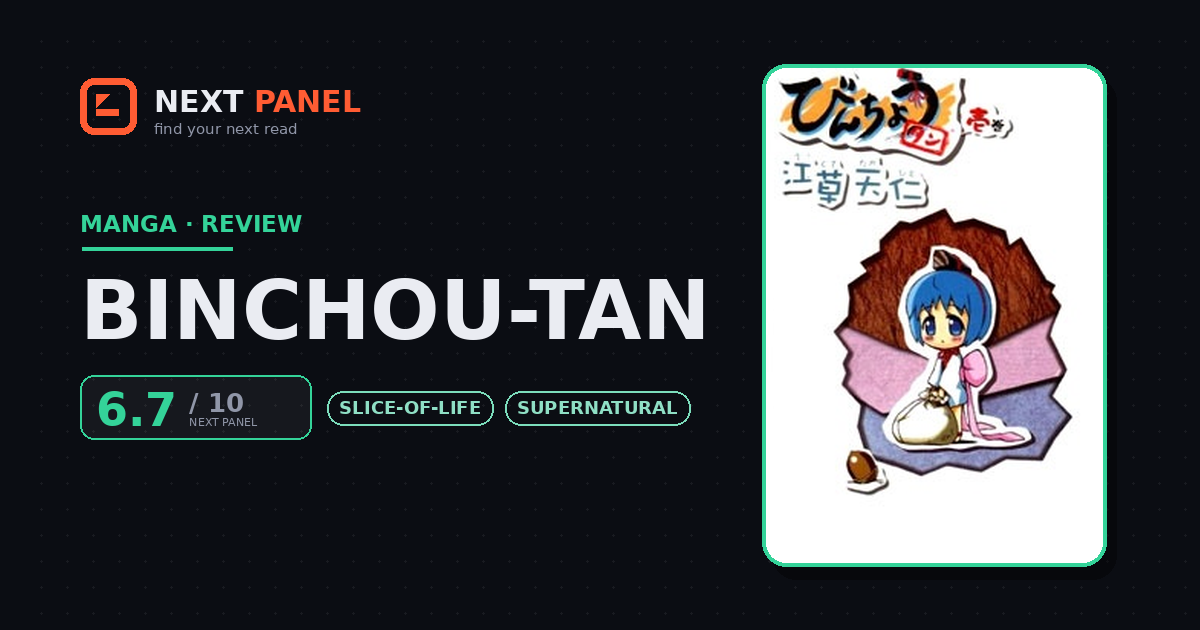
Binchou-tan is a small girl who is, quite literally, a piece of charcoal given human form. She lives alone in an old house deep in the countryside, always barefoot, taking on odd jobs — deodorizing shoes, filtering water, cooking rice — just to get by. Binchou-tan follows her quiet, solitary days and the friendships she slowly builds with other charcoal- and mineral-spirit girls, all without ever raising its voice or forcing a plot where one doesn't need to exist.
What it does well
The premise itself is what makes this memorable: personifying charcoal as a lonely, hardworking little girl is such a specific, odd idea that it gives the whole manga a texture nothing else quite has. What could easily have been a one-note mascot gimmick instead becomes a genuinely tender character study, mostly because the manga trusts small details to do the emotional work. Binchou-tan's treasured kimono, sewn by a grandmother we never meet, or the stray dog she quietly adopts and names "a trifle" because she assumes he was abandoned the same way she was — these small, understated touches say more about her loneliness than any speech could.
Her friendships with Kunugi-tan, Chiku-tan, and the other girls develop the same way: slowly, through small kindnesses rather than declared bonds, which makes them feel more earned than most slice-of-life casts manage in far more pages. And because each chapter is short and self-contained, this is a genuinely easy manga to pick up in small doses — a calming palate cleanser between heavier reads rather than something that demands a long sitting.
Where it falls short
The honest trade-off is that almost nothing happens here in a conventional narrative sense. Chapters are built around errands and small routines, and if you need a story to be going somewhere, long stretches of this will feel static rather than meditative. The supporting cast doesn't help much on that front — most of the side characters are defined by a single gimmick (afraid of bugs, made of aloe, prone to good luck) rather than any real depth, which is fine for atmosphere but thin if you're hoping for character development.
This is also a manga that lives or dies on mood, and if the gentle pace doesn't click for you early on, there's not much else here to pull you back in — no twist, no stakes, no larger mystery waiting to pay off.
Verdict
Binchou-tan isn't trying to tell a big story, and it shouldn't be judged like one. As a quiet, melancholic slice-of-life built around a genuinely original idea, it succeeds on its own modest terms — just go in knowing that "modest" means almost no plot, and that the appeal here is entirely about sitting with a small, lonely life and finding something gentle in it.
Strengths & Weaknesses
Strengths
- The central idea — a little girl who's the living embodiment of charcoal, doing odd jobs alone in the countryside — is genuinely distinctive and gives the whole series a gentle, specific texture you won't find elsewhere.
- Binchou-tan's quiet loneliness is handled with real restraint; the manga never over-explains her circumstances or turns her situation into melodrama, letting small details (a treasured kimono, a stray dog she adopts) carry the emotional weight instead.
- The friendships that form between Binchou-tan and the other charcoal and mineral-spirit girls feel earned precisely because the series takes its time, showing small acts of kindness rather than rushing to declare anyone's bond.
- It's an easy, calming read in short bursts — ideal for picking up between heavier titles rather than committing to a long session.
Weaknesses
- There's very little plot in the conventional sense. Chapters are built around daily routines and small errands, and readers who need forward momentum may find long stretches feel like they're going nowhere.
- Characters beyond Binchou-tan herself are thinly sketched, defined mostly by a single trait or gimmick (the girl afraid of bugs, the girl made of aloe) rather than real depth.
- The gentle, unhurried pace that defines its appeal can also read as slight or insubstantial if you're not already in the mood for something this quiet.
Similar Titles
Frequently Asked Questions
Is Binchou-tan connected to an anime?
Yes — a 12-episode anime adaptation by Studio Deen aired in 2006, following the same gentle, day-in-the-life format as the manga.
Is there much of a plot?
Not really — it's structured as loosely connected vignettes about Binchou-tan's daily routines and friendships rather than a driving storyline.
Is there an official English release?
Not currently. There's no official English translation of the manga at this time.