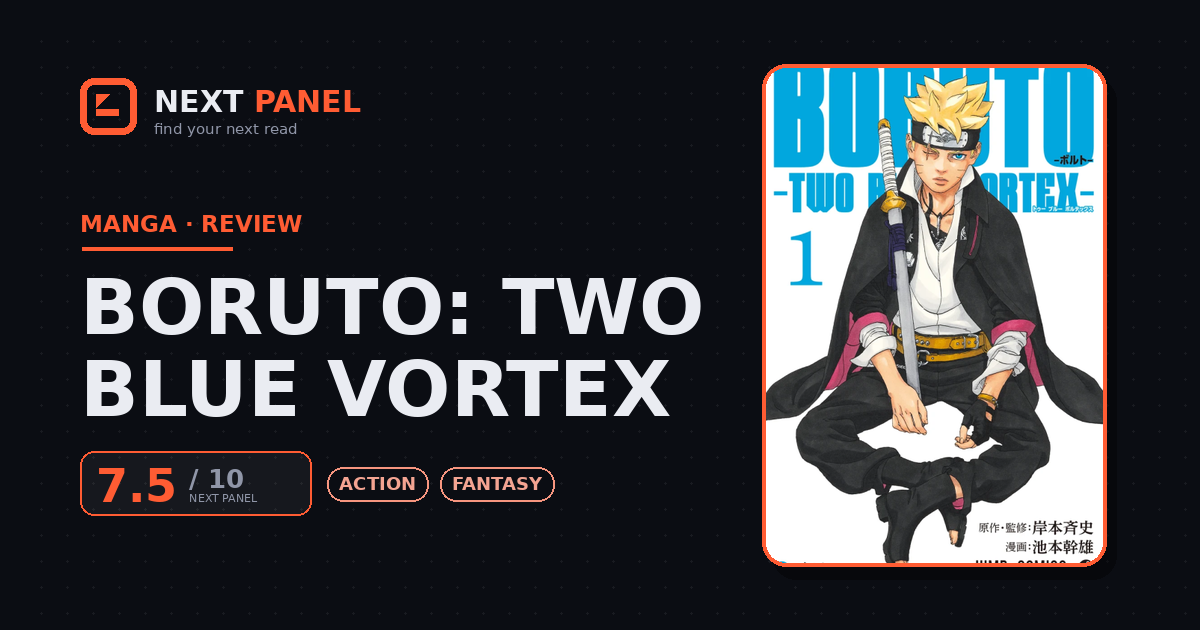
Is Boruto: Two Blue Vortex Worth Reading?
Quick Answer
Worth reading if you want the Naruto franchise's sharpest manga in years: Kishimoto writing solo, a genuinely upended status quo, and a Boruto/Kawaki dynamic that earns its comparisons to Naruto and Sasuke.
Quick Verdict
“Confident creative reset that fixes what dragged down the first Boruto manga, sharper art, higher stakes, and a full Kishimoto script that finally gives its side cast room to matter.”
Best for: Naruto franchise fans who bounced off the original Boruto manga's slower stretches and want to see Kishimoto take full creative control of the sequel.
Not for: Readers with zero investment in the Naruto universe already, since the emotional weight leans hard on decades of prior continuity.
- Type
- Manga
- Genres
- Fantasy, Action, Supernatural
- Status
- Ongoing
- Author
- Masashi Kishimoto
- Artist
- Mikio Ikemoto
- Publisher
- Shueisha
- Platform
- Viz Media / Shonen Jump
| Quick facts | |
|---|---|
| Format | Manga, 8 volumes |
| Run | 2023–present · ongoing |
| Community score | AniList 7.5 · MangaUpdates 7.0 |
| Where to read | Viz Media / Shonen Jump — official |
Overview
Three years pass between the end of Boruto: Naruto Next Generations and the start of Two Blue Vortex, and almost nothing about the status quo survives the jump intact. Kawaki now lives in Konoha as its celebrated hero, Naruto and Hinata are gone, sealed away in the fallout of Part 1's ending, and Boruto is the one treated as the outsider in a world that no longer sees him the way it used to. Getting his father back becomes the engine driving the story forward.
This is the sequel arc to the original Boruto manga, and the biggest structural change is behind the scenes: Masashi Kishimoto, creator of the original Naruto, now writes the story solo, with Mikio Ikemoto continuing on art. It's serialized monthly in V Jump, with Shueisha handling Japanese volumes and Viz Media publishing officially in English both physically and digitally.
What it does well
The time skip isn't cosmetic, it genuinely reshuffles who has power, who's trusted, and who's on the outside looking in, which gives the early chapters real tension instead of just picking up where things left off. Kishimoto writing solo shows: the pacing is tighter and the stakes read as more consequential than stretches of the original Boruto manga, which often struggled under a split writing/art credit structure.
The Boruto and Kawaki dynamic is the clearest beneficiary. Positioning a former rival as the celebrated hero while Boruto fights to reclaim his place draws obvious comparisons to Naruto and Sasuke, and the manga mostly earns them rather than just coasting on nostalgia. The redesigned art holds up well too, action sequences read cleaner and character designs feel more deliberate than Part 1's.
Where it falls short
This is not a jumping-on point. The emotional weight depends entirely on investment built up over the original Naruto series and the first Boruto manga, so anyone without that history will be lost within a few chapters. Monthly V Jump serialization also means the story moves slower in real time than a weekly Shonen Jump title would, so waiting between chapters takes patience. And while the story does more for its side cast than Part 1 did, a few legacy characters from the original Naruto era still show up mostly as background presence rather than active participants.
Verdict
A confident creative reset for the Boruto franchise, sharper writing, higher stakes, and a rivalry that finally does justice to the Naruto/Sasuke comparisons it's clearly reaching for. Worth reading if you already have a stake in this world and want to see Kishimoto take the wheel directly. It's not the place to start the franchise, but for existing fans it's some of the strongest Naruto-universe material in years.
Strengths & Weaknesses
Strengths
- Full Kishimoto script gives the story sharper pacing and higher stakes than the original Boruto manga managed
- A genuinely upended status quo, three years gone, Kawaki celebrated as Konoha's hero, Boruto cast as the outsider, that actually changes how the world works
- Boruto and Kawaki's rivalry earns its comparisons to Naruto and Sasuke instead of just gesturing at them
- Redesigned character art and cleaner action choreography than Part 1
Weaknesses
- Emotional stakes lean heavily on over a decade of Naruto and Boruto continuity, so newcomers will be lost fast
- Monthly V Jump serialization means slower real-time chapter output than a weekly series
- Some legacy side characters from the original cast still get comparatively little to do
Similar Titles
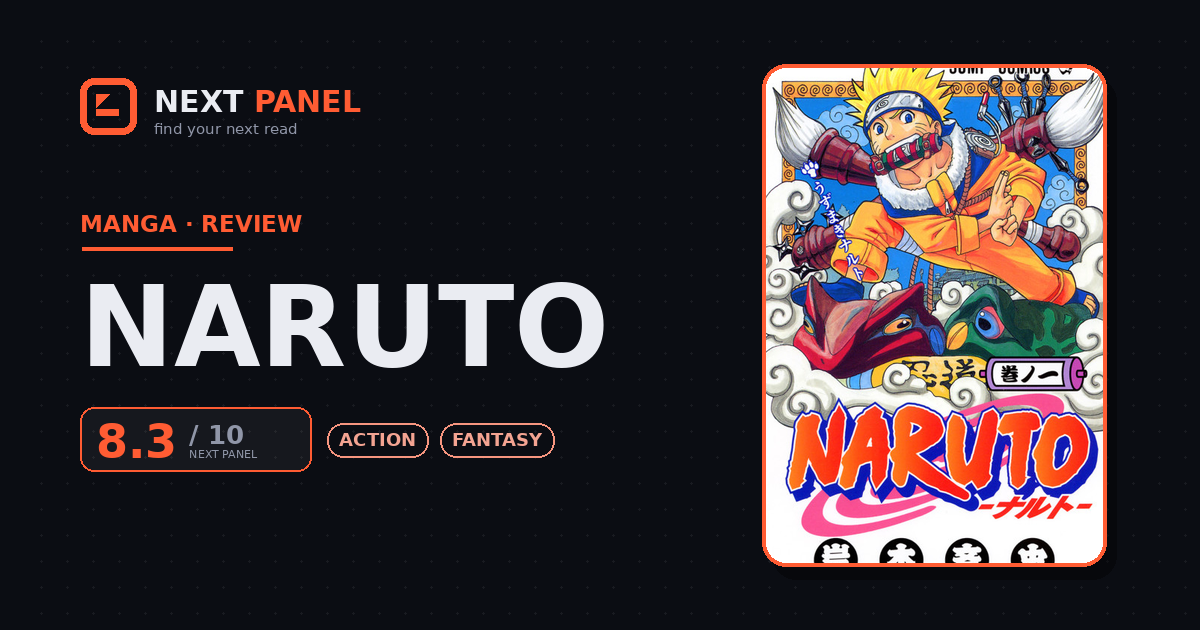
The original series this one is a direct sequel to, and required reading for the stakes to land.
A different franchise entirely, but similar Shonen Jump action-family DNA if you want something already complete.
Where to Read Officially
| Platform | Format | Pricing | Region notes | Link |
|---|---|---|---|---|
| Viz Media / Shonen Jump | Digital & Print | Free + Paid | Region availability varies | Open |
Frequently Asked Questions
Do I need to read the original Boruto manga before Two Blue Vortex?
Yes, and ideally the original Naruto series too. Two Blue Vortex picks up directly from where Boruto: Naruto Next Generations left off and assumes that history.
Is Boruto: Two Blue Vortex finished?
No, it's ongoing, serialized monthly in V Jump, with Viz Media releasing English volumes on an ongoing basis.
Who writes and draws Boruto: Two Blue Vortex?
Masashi Kishimoto, creator of the original Naruto, is the sole writer for this arc, with Mikio Ikemoto handling art.