Is Naruto Worth Reading? Review & Where to Read
Quick Answer
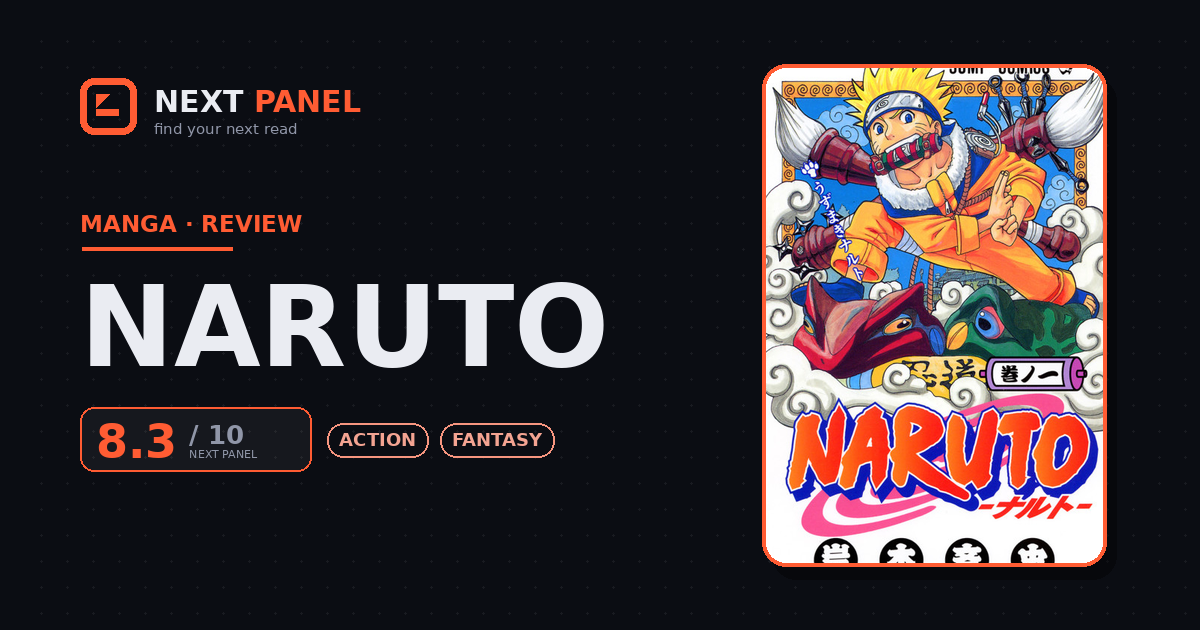
Yes, with caveats. Naruto is one of the most influential shonen ever — a ninja coming-of-age epic about an outcast orphan chasing recognition and the top job in his village. The early arcs and emotional core are fantastic; the long middle has real pacing problems. Still, it's a foundational read for a reason.
Quick Verdict
“One of the foundational shonen for a reason — huge emotional highs and iconic fights, dragged down by a long, uneven middle.”
Best for: Readers who want a sprawling ninja coming-of-age epic, big emotional payoffs, and iconic shonen action.
Not for: Readers who want tight pacing, a short commitment, or a story without filler and power creep.
- Type
- Manga
- Genres
- Fantasy, Action
- Status
- Completed
- This review
- Minor Spoilers
- Author
- Masashi Kishimoto
- Publisher
- Shueisha
- Platform
- VIZ
| Quick facts | |
|---|---|
| Format | Manga (shōnen), 700 chapters, 72 volumes |
| Run | 1999–2014 · completed |
| Community score | AniList 7.9 · MAL 8.1 · MangaUpdates 7.7 |
| Where to read | VIZ — official |
Overview
Naruto, by Masashi Kishimoto, is one of the most popular and influential shonen manga ever made. It follows Naruto Uzumaki, an orphaned outcast in the ninja village of Konoha who has the Nine-Tailed Fox, a destructive demon, sealed inside him. Shunned and lonely, Naruto dreams of becoming Hokage — the village's leader — to finally earn everyone's respect. The series follows him from a hot-headed kid through years of training, friendships, rivalries, and escalating ninja wars, as he and his classmates grow up and the world's hidden conflicts close in around them.
It's a foundational coming-of-age epic, and one of the "big three" series that defined a generation of shonen. It's also genuinely uneven, and worth going in knowing both things.
What it does well
The early run is the high point, and it's excellent. The Chunin Exams arc in particular is peak shonen — a tournament packed with great fights, clever jutsu, and character reveals that still hold up. Kishimoto is great at building tension and paying it off, and the foundational arcs move with real purpose.
Underneath the action, the emotional core is what made Naruto huge. Its themes — loneliness, the hunger to be acknowledged, breaking cycles of hatred and revenge — run through everything, and they give the fights weight. The rivalry between Naruto and Sasuke is the spine of the series and one of the most affecting relationships in the genre, and the villains often get backstories that complicate who you're rooting for.
The world helps too. The ninja system, the villages, the jutsu, the huge memorable cast — it's a deep, imaginative setting that rewards living in it. And when Naruto hits its peaks, it delivers some of the most iconic moments and fights in all of manga.
Where it falls short
The big issue is pacing. Naruto is long, and the middle stretch sags — drawn-out arcs, detours, and a plot that sometimes spins its wheels before the next big payoff. It asks for patience, and not every reader makes it through the slower patches.
Power creep is the other problem. The grounded, clever ninja fights of the early series gradually give way to escalating, world-shaking abilities, and as the scale balloons, the stakes can feel more abstract than the tense, small-scale duels that hooked people early on. Some plot threads and characters also get sidelined or wrapped up unevenly, and the later arcs are divisive even among devoted fans. It's a series that's easier to love for its highs than to defend as a consistent whole.
Verdict
Naruto is a landmark for good reason — a sprawling, heartfelt ninja epic with some of the most iconic highs in shonen and an emotional core that genuinely lands. It's also uneven, long, and saggy in the middle, so go in expecting a commitment and some patience-testing stretches. If you want a foundational coming-of-age shonen and you're willing to ride out the slow parts for the peaks, it's absolutely worth reading. If tight pacing or a short page count matter to you, know what you're signing up for. For most fans of the genre, it's essential homework — flaws and all.
Strengths & Weaknesses
Strengths
- The early arcs are fantastic — the Chunin Exams especially are peak shonen tournament storytelling, full of memorable fights and reveals.
- Its emotional core is strong; themes of loneliness, acceptance, and breaking cycles of hatred give the action real weight, and the Naruto-Sasuke rivalry is genuinely affecting.
- The world and its jutsu system are deep and imaginative, with a huge, memorable cast and villains who get real depth.
- When it peaks, it delivers some of the most iconic moments and fights in all of shonen manga.
Weaknesses
- The pacing is a real problem — the series is long, and the middle sags with drawn-out arcs and detours that test your patience.
- Power creep gets out of hand later on, with escalating abilities that make the stakes feel abstract next to the grounded early fights.
- Some plot threads and characters get sidelined or resolved unevenly, and the later arcs are divisive even among longtime fans.
Similar Titles
Another of the 'big three' shonen — long-running action with a huge cast and flashy powers.
If you want a smarter, more inventive take on shonen power systems and tournament arcs.
A modern heir to Naruto — underdog hero, training, and a strong rival dynamic.
Where to Read Officially
| Platform | Format | Pricing | Region notes | Link |
|---|---|---|---|---|
| VIZ | Print & digital volumes | Free + Paid | Region availability varies | Open |
Frequently Asked Questions
Is Naruto finished?
Yes. The original manga is complete at 72 volumes, with a sequel series (Boruto) following it. VIZ publishes Naruto in English.
Where does it get good, and where does it slow down?
The early arcs through the Chunin Exams are widely loved; the long middle has the most pacing issues. The manga also has far less filler than the anime.
Do I need to read it if I've seen the anime?
Not necessarily, but the manga is the original, moves faster, and skips the anime's heavy filler — a good option if the show's pacing wore you down.