Is Chiikawa Worth Reading? Review & Where to Read
Quick Answer
Yes, if you want something you can read in two-minute bursts that's funnier and sadder than it looks. It's not a plot-driven read, so go in expecting vibes and gags over a story arc.
Quick Verdict
“Looks like merchandise bait, reads like a small existential crisis wearing a hamster costume — and somehow both halves work.”
Best for: Readers who want short, expressive comic strips they can dip into in any order, with warmth that keeps turning unexpectedly dark.
Not for: Readers who want a driving plot with escalating stakes and full dialogue rather than wordless reaction comedy.
- Type
- Manga
- Genres
- Slice of Life, Comedy
- Status
- Ongoing
- This review
- Minor Spoilers
- Author
- Nagano
- Publisher
- Kodansha
| Quick facts | |
|---|---|
| Format | Manga (seinen) |
| Run | 2020–present · ongoing |
| Community score | AniList 7.9 |
| Content | Mild violence, themes of predation and economic anxiety played for dark comedy |
Overview
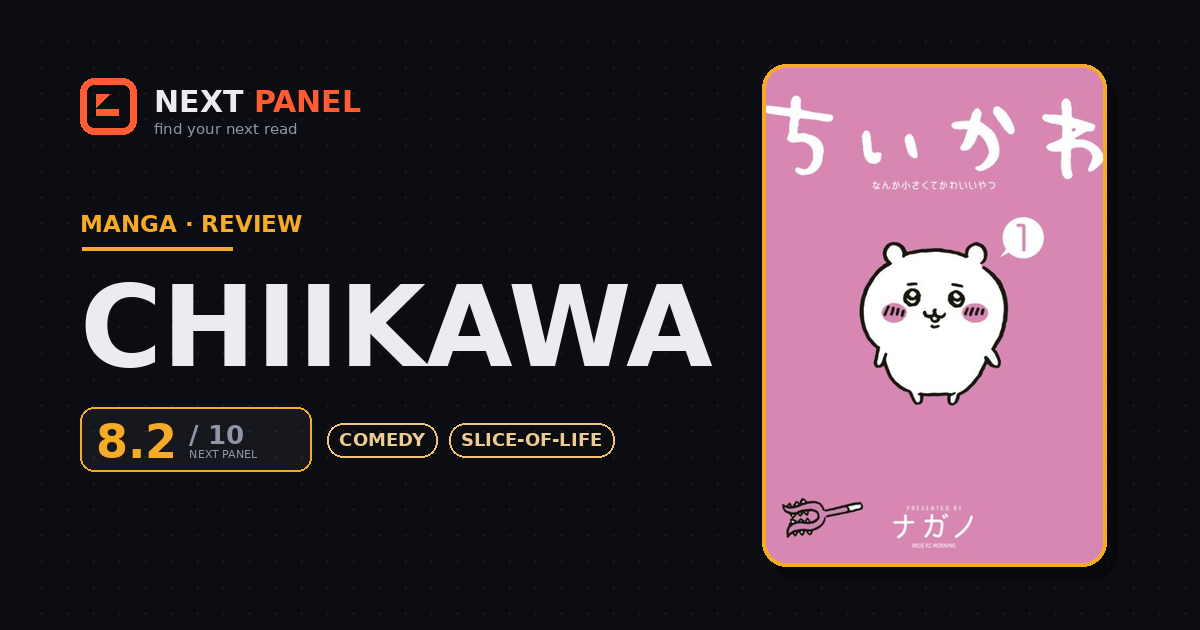
Chiikawa started as a side project Nagano posted to X (formerly Twitter) in 2020 — short, mostly wordless comic strips about a small round creature just trying to get by — and it's since become one of the biggest things in Japanese pop culture, collected into eight tankōbon volumes by Kodansha and adapted into a long-running anime. The premise sounds like pure merchandise fodder: a hamster-ish thing named Chiikawa and its friends Hachiware and Usagi live in a world of small fuzzy creatures, do odd jobs, eat snacks, and try to earn certifications for things like drinking alcohol. None of the main trio can speak in words the reader can parse — they communicate in noises like "yada" and "una" — and the comic still manages to build a surprisingly complete emotional world out of body language and timing alone.
What makes it worth talking about as a comic rather than just a mascot property is the tone underneath the cuteness. This isn't a soft, risk-free world. Characters take on dangerous jobs — hunting, weeding infested areas — because they need the money to live, and there are monsters ("chimeras") that can and do hurt or replace the cast. Japanese critics have compared its slow-drip dread to Attack on Titan and Madoka Magica, which sounds like a stretch until you've read a few volumes and felt how deliberately Nagano lets the danger sit in the background instead of resolving it.
What it does well
The core trick is control of tone. Most strips are simple gags — someone's hungry, someone's embarrassed, someone's proud of a small win — and they're genuinely funny in a way that doesn't rely on dialogue to land. Nagano gets a full range of expression out of very simple character designs, and the comic timing of a strip (the setup panel, the reaction panel) is consistently sharp. Then, without much warning, a strip will pivot into something quietly upsetting — a friend gets hurt, a character is threatened with being eaten, someone realizes how replaceable they are in this world — and the whiplash is the point. It never spells out how to feel about it, which is more effective than if it did.
The format also just makes the comic easy to live with. Each entry is short, so it's built for picking up in spare minutes rather than sitting down for a chapter. And the worldbuilding, thin as it can feel strip to strip, does accumulate — the rules around the armored "Yoroi-san" characters, the economy of odd jobs, the recurring threats — into something that rewards reading in order even though it doesn't demand it.
Where it falls short
The biggest issue is momentum. This is not a comic that's building toward a climax, and if you go in wanting the worldbuilding threads to resolve at a normal narrative pace, you'll be frustrated — some ideas get set up and then sit for a long stretch before anything happens with them. There are also runs of strips that are pure fluff, no darker layer at all, which is fine in isolation but can feel like filler if you're specifically chasing the series' sharper moments. And practically speaking, there's no official English release yet, so reading it in translation means relying on fan summaries or importing the Japanese volumes yourself.
Verdict
Chiikawa earns its popularity honestly — it's a genuinely well-crafted gag strip with more emotional range than its merchandise presence suggests, and the moments where the cute surface cracks are some of the most memorable in slice-of-life comics right now. It's just not a comic to read for plot momentum, and English-language access is still a real hurdle. If short, expressive strips with a mean streak sound appealing, it's worth seeking out however you can.
Strengths & Weaknesses
Strengths
- Nagano draws an enormous amount of feeling into characters who can't actually talk — Chiikawa and Usagi communicate only in noises and expressions, and the comic still lands real emotional beats off body language alone.
- The gag-strip format means every entry is short and self-contained, so it's one of the easiest comics on this list to pick up for two minutes and put back down without losing anything.
- The dark-fantasy undercurrent — characters taking dangerous jobs to earn enough to eat, the constant threat of being hunted by monsters — gives the cuteness real stakes instead of letting it go empty-calorie.
- The character designs and expression work are just genuinely funny on a page-to-page level, which is harder to pull off in a nearly wordless strip than it looks.
Weaknesses
- There's very little forward momentum. Threads about the world's rules and dangers get dropped in and picked back up slowly, so anyone expecting a plot to build toward something will be waiting a long time.
- The gag-a-day rhythm means some stretches are pure fluff with no bite at all, which can feel thin if you're chasing the series' darker moments specifically.
- There's no official English translation yet, so English readers are stuck importing volumes or reading machine-translated summaries of the ongoing story beats.
Similar Titles
Same gag-strip energy and love of small, weird character moments, though Nichijou is pure absurdist comedy without the darker undercurrent.
Another wordless-protagonist, panel-by-panel comfort read built on small daily moments and simple, expressive art.
Frequently Asked Questions
Is there an official English translation of Chiikawa?
Not yet as of this review. The anime is licensed in English by Sentai Filmworks, but the manga itself doesn't have a confirmed official English print or digital release, so English readers are currently limited to following fan summaries or the original Japanese strips.
How dark does Chiikawa actually get?
Dark enough that Japanese outlets have half-jokingly compared it to Attack on Titan for how much anxiety it smuggles under a cute surface — characters take on real physical risk for money, and the world doesn't go out of its way to protect them. It's still fundamentally gentle in tone, but the threat is real.
What order should I read Chiikawa in?
Chronological, by tankōbon volume, is easiest to follow the running gags and the slow-burn worldbuilding, though because it's a strip format you can also just start wherever you land and pick up context as you go.