Is Cross Game Worth Reading? Review & Where to Read
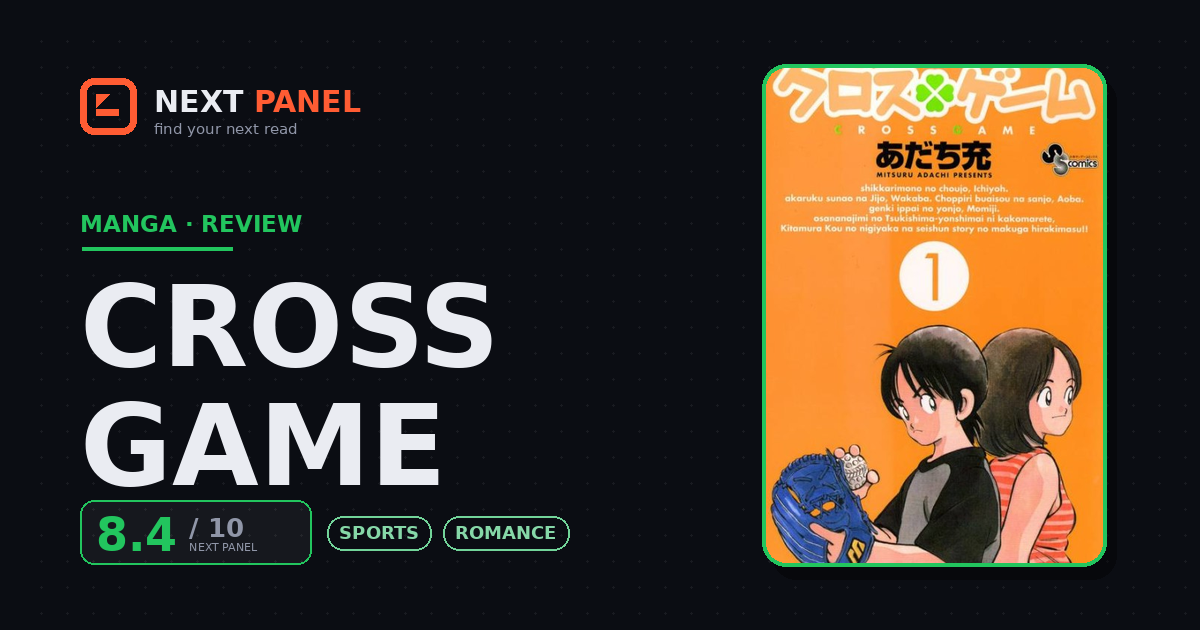
Quick Answer
Yes. Cross Game is a quiet masterpiece — Adachi blends baseball and romance with extraordinary restraint, and the result is deeply moving. The only catch is that its understated, slow style isn't for readers who want loud drama or flashy art.
Quick Verdict
“Quiet and understated to its core, this sports romance is a masterpiece — Adachi conveys humor and heartbreak through restraint, and the Ko-and-Aoba slow burn is the genre at its best.”
Best for: Readers who want a quiet, deeply moving sports romance driven by character and restraint.
Not for: Readers who want loud drama, fast pacing, or flashy art.
- Type
- Manga
- Genres
- Romance, Sports
- Status
- Completed
- This review
- Minor Spoilers
- Author
- Mitsuru Adachi
- Publisher
- VIZ Media
- Platform
- VIZ
| Quick facts | |
|---|---|
| Format | Manga (shōnen), 170 chapters, 17 volumes |
| Run | 2005–2010 · completed |
| Community score | AniList 8.3 · MAL 8.5 · MangaUpdates 8.7 |
| Where to read | VIZ — official |
Overview
Cross Game is a baseball manga, a romance, and a quiet coming-of-age story all at once, and it's a masterpiece of understatement. Ko Kitamura grows up beside the four Tsukishima sisters, and an early loss reshapes his life and quietly sets him on a path toward baseball and a promise he carries for years. From there it follows Ko and the prickly, fiercely talented Aoba through high school, the pitcher's mound, and a slow-burning relationship neither of them will admit to. Mitsuru Adachi tells all of it with remarkable restraint, conveying humor, heartbreak, and deep feeling through silence, small gestures, and what goes unsaid. It's complete.
What it does well
The understatement is the genius of it. Adachi trusts the reader, letting big emotions land through a held panel, a quiet line, or a glance rather than melodrama, and the effect is far more powerful than a louder story would manage. It earns tears without ever reaching for them.
The characters are the other triumph. Ko's easy calm and Aoba's prickly brilliance make them a wonderful pair, and their slow-burn relationship, full of things they won't say out loud, is one of the most quietly satisfying romances in manga. The supporting cast and the team around them are warm and lived-in, and the years-long timeframe lets the relationships deepen in a way short series can't.
It also blends its halves perfectly. The baseball is genuinely good and tense, and the sport and the romance feed each other instead of competing, so the games carry emotional weight and the quiet moments have stakes. The gentle humor running throughout keeps it from ever feeling heavy.
Where it falls short
The same restraint that makes it special also makes it an acquired taste. It's quiet and slow by design, and readers who want loud drama, fast momentum, or high-energy sports action may find it too low-key.
Adachi's art is also simple and famously consistent, to the point that his character designs can look samey from work to work. And because the emotional beats are deliberately muted, some readers wish the highs and lows hit harder than they do.
Verdict
Cross Game is a quiet masterpiece, and a near-essential read for anyone who loves understated, character-driven storytelling. Go in for the restraint, the slow-burn romance, and the perfect weave of baseball and feeling rather than spectacle. If you want flashy art or loud, fast drama, its gentle approach won't be for you, but if you're open to a story that says the most with the least, few manga do it better, and it's complete.
Strengths & Weaknesses
Strengths
- It's a masterclass in understated storytelling, conveying humor, heartbreak, and deep feeling through restraint and small gestures.
- The characters are wonderful, especially Ko and Aoba, and their slow-burn relationship is handled beautifully.
- It blends baseball and romance perfectly, with the sport and the feelings reinforcing each other.
- It's award-winning, emotionally resonant, and deeply satisfying.
Weaknesses
- Its quiet, understated pace won't grab readers who want loud drama or fast momentum.
- Adachi's art is simple and his character designs can look samey across his works.
- The emotional beats are deliberately restrained, which some readers wish hit harder.
Similar Titles
Another tender sports-and-romance manga about young athletes and first love.
Another emotionally resonant, bittersweet youth drama, though louder and more melodramatic.
Another great sports manga, more energetic and competition-focused than Cross Game's quiet romance.
Where to Read Officially
| Platform | Format | Pricing | Region notes | Link |
|---|---|---|---|---|
| VIZ | Print & digital volumes | Paid | Region availability varies | Open |
Frequently Asked Questions
Do I need to like baseball?
No. The baseball is great, but Cross Game is just as much a romance and coming-of-age story. Adachi makes the emotional beats land whether or not you follow the sport.
Is it finished?
Yes, it's complete in 17 volumes, so you can read the whole story.
Why is it so acclaimed?
Its restraint. Adachi conveys huge emotion with minimal melodrama, and the way humor, grief, and romance are woven together is widely considered some of the best storytelling in the medium.