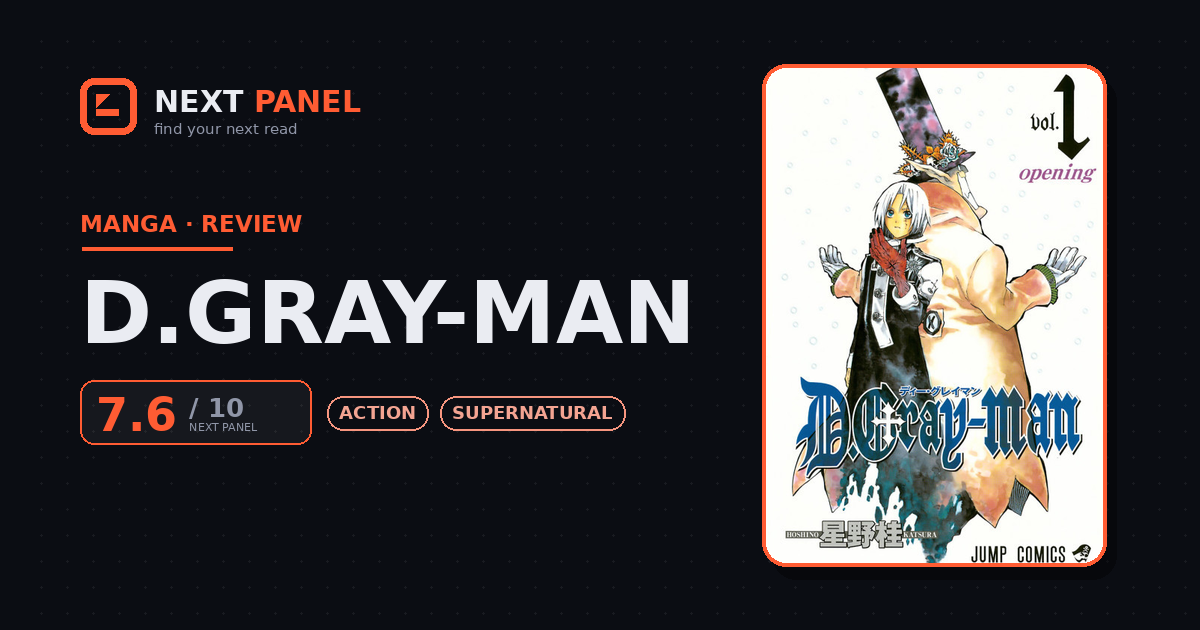
Is D.Gray-man Worth Reading? Review & Where to Read
Quick Answer
Yes, with a clear caveat: the story and art are genuinely excellent, but Katsura Hoshino's health-related hiatuses have made this one of the most irregularly published major shonen series ever, so go in knowing the wait between arcs can be long.
Quick Verdict
“The gothic art and the grief-driven demon concept are as good as shonen horror-fantasy gets, but this is a series you commit to knowing full well it might vanish for a year or two mid-arc.”
Best for: Readers who want gothic, Victorian-flavored dark fantasy with real emotional weight behind its monster designs.
Not for: Readers who want a series with a reliable, predictable release schedule instead of long, unpredictable gaps between arcs.
- Type
- Manga
- Genres
- Action, Supernatural
- Status
- On Hiatus
- This review
- Minor Spoilers
- Author
- Katsura Hoshino
- Publisher
- Shueisha
- Platform
- VIZ
| Quick facts | |
|---|---|
| Format | Manga (shōnen), 29 volumes |
| Run | 2004–present · on hiatus |
| Community score | AniList 8.1 · MangaUpdates 8.5 |
| Content | Violence, dark themes |
| Where to read | VIZ — official |
Overview
Allen Walker is an exorcist with a cursed, parasite-type Innocence weapon fused to his left arm, fighting for the Black Order against Akuma — demons the Millennium Earl creates by answering grieving people's wishes to bring back someone they've lost. Katsura Hoshino's D.Gray-man wraps that premise in a gothic, Victorian-flavored world of religious orders, ancient prophecy, and an expanding cast of exorcists and enemies. It began in Weekly Shōnen Jump in 2004 before moving through several different Jump imprints as Hoshino's health forced repeated hiatuses, and it remains one of the most visually distinctive dark-fantasy shonen manga running.
What it does well
The art is the first thing that sets D.Gray-man apart. Hoshino's gothic linework — ornate, detailed, unmistakably her own — gives the Black Order's world a genuinely different visual identity from the usual shonen house style, and the Akuma designs in particular are as unsettling as they are inventive. That distinctiveness extends to the story's core concept: because every Akuma originates from someone's grief and a loved one's desperate wish, even throwaway enemies carry real emotional weight instead of being disposable obstacles.
Allen and the Black Order cast make the most of that foundation. The found-family dynamic among the exorcists — outsiders and outcasts bound together by a shared, near-impossible fight — gives the series a strong emotional throughline, and the expanding mythology around the Noah Family and the Millennium Earl rewards readers willing to stick with it across a very long game. When Hoshino is deep into an arc, few shonen series match the atmosphere she builds.
Where it falls short
The unavoidable issue with D.Gray-man is its publication history. Hoshino's health has forced hiatuses stretching a year or more at a stretch, repeatedly, across the series' run — which makes it genuinely hard to stay immersed as a reader, and means committing to this series means committing to long, unpredictable waits between updates.
Pacing inside arcs is uneven too, with some stretches moving briskly and others dragging, and the combination of a large cast and those long gaps between chapters makes it easy to lose track of who's who, especially if you're picking the story back up after a break of your own. None of this is really a criticism of the storytelling itself so much as a structural reality anyone starting the series should know going in.
Verdict
D.Gray-man's art and emotional core are genuinely excellent, and the story it's telling is worth the investment — but this is a series to start with clear eyes about its notoriously irregular schedule. If long waits between arcs don't bother you, it's one of the more distinctive gothic shonen series out there.
Strengths & Weaknesses
Strengths
- Katsura Hoshino's gothic, Victorian-inflected art style is genuinely distinctive — the Akuma demon designs and the Black Order's aesthetic don't look like anything else on the shonen shelf.
- The Akuma's origin — demons born when the Millennium Earl answers a grieving person's wish to bring back someone they lost — gives the 'monster of the week' structure real emotional weight instead of treating enemies as disposable.
- Allen Walker and the Black Order exorcists carry genuine pathos as a found family fighting against overwhelming odds, anchoring a large ensemble cast.
- The expanding mythology around the Noah Family and the Earl rewards patient readers with real long-game plotting rather than filler.
Weaknesses
- The publication history is famously erratic — health-related hiatuses have stretched for a year or more at a time, which makes momentum genuinely hard to maintain as a reader.
- Pacing within individual arcs is uneven; some stretches move briskly while others feel padded.
- The large cast, combined with long gaps between updates, can make it genuinely difficult to keep track of who's who when you pick the story back up.
Similar Titles
shares a similar dark, morally complex fantasy tone and a tightly bonded core cast
same exorcists-vs-demons shonen setup, with a lighter tone and steadier release schedule
for readers drawn to Hoshino's distinctive linework, a similarly striking, atmosphere-heavy art style
Where to Read Officially
| Platform | Format | Pricing | Region notes | Link |
|---|---|---|---|---|
| VIZ | Digital chapters | Print & digital volumes | Paid | Region availability varies | Open |
Frequently Asked Questions
Is D.Gray-man finished?
No, it's currently on hiatus. It's had multiple extended breaks over the years due to creator Katsura Hoshino's health, so check for updates before diving in if a long wait would bother you.
Is D.Gray-man worth starting if it's not finished?
Yes, if you're comfortable reading an unfinished, irregularly published series — the story arcs completed so far are satisfying on their own even without a final ending yet.
How many volumes are there so far?
28 volumes have been released in English as of late 2024, spanning serialization that moved from Weekly Shonen Jump to several different Jump imprints over the years.