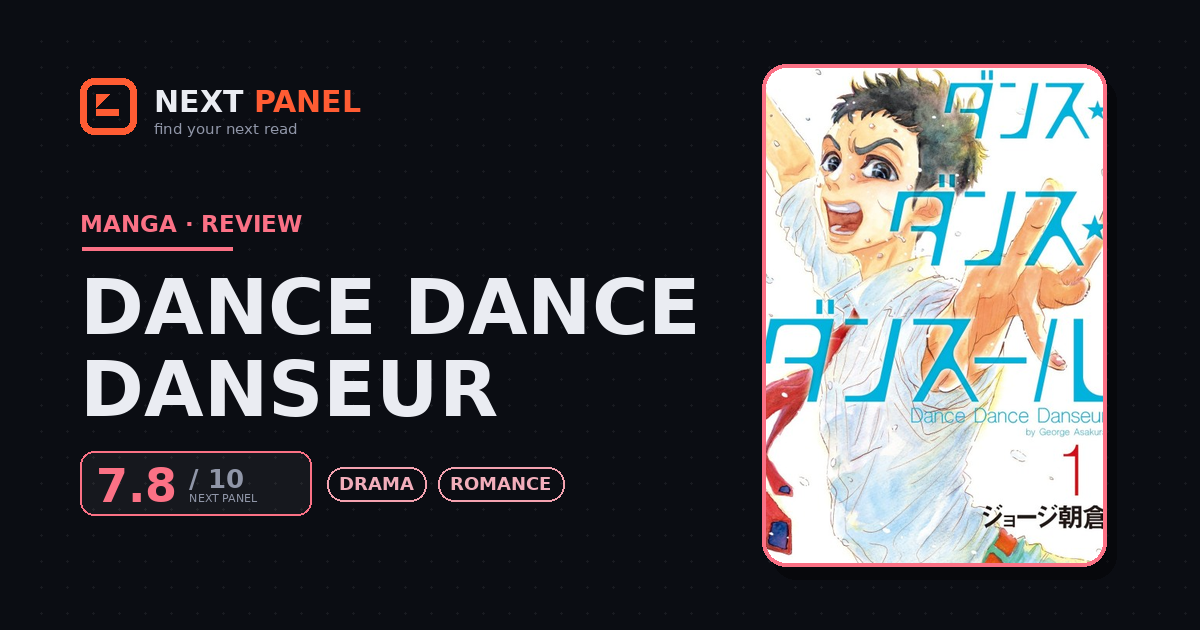
Is Dance Dance Danseur Worth Reading? Review & Where to Read
Quick Answer
Yes, especially if Swan or any performance-focused shoujo appealed to you. Dance Dance Danseur takes a genuinely fresh angle — a boy fighting the stigma around male ballet dancers — and draws its dance sequences with real physical weight.
Quick Verdict
“It's less interested in easy inspiration than in how much a body and an ego have to be rebuilt to actually dance well, which makes it sting more than most sports-manga comebacks.”
Best for: Readers who want a coming-of-age story about masculinity and body image wrapped around genuinely well-drawn dance sequences.
Not for: Readers who want a fast-moving plot or a series they can finish soon — it's long, ongoing, and has had real publication gaps.
- Type
- Manga
- Genres
- Romance, Drama
- Status
- On Hiatus
- Author
- George Asakura
- Publisher
- Shogakukan (Weekly Big Comic Spirits)
| Quick facts | |
|---|---|
| Format | Manga (seinen), 33 volumes |
| Run | 2015–present · on hiatus |
| Community score | AniList 7.6 · MangaUpdates 7.0 |
Overview
Junpei Murao gave up ballet as a kid, right after his father died and the other boys made it clear dancing wasn't something he was supposed to do. Years later, a new transfer student who trained at the Bolshoi drags him back toward the barre, and George Asakura's Dance Dance Danseur spends its run tracking what it actually takes for Junpei to relearn a discipline — and a version of himself — he spent years suppressing. It's been serializing in Shogakukan's Weekly Big Comic Spirits since 2015, currently past 30 volumes, and got an anime adaptation in 2022.
What it does well
The premise does real work instead of just being a hook. Junpei's reason for quitting isn't a vague excuse — it's grief plus the specific social pressure that ballet isn't something boys are supposed to want, and the manga takes that stigma seriously rather than dismissing it in one scene. Watching him fight through his own self-consciousness, and other characters' open skepticism, gives the story stakes that a simpler 'hidden talent gets discovered' plot wouldn't have.
The dance art backs that up. Asakura draws the mechanics of male ballet technique — which genuinely differs from what most readers picture when they think 'ballet' — with real physical specificity: strain, balance, the actual effort of a lift or a turn. It reads as work, not just grace, which fits a story about a body that has to be rebuilt rather than one that was already gifted. The romance with Miyako, meanwhile, develops alongside the ballet plot instead of swallowing it, so the story keeps its focus on Junpei's own reconstruction rather than turning into a pure romance.
Where it falls short
The biggest practical issue is that this is genuinely open-ended right now. The author has taken real, extended hiatuses for health reasons, the manga is already past 30 volumes with no end in sight, and there's currently no official English release, so anyone picking this up should go in knowing it's a long-term, imperfect commitment rather than a series to finish soon. On the page itself, stretches focused on technical training are clearly well-researched but can read as dry if you're mainly invested in the character drama rather than the mechanics of the dance.
Verdict
Dance Dance Danseur earns comparisons to Swan by taking its subject just as seriously, from an angle — a boy fighting the stigma around male ballet dancers — that classic ballet manga rarely explored. The dance art alone makes it worth following. Just know what you're signing up for: it's ongoing, unlicensed in English, and prone to real gaps between updates.
Strengths & Weaknesses
Strengths
- Junpei's reason for quitting ballet as a kid — his father's death and the social pressure that boys shouldn't dance — gives the story real emotional stakes from page one instead of a generic 'discover your talent' hook.
- The dance sequences are drawn with real physical weight: strain, balance, and the specific mechanics of male ballet technique (which differs from what most readers picture) all come through clearly on the page.
- It engages honestly with the stigma around men in ballet without turning that into a simple lesson — other characters' skepticism and Junpei's own self-consciousness both get real space instead of being waved away.
- The central romance with Miyako develops alongside the ballet plot instead of overtaking it, so the story stays focused on Junpei rebuilding a body and a confidence he buried years earlier.
Weaknesses
- The series has gone on real, extended hiatuses due to the author's health, and it's still ongoing at over 30 volumes — this is not a series you can expect to finish cleanly any time soon.
- Pacing slows considerably in stretches focused on technical ballet training, which is well-researched but can read as dry if you're here mainly for the character drama.
- There's currently no official English release, so right now it's readable only in the original Japanese.
Similar Titles
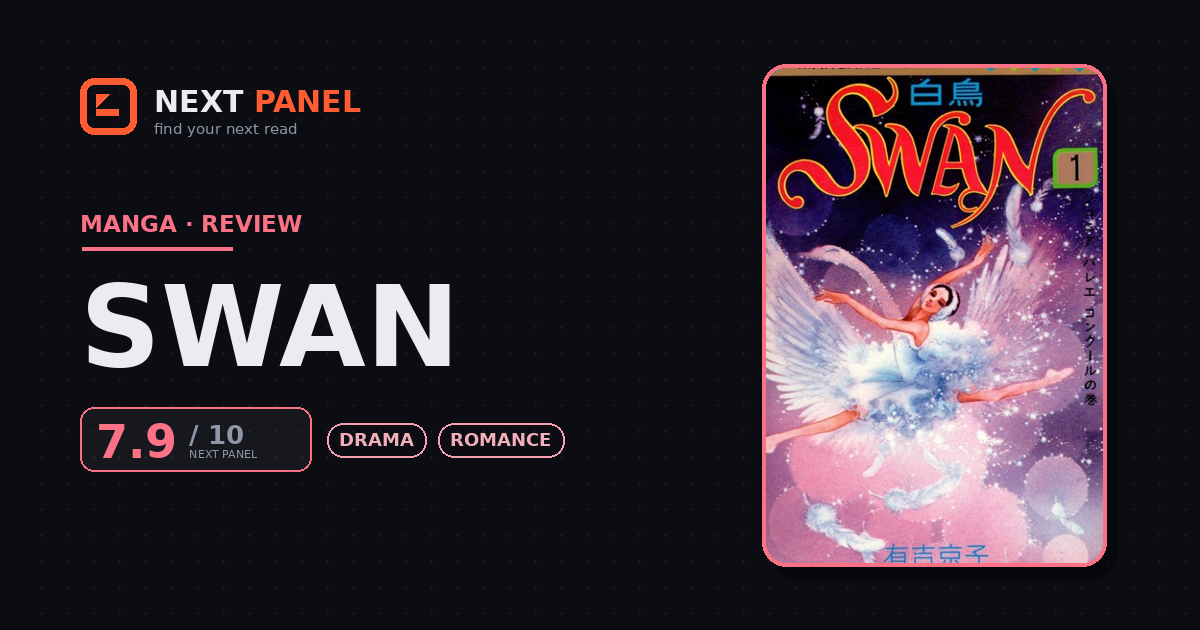
The classic ballet manga this one is often compared to, told from a female dancer's perspective instead.
Different art form, same interest in an outsider fighting self-doubt to take an art form seriously.
Frequently Asked Questions
Is Dance Dance Danseur finished?
No, it's still ongoing, and the author has taken extended breaks for health reasons, so updates can be irregular.
Is there an anime?
Yes, a 2022 anime adaptation covers the earlier chapters, but the manga has continued well past where it stops.
Is Dance Dance Danseur available in English?
Not currently. There's no official English publisher for the manga as of now, though the anime has official streaming subtitles.