Is Forest of Piano Worth Reading? Review & Where to Read
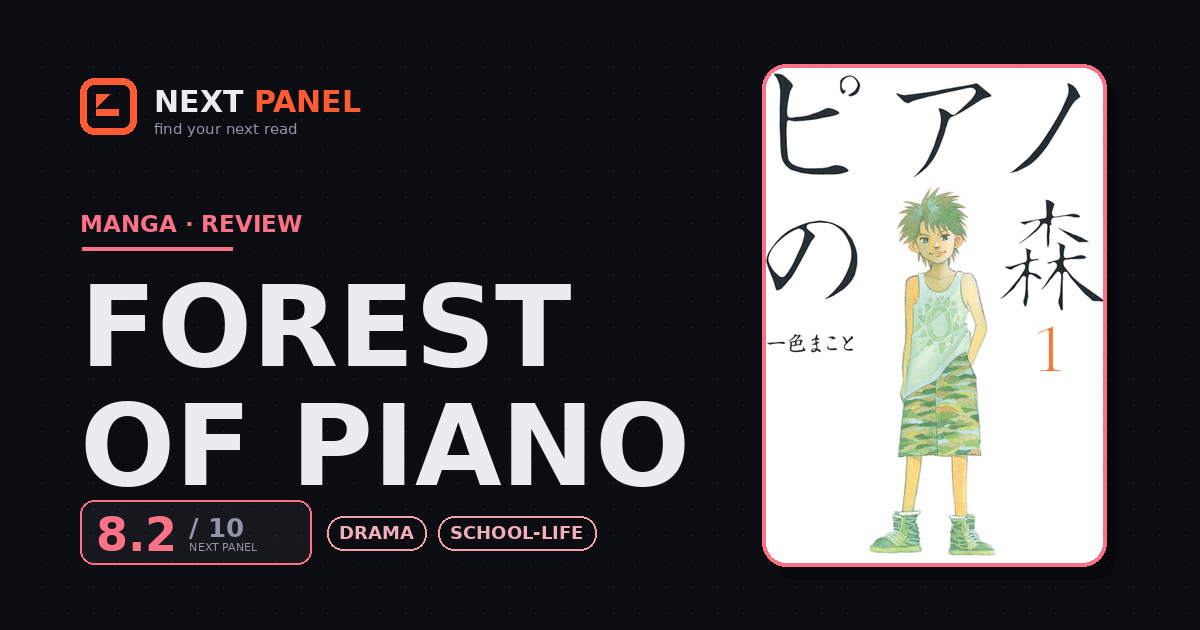
Quick Answer
Yes, especially if you like music stories or the rivalry-and-tournament shape of a good sports manga. It's a warm, award-winning drama about two boys chasing the piano, and it makes you feel the performances even on a silent page. Just be ready for rough early art and a long middle.
Quick Verdict
“Think of it as a sports manga where the arena is a concert hall, built around one of the best rivalries in the genre. The early art is rough, but stick with it and the performances hit hard.”
Best for: Readers who love music or competition stories and want a warm, long rivalry to sink into over many volumes.
Not for: Readers who want polished art from page one, tight pacing, and a short, self-contained story.
- Type
- Manga
- Genres
- School Life, Drama
- Status
- Completed
- This review
- Minor Spoilers
- Author
- Makoto Isshiki
- Publisher
- Kodansha
- Platform
- Kodansha
| Quick facts | |
|---|---|
| Format | Manga (seinen), 242 chapters, 26 volumes |
| Run | 1998–2015 · completed |
| Community score | AniList 8.2 |
| Where to read | Kodansha — official |
Overview
Forest of Piano (Piano no Mori) is a music drama by Makoto Isshiki about two boys and a piano. Kai Ichinose grows up poor in the red-light district, but he has spent his whole life playing a piano someone abandoned in the woods, and he can get sound out of it when no one else can. Shuhei Amamiya is the opposite: the son of a famous pianist family, drilled since birth and carrying everyone's expectations. They meet as kids, become rivals and friends, and the series follows them from grade school into adulthood as they chase the piano as far as it will take them.
If you have read a sports manga, the shape will feel familiar. Once the boys get serious, the book turns into a run of competitions, from regional rounds to the big Chopin Competition in Warsaw, with rivals, judges, and the pressure of a single performance. Isshiki just swaps the court or the field for a concert stage. It ran from 1998 to 2015 across 26 volumes, won the Kodansha Manga Award, got two anime, and Kodansha releases it in English digitally.
What it does well
Drawing music is hard, and this is where the book shines. Isshiki finds ways to make you "hear" a performance on a silent page: the way a piece looks in a player's head, the crowd's faces, the small physical tells of nerves and joy. When Kai plays, you feel why it is special, and the big competition performances build real tension even though you cannot hear a note.
The central pair carries it. Kai is a natural who plays for the love of it; Shuhei has the training and the pedigree but has to find his own reason to keep going. Their rivalry is warm rather than bitter, and watching them push each other over the years is the heart of the story. The adult cast pulls weight too, especially Ajino, the washed-up pianist who becomes Kai's teacher and gets one of the most moving arcs in the book.
It is also a real underdog story with class baked in. Kai's background isn't just there for flavor; the gap between a kid from the slums and the polished conservatory world drives a lot of the drama, and the book takes it seriously.
Where it falls short
The art is rough early on. The first few volumes look dated and a little stiff, and while Isshiki improves a lot over the run, the opening can be a hard sell on looks alone.
It is also long, and it sags in the middle the way a lot of tournament stories do. Some competition rounds and side pianists blur together, and if you are not invested in the music you will feel the length. A couple of emotional beats lay it on thick, too. And while the story starts as a small, magical tale about a forest piano, it becomes a fairly conventional competition drama, which not everyone will love as much as the quieter opening.
Verdict
This is one of the best music manga going, a warm, long-haul story about talent, class, and two kids who grow up chasing the same dream. Push through the rough early art and it rewards you. If piano competitions and a strong rivalry sound like your thing, or you liked Your Lie in April and want more, it is an easy recommendation, and it is finally readable in English.
Strengths & Weaknesses
Strengths
- It makes you 'hear' the music on a silent page, using faces, imagery, and body language to turn a piano performance into real tension.
- The rivalry between free-spirited Kai and dutiful Shuhei is warm and believable, and it grows naturally as they age from kids into adults.
- The adult supporting cast is strong, especially Kai's mentor Ajino, whose arc is one of the most moving in the book.
- It takes class and background seriously, so the underdog story has real stakes instead of being a throwaway detail.
Weaknesses
- The early art is dated and stiff, which makes the first few volumes a tougher sell than they should be.
- At its full length it sags in the middle, and some competition rounds and side pianists blur together.
- It shifts from a small, magical story about a forest piano into a fairly conventional competition drama, which some readers will miss.
Similar Titles
The closest match: piano, competitions, and big emotions, aimed at a slightly younger crowd.
Another story about a music prodigy chasing greatness, this time with a saxophone and jazz.
For the same mix of tournament pressure and quiet coming-of-age drama, built around shogi instead of music.
Where to Read Officially
| Platform | Format | Pricing | Region notes | Link |
|---|---|---|---|---|
| Kodansha | Digital volumes | Paid | Region availability varies | Open |
Frequently Asked Questions
Is Forest of Piano finished?
Yes. It ran from 1998 to 2015 and is complete, and Kodansha has released the whole series in English digitally.
Can I read it in English officially?
Yes. Kodansha releases it digitally in English, so you can buy the volumes through Kodansha's own store and the usual digital shops.
Do I need to know classical music to enjoy it?
No. It helps if you like music, but the story explains what matters and leans on emotion and rivalry, so you don't need any background to follow along.