Is Getter Robo Worth Reading? Review & Where to Read
Quick Answer
If you care about where the combining-robot mecha genre came from, yes — this is the source. If you just want a good story on its own terms, it's rougher going: thin characters, brutal violence, and pacing that jumps around.
Quick Verdict
“More important than it is enjoyable — read it for the history, not expecting a polished story.”
Best for: Readers who want to trace mecha anime and manga back to where the combining-robot genre started.
Not for: Readers who want developed characters and a plot that holds together from chapter to chapter.
- Type
- Manga
- Genres
- Sci-Fi, Action
- Status
- Completed
- This review
- Minor Spoilers
- Author
- Go Nagai & Ken Ishikawa
- Artist
- Ken Ishikawa
- Publisher
- Shogakukan (Weekly Shōnen Sunday)
| Quick facts | |
|---|---|
| Format | Manga (shōnen), 15 chapters, 4 volumes |
| Run | 1974–1975 · completed |
| Community score | AniList 6.9 · MangaUpdates 7.0 |
| Content | Extreme violence, gore |
Overview
Getter Robo isn't a comfortable read, and it isn't trying to be. Ken Ishikawa, working with Go Nagai's original concept, ran it in Weekly Shōnen Sunday for barely a year and used that short runway to lay down a template the entire mecha genre would spend the next five decades copying: three pilots, three vehicles, one combining robot, and an enemy empire that just won't stop escalating. If you've ever watched a Super Sentai team merge their machines into something bigger, you're looking at this manga's great-grandchild.
What it does well
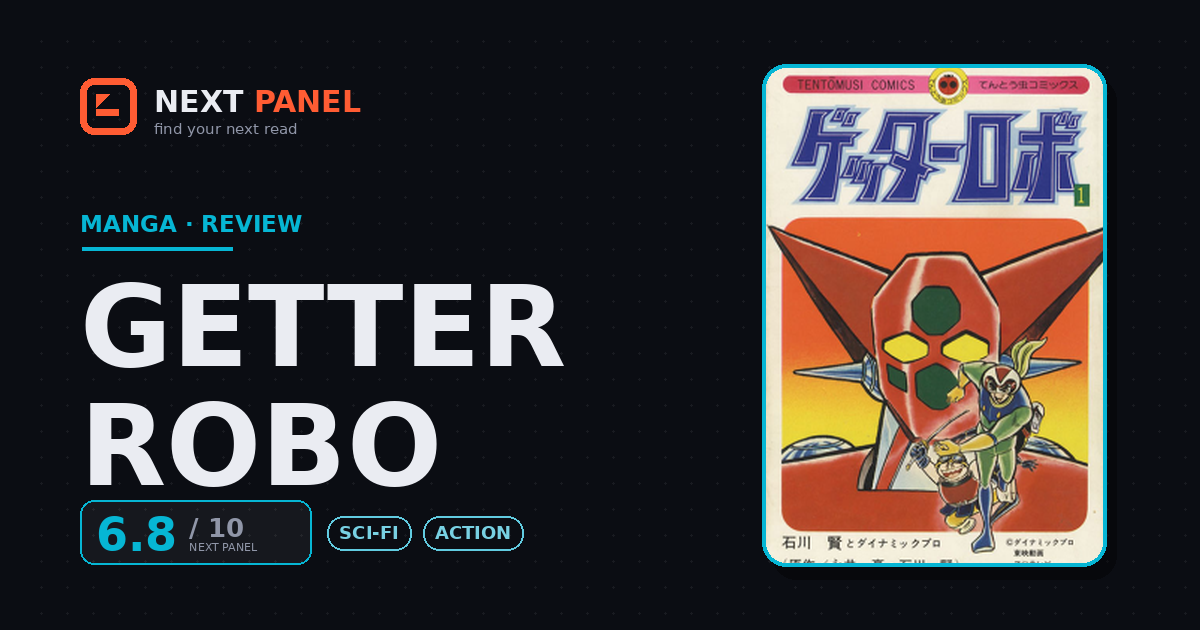
The premise is simple and the manga trusts it. Ryoma, Hayato, and Musashi pilot the Eagle, Jaguar, and Bear, which combine into Getter-1, -2, or -3 depending on what the fight calls for — flight, ground brawling, or underwater combat. That three-mode structure keeps the battles from feeling repetitive even across a short page count, and Ishikawa draws them with a nasty, kinetic edge that feels more like a horror comic than a toy commercial. The Dinosaur Empire's attacks escalate fast and hit hard, and the manga isn't shy about characters actually dying for it.
That willingness to be genuinely brutal is the most interesting thing about it in hindsight. This wasn't a soft, sanitized robot story for kids — it's mean, fast, and occasionally shocking in a way that explains a lot about where the darker end of the mecha genre came from.
Where it falls short
What it doesn't do is build characters. Ryoma is the hothead, Hayato is the reformed sociopath, Musashi is the disciplined one, and that's about as deep as any of them get across the whole run. The pacing is choppy too — because the manga was produced alongside a fast-moving anime, arcs start and stop abruptly, and some fights resolve with barely any setup. If you're coming in expecting the sturdier, more patient plotting of later mecha manga, this earlier, rougher version will feel thin by comparison.
Verdict
Getter Robo matters more than it entertains. It's short enough to knock out in an afternoon, and worth doing so if you want to see the mecha genre's blueprint in its rawest, meanest form — just don't expect the polish that its own descendants eventually built on top of it.
Strengths & Weaknesses
Strengths
- It's the manga that gave the mecha genre the combining-robot format still used today — the historical weight is real.
- The Dinosaur Empire's escalating attacks keep individual chapters brisk and eventful.
- Ishikawa's action linework is genuinely brutal and kinetic, closer to a horror comic than a typical kids' robot book.
- The three-pilot, three-mode Getter system (flight, ground, marine) is a clever structural gimmick that keeps fights varied.
Weaknesses
- The three leads get almost no interiority beyond a single defining trait each — this is plot and violence first, character work a distant third.
- Pacing is erratic, with arcs starting and ending abruptly as the manga followed the anime's production rather than its own internal logic.
- The violence is often shockingly harsh for what looks like a kids' robot comic, which can be a turn-off if you're not expecting it.
Similar Titles
Cyborg 009
Same generation of scrappy, violent tokusatsu-adjacent hero manga.
Mazinger Z
The other foundational super-robot manga from the same era, with a similar mean streak.
Go Nagai's other landmark from the same period, sharing its brutal, unsentimental tone.
Frequently Asked Questions
Is the original Getter Robo manga finished?
Yes — it ran in Weekly Shōnen Sunday from 1974 to 1975 and is a complete, self-contained story.
Where can I read Getter Robo in English?
The original 1974 manga has never had an official English release. Seven Seas did publish Getter Robo Devolution, a modern reimagining by Ken Ishikawa, in English, which is the easiest official way to experience the franchise's tone today, though it's a different story from this original.
Do I need to watch the anime first?
No — the manga and the 1974 anime were produced alongside each other and diverge quite a bit, so you can read this as its own, considerably darker take on the same premise.