Is Gleipnir Worth Reading? Review & Where to Read
Quick Answer
Worth reading if you want a body-horror action series with a genuinely unsettling premise and a cast of morally compromised monster-people, as long as you can tolerate its heavy dose of fanservice.
Quick Verdict
“Body horror this committed to its own weirdness is rare, and it's a shame the story leans so hard on cheap fanservice to sell it.”
Best for: Readers who want strange, unsettling body-horror action with a morally messy ensemble cast of hidden monsters.
Not for: Readers who don't want fanservice woven into their action scenes, or who want a story that plays its premise straight without exploiting it.
- Type
- Manga
- Genres
- Horror, Action
- Status
- Completed
- This review
- Minor Spoilers
- Author
- Sun Takeda
- Publisher
- Kodansha
- Platform
- Kodansha
| Quick facts | |
|---|---|
| Format | Manga (seinen), 88 chapters, 14 volumes |
| Run | 2015–2023 · completed |
| Community score | AniList 6.7 · MangaUpdates 7.0 |
| Content | Graphic violence, sexual content, body horror |
| Where to read | Kodansha — official |
Overview
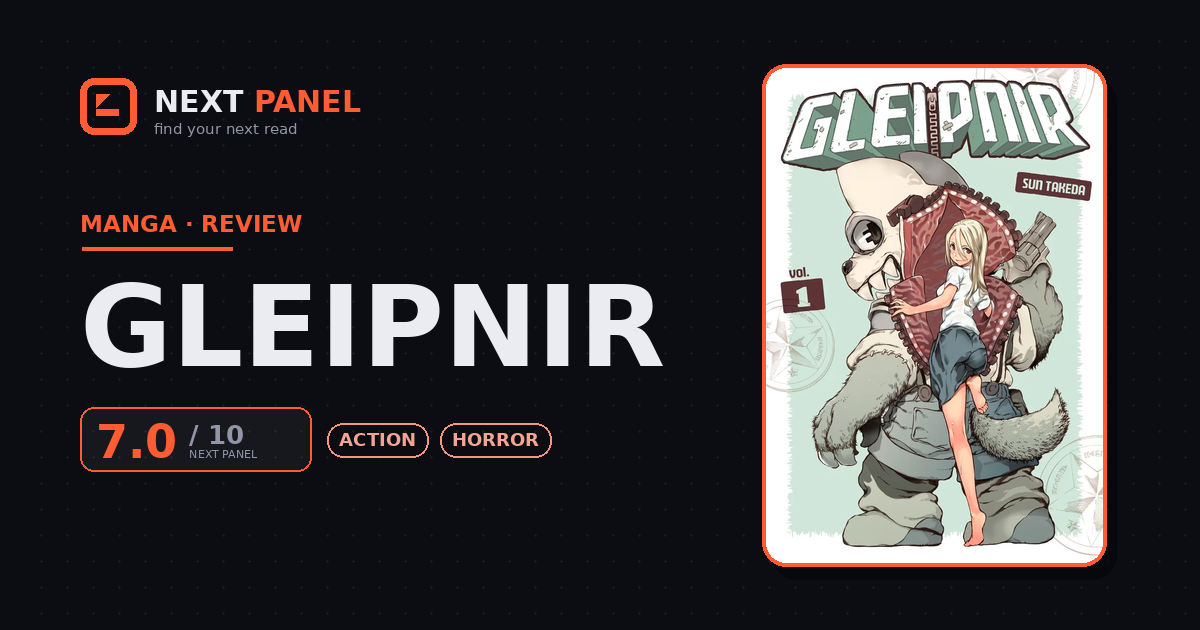
Shuichi Kagaya's secret is that he can turn into a hulking, dog-faced monster with an oversized revolver built into his body and a zipper running down his back. When his classmate Claire Aoki finds out, she doesn't just keep his secret — she starts using him, literally climbing inside his transformed body to access the gun, as a tool in her hunt for the sister who destroyed her family. Written and illustrated by Sun Takeda, Gleipnir ran in Kodansha's Young Magazine the 3rd and Monthly Young Magazine from 2015 to 2023, wrapping at 14 volumes, and got a 2020 anime adaptation covering part of the story.
What it does well
The central transformation gimmick is the thing that makes this stand out — there's genuinely nothing else quite like the image of Claire unzipping Shuichi's monster form and stepping inside to use it as both cover and weapon. It's inventive, uncomfortable body horror that the story keeps finding new angles on rather than treating as a one-note shock.
As more "coin" collectors with their own monster forms get introduced, the scavenger-hunt structure stays easy to follow, which isn't a given in a series that keeps expanding its cast of powers and motivations. Claire's grief over her family is also handled with more weight than the premise might suggest — her willingness to use and be used is framed as something broken in her, not just a quirky character trait, and that gives the Shuichi/Claire dynamic real discomfort instead of played-for-laughs shipping fuel.
The horror commits, too. Takeda draws transformations and violence with a squirming, visceral quality, and the series isn't interested in softening its body horror to make it easier to look at.
Where it falls short
The fanservice is the thing most readers will either accept or bounce off of. It's frequent, and it's tied directly into the story's most iconic mechanic, so there's no getting around it if it's not for you — this isn't a series that keeps its horror and its exploitation elements in separate rooms. Some of the later monster-people introduced as the coin count widens also don't get much beyond a single defining trait before the plot moves past them. And the tone can whiplash between grim psychological horror and broader comic beats in a way that occasionally undercuts scenes that are trying to land as unsettling.
Verdict
This is body horror with a genuinely original hook and a willingness to sit in discomfort that most action manga avoid, dragged down somewhat by how much it leans on fanservice to sell that same hook. If the mix of grim monster-horror and heavy service sounds like your thing, it delivers something you won't find quite the same way anywhere else.
Strengths & Weaknesses
Strengths
- The core transformation gimmick — Shuichi turning into an oversized, gun-toting mascot creature that Claire can physically climb inside of to use as a weapon — is genuinely inventive body horror that doesn't have an easy comparison elsewhere in the genre.
- The rules of the scavenger-hunt-for-coins premise stay legible even as more monster-people are introduced, so the escalating cast doesn't become confusing the way ensemble power-system stories often do.
- Claire's grief and rage over her family are treated as genuinely destabilizing rather than just a backstory hook, and it colors how uncomfortable her partnership with Shuichi is meant to feel.
- The horror elements commit fully — transformations and violence are drawn with a squirming, visceral quality that a lot of action manga soften for readability.
Weaknesses
- The fanservice is heavy and frequent, and it's baked directly into the premise's most memorable mechanic, which will be a dealbreaker for readers who don't want that mixed into their body horror.
- Some of the newer monster-people introduced later in the run get less room to become more than a single gimmick before the story moves on.
- The tone swings between grim psychological horror and broader comedy in a way that doesn't always land smoothly from chapter to chapter.
Similar Titles
Similar mix of body horror, dark comedy, and a cast of morally messy characters wielding strange, monstrous powers.
An earlier body-horror classic that shares the same interest in blurring the line between human and monster.
For readers who want another dark, violent series that treats its monster cast as tragic rather than purely villainous.
Where to Read Officially
| Platform | Format | Pricing | Region notes | Link |
|---|---|---|---|---|
| Kodansha | Digital chapters (first chapter free, volumes for purchase) | Free + Paid | Region availability varies | Open |
Frequently Asked Questions
Is Gleipnir licensed in English?
Yes — Kodansha USA publishes it, with the first chapter free and the rest sold by volume.
Is the series finished?
Yes, it ran from 2015 to 2023 across 14 volumes.
Is there an anime?
Yes, a 2020 anime adaptation covers the earlier arcs of the story.