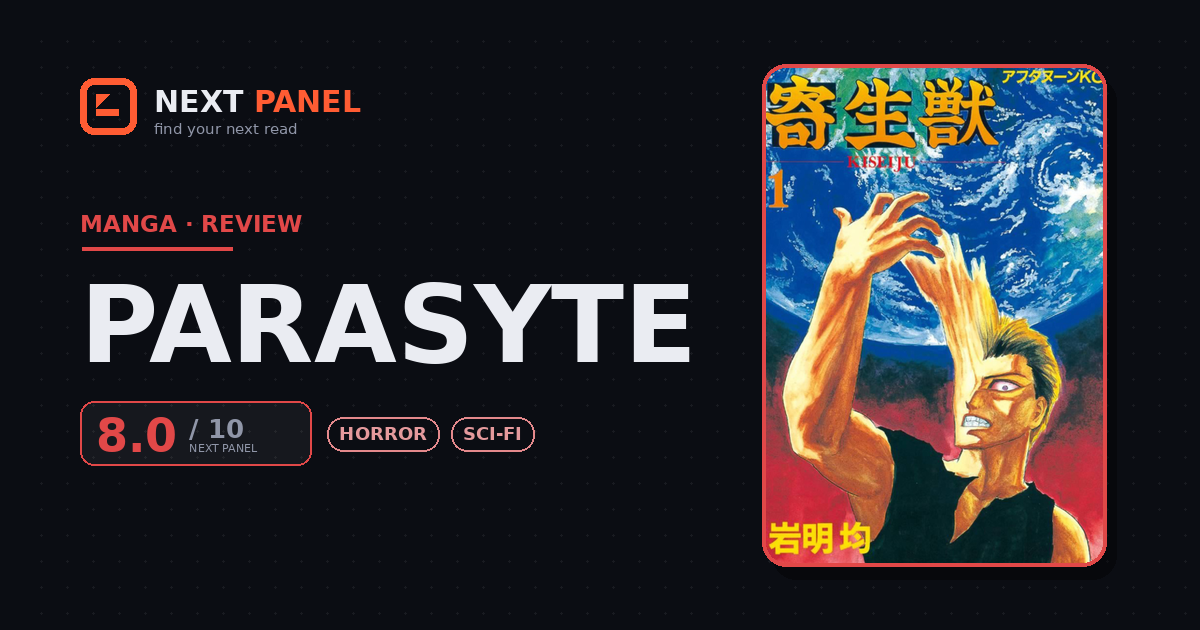
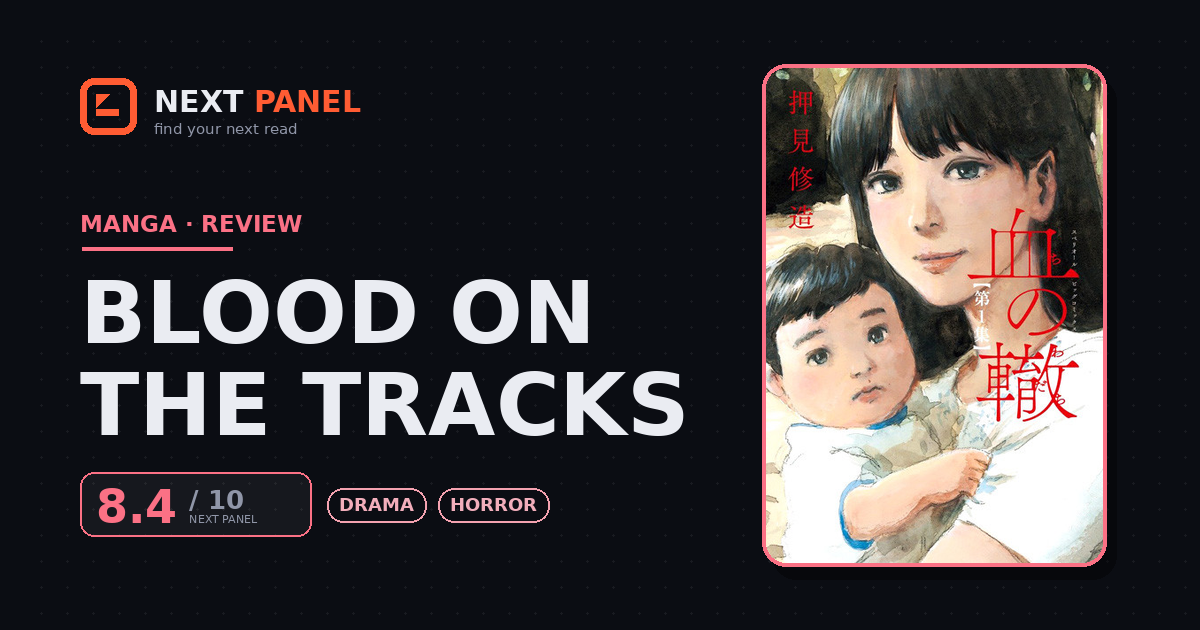
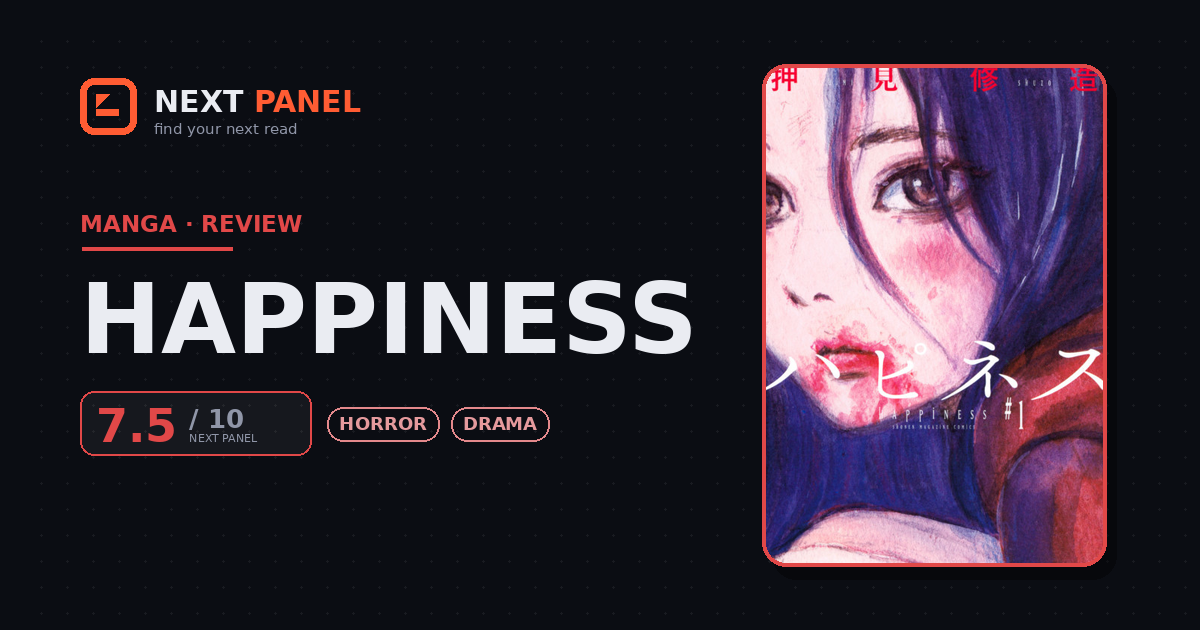
Is Happiness Worth Reading? Review & Where to Read
Quick Answer
If you like moody, character-driven horror more than plot-driven scares, Happiness is worth it. Oshimi's art and atmosphere are superb, and the early volumes are gripping. It loses its way later, though, and the ending divides readers — so go in for the mood, not the resolution.
Quick Verdict
“Beautifully drawn and deeply uneasy — Oshimi turns vampirism into a study of teenage isolation, even as the story loses its grip near the end.”
Best for: Readers who want moody, character-driven horror about alienation and don't mind a slow, unsettling pace.
Not for: Readers who want a tightly plotted vampire story with a clear, satisfying ending.
- Type
- Manga
- Genres
- Drama, Horror
- Status
- Completed
- This review
- Minor Spoilers
- Author
- Shuzo Oshimi
- Publisher
- Kodansha Comics
- Platform
- Kodansha Comics
| Quick facts | |
|---|---|
| Format | Manga (shōnen), 50 chapters, 10 volumes |
| Run | 2015–2019 · completed |
| Community score | AniList 7.3 · MAL 6.7 · MangaUpdates 6.5 |
| Content | Graphic violence, blood, mature themes |
| Where to read | Kodansha Comics — official |
Overview
Happiness starts with one of the oldest setups in horror and makes it feel intimate and strange. Makoto Okazaki is an ordinary, lonely high-schooler — quiet, bullied, easy to overlook. One night he's attacked by a mysterious girl who turns out to be a vampire, and she offers him a choice: die, or become like her. He chooses to live, and wakes up changed. Drawn by Shuzo Oshimi, the artist behind The Flowers of Evil and Blood on the Tracks, the manga is less interested in vampire action than in what it feels like to suddenly become something other than human while still being a scared teenager.
What it does well
Oshimi is one of the best artists working in this register, and Happiness is a showcase. His linework is delicate and his faces are extraordinarily expressive, catching tiny flickers of fear, shame, and longing. He's a master of the quiet, uneasy moment — a held gaze, an empty hallway, a small physical detail that suddenly feels wrong — and that control is what makes the book genuinely unsettling. It doesn't lean on gore (though there's some); it lets dread build in the spaces between events.
The smartest thing it does is treat vampirism as a metaphor rather than a gimmick. Makoto's transformation maps neatly onto adolescence itself: the alienation, the new and frightening urges, the sense of a body and a self changing in ways you can't control or explain to anyone. That gives the horror real emotional weight. His loneliness was already painful before the bite; afterward it becomes unbearable, and the manga sits with that ache instead of rushing past it. The early volumes, in particular, are gripping — a slow, melancholy spiral that's hard to put down.
The supporting cast deepens it. The people around Makoto — the friend who worries about him, the girl drawn into his orbit, the strangers who sense something is off — all reflect different facets of his isolation, and Oshimi handles them with the same careful attention he gives his lead.
Where it falls short
The problem is that Happiness doesn't hold its shape. Around the midpoint the focus shifts and a timeskip jumps the story forward, and a lot of the careful tension built in those early volumes leaks away. The later volumes are more diffuse, introducing new threads and pulling away from the intimate character study that made the opening so strong. Worst of all is the ending, which arrives abruptly and leaves major questions unresolved; readers hoping the buildup would pay off in a clear, satisfying conclusion often feel shortchanged. This was always a mood piece more than a plot machine, but even on its own terms the structure gets shaky.
Verdict
Happiness is a beautiful, deeply uneasy manga that uses vampirism to say something true about being young and alone. Oshimi's art and atmosphere are reason enough to read it, and the first half is excellent. The wandering second half and unsatisfying ending keep it out of his top tier, so adjust your expectations: come for the mood, the dread, and the aching character work, not for a tidy story. On those terms, it's well worth a look.
Strengths & Weaknesses
Strengths
- Oshimi's art is the main draw — intimate, expressive, and genuinely unsettling, especially in its quiet moments.
- It uses vampirism as a metaphor for adolescent isolation, which gives the horror real emotional weight.
- The early volumes build a creeping, melancholy dread that gets under your skin and stays there.
- Makoto's confusion and loneliness feel painfully real, grounding the supernatural in something human.
Weaknesses
- The story meanders, especially after a midway shift in focus and a timeskip that drains the momentum.
- The ending is abrupt and divisive, leaving threads that never resolve in a satisfying way.
- It's more mood than plot, so readers who want clear answers will come away frustrated.
Similar Titles
Oshimi's even more unnerving psychological drama, about a mother and son.
Another moody Japanese vampire story that humanizes its monsters.
Horror about a teen fused with something inhuman, wrestling with what he's becoming.
Where to Read Officially
| Platform | Format | Pricing | Region notes | Link |
|---|---|---|---|---|
| Kodansha Comics | Print & digital volumes | Paid | Region availability varies | Open |
Frequently Asked Questions
Is Happiness as good as Oshimi's other work?
It's strong but generally seen as a step below his best, like The Flowers of Evil and Blood on the Tracks. The art and atmosphere are excellent; the story is just less focused.
Where can I read it in English?
Kodansha Comics publishes the official English edition in print and digital, complete in ten volumes.
Is it scary?
More unsettling than scary — a slow, melancholy dread rather than jump scares, though it has bursts of real violence.