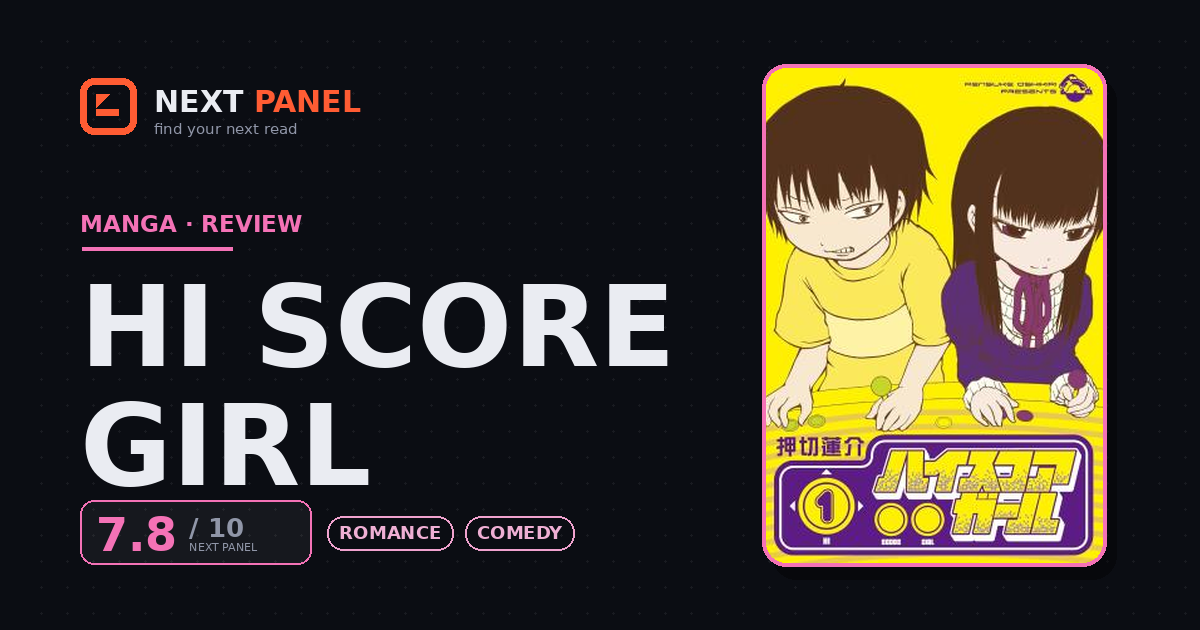
Is Hi Score Girl Worth Reading? Review & Where to Read
Quick Answer
Yes, especially if you have any nostalgia for 90s arcade and console gaming. It's a genuinely funny, unusually patient romance that uses real games as its love language instead of dialogue.
Quick Verdict
“Nostalgic without being hollow about it, and the romance actually earns its slow burn instead of just stalling for volumes.”
Best for: Readers who grew up on retro fighting games and want a romance that takes its time instead of rushing the pay-off.
Not for: Readers who want a story with lots of dialogue and interiority rather than one that says most of its feelings through gameplay and expressions.
- Type
- Manga
- Genres
- Romance, Comedy
- Status
- Completed
- This review
- Minor Spoilers
- Author
- Rensuke Oshikiri
- Publisher
- Square Enix
- Platform
- Square Enix Manga & Books
| Quick facts | |
|---|---|
| Format | Manga (seinen), 10 volumes |
| Run | 2010–2018 · completed |
| Content | None significant |
| Where to read | Square Enix Manga & Books — official |
Overview
Haruo Yaguchi is a middle-schooler who cares about exactly one thing: the arcade. Akira Ono is the quiet, wealthy girl in his class who says almost nothing to anyone — until she sits down across from him at a Street Fighter II cabinet and beats him without blinking. Hi Score Girl follows the two of them from that first match through years of an on-and-off, mostly wordless rivalry that slowly, believably turns into something more.
Rensuke Oshikiri built the whole series around a simple idea: these two people communicate best through games, not conversation. Akira barely speaks for long stretches of the story, and Haruo isn't much of a talker either once you get past his running internal monologue. What carries the relationship instead is a shared language of matches, high scores, and the specific 90s arcade and console culture the manga renders in loving, accurate detail.
What it does well
The central romance is the strongest thing here precisely because it doesn't rush. Oshikiri lets years pass between key moments, and the manga tracks Haruo and Akira actually growing up — not just aging on the page, but changing how they see each other and themselves. That patience pays off in a way a lot of faster-moving romance manga can't match, because by the time the relationship becomes explicit, you've watched it get built one arcade session at a time.
The comedy holds up just as well. Haruo is a genuinely funny lead — self-absorbed, oblivious, and completely unbothered by how he looks to other people — and the manga gets a lot of mileage out of playing his obliviousness against everyone around him quietly noticing what he can't. The retro gaming material is the other big draw: cabinet layouts, specific matchups, the social hierarchy of who's actually good versus who just talks a big game — it's all rendered with a level of detail that reads as genuine affection rather than trivia-dumping.
And because the story spans years, side material like Haruo's family life and the shifting social dynamics around him get room to matter instead of feeling like filler between the big romantic beats.
Where it falls short
Akira's silence is a real double-edged trait. It's central to her character and the story's whole communication-without-words conceit, but it also means she can feel underwritten next to Haruo for long stretches — you're meant to read her through small gestures and expressions, and it doesn't always land as clearly as the manga seems to think it does. The story does eventually give her more voice and interiority, but it takes a while to get there.
The middle volumes also lean on a love-triangle structure that repeats the same emotional beats more than once without moving the needle much. It's not a dealbreaker, but it's the stretch where the pacing sags hardest. And there's no getting around it: a chunk of the humor and tension depends on caring at least a little about 90s fighting games and arcade culture, which will land differently depending on how much of that history means anything to you.
Verdict
Hi Score Girl is a rare romance manga that's actually willing to let time do the work — the slow burn here earns its payoff instead of just running out the clock. If you have any nostalgia for the arcade era, or you just want a patient, funny will-they-won't-they that treats its characters like they're actually growing up, this is worth the ten volumes.
Strengths & Weaknesses
Strengths
- The central rivalry-to-romance between Haruo and Akira is told mostly through arcade matches and expressions rather than dialogue, and it works — you feel the relationship build without either of them saying much at all.
- The 90s arcade and console culture is rendered with real specificity and affection, from cabinet layouts to fighting-game meta, without turning into a dry history lesson.
- It's genuinely funny — Haruo's total lack of self-awareness and the deadpan reactions around him carry the comedy for most of the series.
- The story covers years of these characters' lives and lets them actually grow up, which gives the slow-burn romance a payoff that shorter series can't match.
Weaknesses
- Akira's near-total silence, a defining trait early on, means she can read as thin compared to Haruo for long stretches before the story gives her more interiority.
- The love-triangle structure with a third character drags in the middle volumes and repeats beats it's already made.
- Readers with zero interest in retro fighting games will miss a layer of the appeal — a fair amount of the humor and tension is built on gaming specifics.
Similar Titles
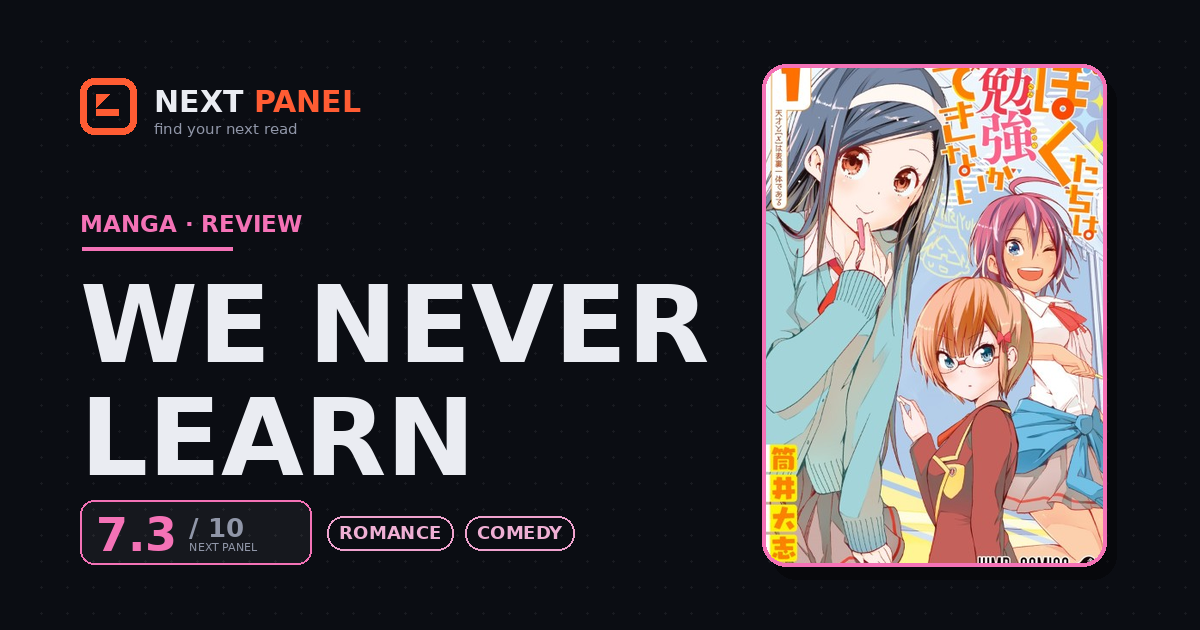
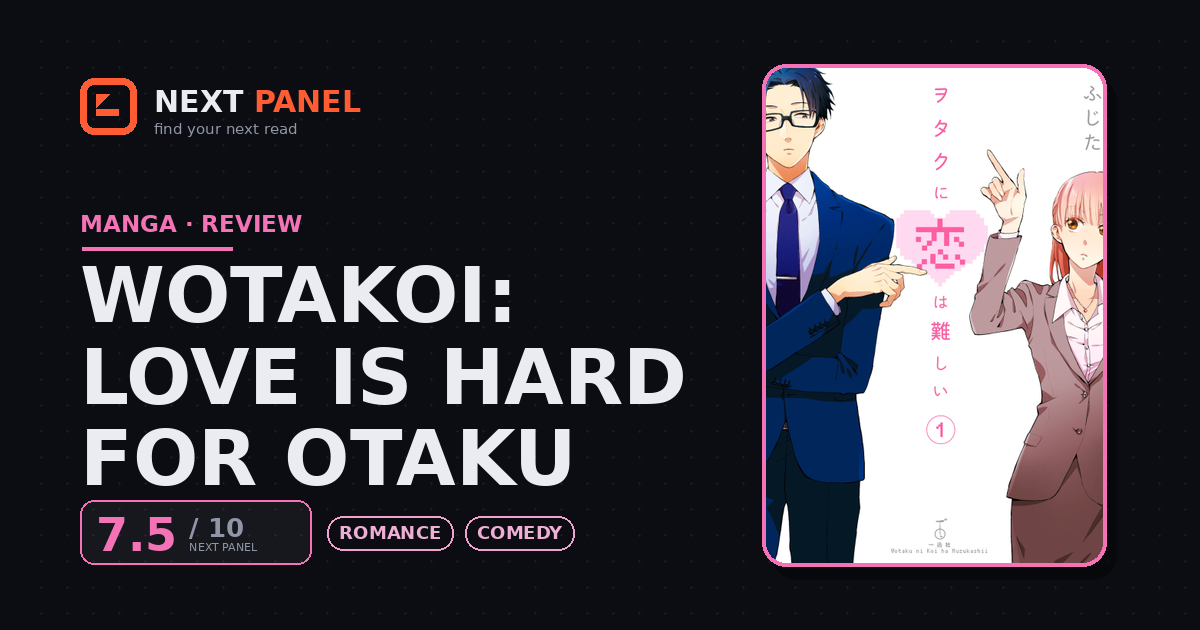
Wotakoi: Love is Hard for Otaku
Same nostalgic-nerd-culture romance angle, told with similar warmth.
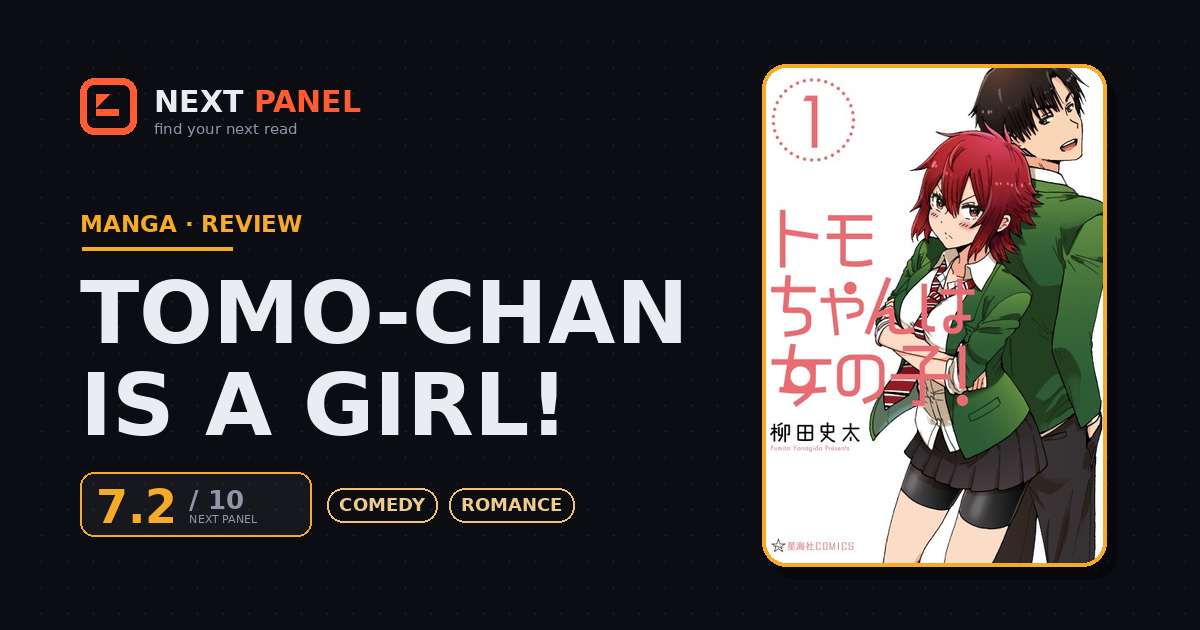
Another comedy that plays a long, physical friendship-to-romance arc for laughs and real feeling.
Shares the patient, comedic slow-burn approach to a will-they-won't-they romance.
Where to Read Officially
| Platform | Format | Pricing | Region notes | Link |
|---|---|---|---|---|
| Square Enix Manga & Books | Print & digital volumes | Paid | Region availability varies | Open |
Frequently Asked Questions
Is Hi Score Girl finished?
Yes. It ran for ten volumes from 2010 to 2018, with a brief hiatus in the middle, and is fully complete.
Do I need to know retro fighting games to enjoy it?
No, but it helps. The story explains the games it uses well enough to follow, and the romance and comedy work on their own even if you've never touched a Neo Geo cabinet.
Why did the manga go on hiatus?
SNK Playmore filed a legal complaint in 2014 over the manga's extensive, unlicensed use of its game characters and cabinets. The two companies settled in 2015 and the series resumed with proper licensing.