Is Maison Ikkoku Worth Reading? Review & Where to Read

Quick Answer
Yes, if you have patience for a slow burn. Maison Ikkoku takes its time in a way almost no modern romance manga would dare, and the payoff is worth the wait.
Quick Verdict
“Takahashi wrote a lot of manga after this one, but never another romance this patient or this honest about how messy real relationships actually are.”
Best for: Readers who want a slow-burn, will-they-won't-they romance grounded in real adult stakes rather than high school antics.
Not for: Readers who want fast romantic payoff or a story that doesn't spend years circling the same two people.
- Type
- Manga
- Genres
- Romance, Comedy
- Status
- Completed
- This review
- Minor Spoilers
- Author
- Rumiko Takahashi
- Publisher
- VIZ Media
- Platform
- VIZ Media
| Quick facts | |
|---|---|
| Format | Manga (seinen), 162 chapters, 15 volumes |
| Run | 1980–1987 · completed |
| Community score | AniList 8.0 · MangaUpdates 8.4 |
| Where to read | VIZ Media — official |
Overview
Maison Ikkoku is the manga that convinced a lot of readers Rumiko Takahashi could do more than the broad slapstick of Ranma 1/2 or the demon-hunting adventure of Inuyasha. It's a romantic comedy set almost entirely inside one shabby Tokyo boarding house, following Yusaku Godai, a chronically unlucky ronin student, as he falls for Kyoko Otonashi, the young widow who takes over as building manager. That's essentially the whole premise, and Takahashi spends seven real-time years and fifteen volumes on it without the story ever feeling padded.
What it does well
The patience is the point. Godai and Kyoko circle each other for a long time, and the manga never resorts to cheap misunderstandings or contrived breakups to keep them apart — every delay comes from something real: grief Kyoko hasn't processed, Godai's crushing lack of confidence and money, timing that never quite lines up. It's the rare romance where the obstacles are actually about the people involved rather than plot machinery, which is why the slow burn works instead of becoming frustrating.
The boarding house itself is doing a lot of quiet work too. Akemi, Yotsuya, and Ichinose — Godai's chaotic, nosy fellow tenants — supply the comedy, and they're funny enough to carry entire chapters on their own, but they also function as a kind of extended family that makes the setting feel lived-in rather than like a static backdrop. Takahashi's art, meanwhile, has aged remarkably well. She draws small, specific gestures — a hesitation, a half-turned face, someone not quite looking at someone else — that communicate more than the dialogue does, and that skill is on full display here in a way her later, broader-comedy work doesn't always need.
What elevates Maison Ikkoku above being just a nostalgia pick is how seriously it takes its adult cast. Godai and Kyoko have jobs, debts, family obligations, and actual grief to work through, and the manga never flattens them into simple romantic-comedy archetypes. That grounded quality is a big part of why the series is still cited as a genre touchstone decades later.
Where it falls short
The same patience that makes the romance work is also the thing most likely to test a reader's patience. Godai in particular spends a huge amount of the story failing to just say what he means, and even sympathetic readers will hit stretches where they want to reach into the page and shake him. The 1980s domestic-comedy rhythms — long dinner-table misunderstandings, running gags about rent and eviction threats — occasionally feel slower and more repetitive than what modern romance manga tends to offer, and a handful of the supporting cast's bits get reused past the point of still landing.
Verdict
Maison Ikkoku asks for real patience, but it rewards that patience honestly, with a love story that earns every year it takes. If you want a romance that feels like it's about actual adults instead of a plot device, this is still one of the best the medium has produced.
Strengths & Weaknesses
Strengths
- The push-and-pull between Godai and Kyoko is drawn out for years without ever feeling like padding, because every delay comes from a believable, human reason.
- The apartment building's cast of nosy, chaotic neighbors gives the story comic relief without turning into empty filler.
- Takahashi's expressive, grounded art holds up decades later — body language and small gestures carry as much storytelling as the dialogue does.
- It treats its characters like actual adults with jobs, debts, and baggage instead of idealizing them.
Weaknesses
- The central will-they-won't-they stretches on long enough that some readers will want to shake Godai and tell him to just say something.
- The slow, episodic pace and 1980s domestic-comedy rhythms can feel dated next to faster modern romance manga.
- A few of the extended cast's running gags get repeated past the point of still being funny.
Similar Titles
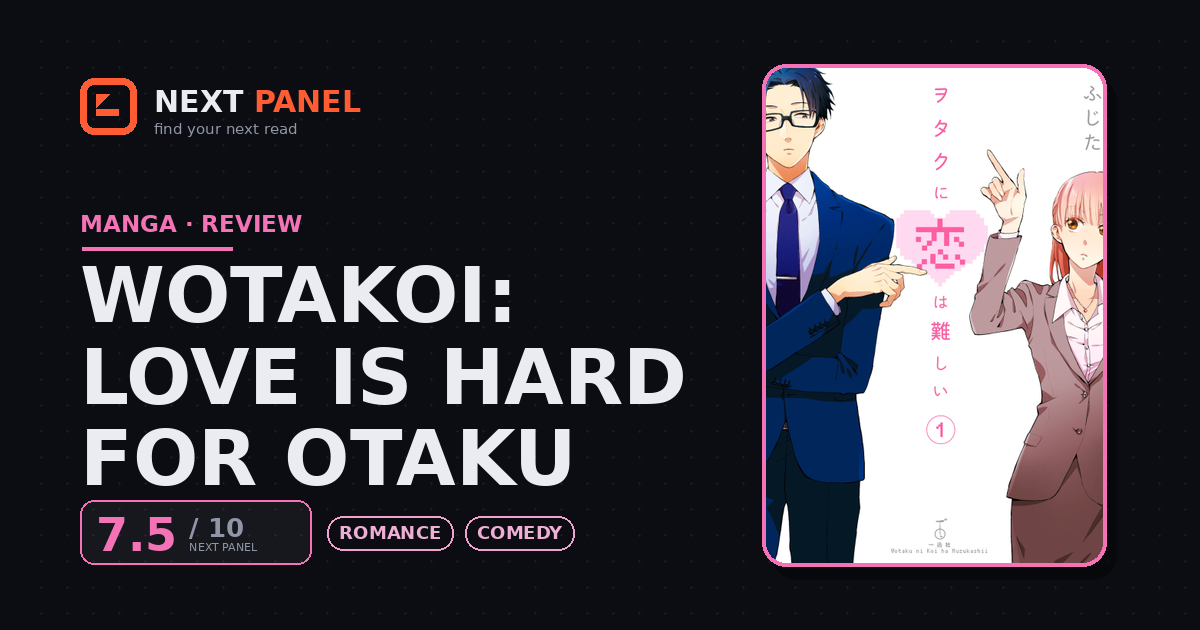
Wotakoi: Love Is Hard for Otaku
Same interest in adults, not teenagers, working through an awkward relationship.
Shares the slow-burn structure and a cast that keeps getting in its own way.
Similar grounded, character-driven drama about adults figuring out love and independence.
Where to Read Officially
| Platform | Format | Pricing | Region notes | Link |
|---|---|---|---|---|
| VIZ Media | Print & digital volumes | Paid | Region availability varies | Open |
Frequently Asked Questions
Is Maison Ikkoku finished?
Yes, it's fully completed — 15 volumes in VIZ's current English edition, originally serialized from 1980 to 1987.
Do Godai and Kyoko end up together?
The manga is built entirely around that question, and it earns its ending rather than rushing to it — no spoilers here.
Where can I read Maison Ikkoku officially in English?
VIZ Media publishes it in print and digital volumes, including a collector's edition.